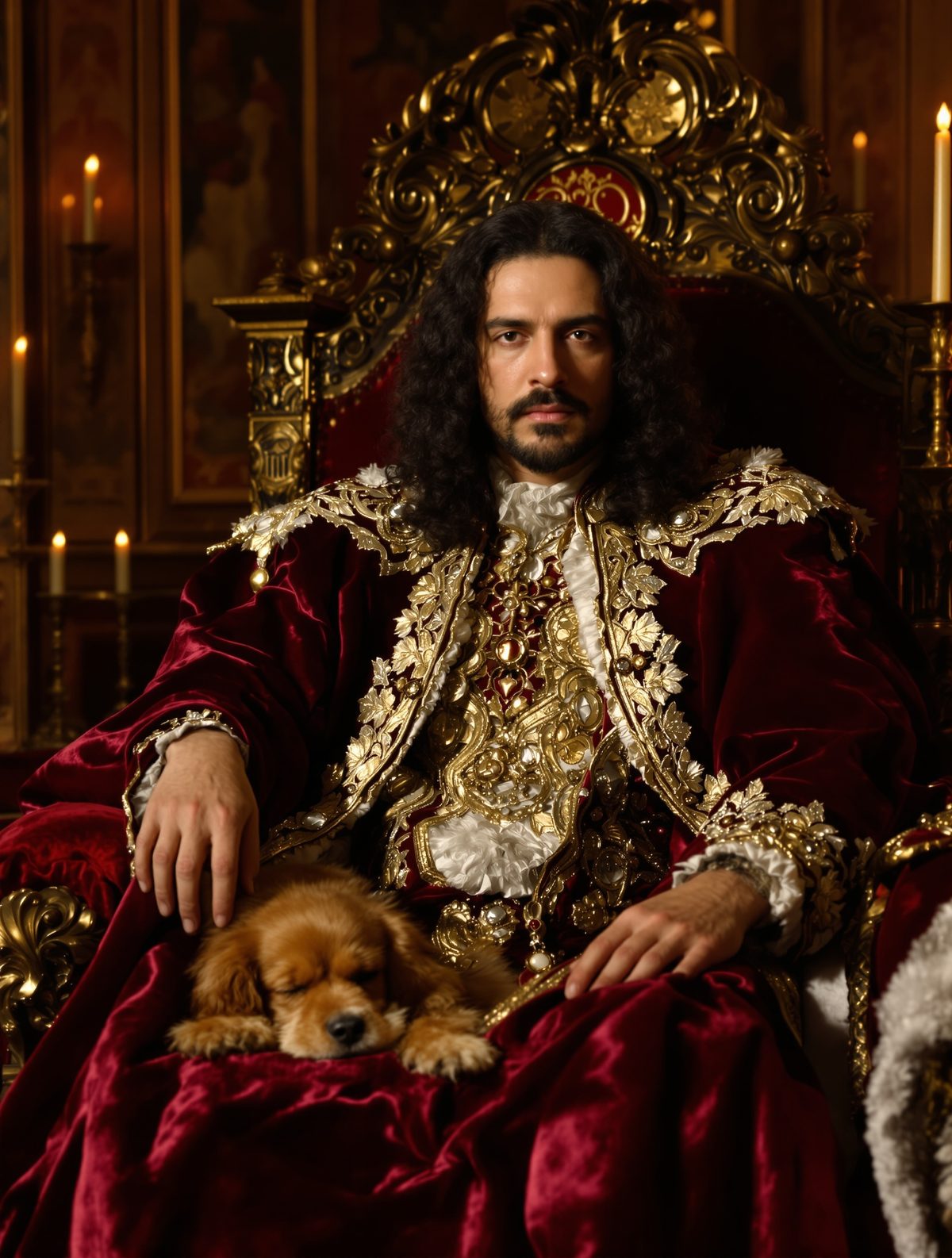
While his Privy Council debated matters of war and taxation, King Charles II's most trusted companion wasn't a minister or advisor. It was a small spaniel who slept peacefully on a velvet cushion throughout the most serious affairs of state. In the grand chambers of Whitehall Palace, where England's future was decided daily, courtiers and ministers had to step carefully around a four-legged confidant who enjoyed privileges that many nobles could only dream of.
This wasn't merely royal eccentricity—though Charles II certainly had his share of those. The king's devotion to his spaniel revealed something profound about a monarch who had endured exile, civil war, and his father's execution before finally claiming his rightful throne. In an age of political intrigue and constant threats, perhaps only a loyal dog could offer the unconditional companionship that even kings desperately needed.
The Merry Monarch and His Four-Legged Cabinet Member
Charles II, known to history as the "Merry Monarch," transformed the English court from the austere Puritan atmosphere of the Commonwealth into a vibrant center of culture, science, and—yes—pets. After eleven years of exile following his father's execution in 1649, Charles brought continental sophistication back to England when he reclaimed the throne in 1660. But alongside French fashions and Italian art, he also brought an unshakeable love for small spaniels.
The breed that would eventually bear his name—the Cavalier King Charles Spaniel—became Charles II's constant companions. Historical accounts describe how these dogs enjoyed unprecedented access to royal quarters, but one particular spaniel earned the ultimate privilege: a permanent seat in government. Court observers noted with amazement that the king's favored dog attended every Privy Council meeting, curled up on his specially crafted velvet cushion positioned right beside the throne.
Picture the scene: England's most powerful men gathering to discuss naval battles, colonial expansion, and parliamentary tensions, while a small spaniel dozed contentedly nearby. The absurdité wasn't lost on foreign diplomats, who wrote bemused dispatches home about the English king who governed alongside his dog. Yet none dared question the arrangement—Charles II had learned during his years of exile that loyalty came in many forms, and his spaniel's devotion was absolute.
Life in the Restoration Court
To understand why Charles II's spaniel became such an integral part of government proceedings, we must appreciate the unique atmosphere of Restoration England. After the rigid religious rule of Oliver Cromwell, Charles II deliberately cultivated a court that celebrated pleasure, learning, and yes, a certain charming informality. This was a king who founded the Royal Society, patronized Christopher Wren's architectural masterpieces, and encouraged the theater to flourish once again.
The king's daily routine reflected this blend of serious governance and personal comfort. Morning audiences with ministers might see the royal spaniel padding alongside Charles as he moved between chambers. State dinners featured the dog receiving choice morsels from the king's own plate—a gesture that horrified protocol-minded courtiers but delighted those who appreciated their monarch's human touch.
Contemporary diarist Samuel Pepys, ever observant of court life, recorded numerous instances of the king's spaniels interfering with official business. Ministers learned to navigate around sleeping dogs, and more than one important document was reportedly marked with muddy paw prints. Yet Charles II remained unmoved by criticism. His spaniels weren't merely pets—they were living symbols of the joy and spontaneity he'd brought back to English royal life.
The velvet cushion beside the throne became legendary among court watchers. Crafted specifically for the king's favored spaniel, it represented an almost revolutionary approach to monarchy. Here was a king who'd witnessed his father's execution, fled his own kingdom, and lived on the charity of foreign courts. Perhaps understandably, he valued companions whose loyalty couldn't be bought with titles or influenced by political ambition.
A King's Best Friend in Turbulent Times
The 1660s and 1670s tested Charles II's reign with plague, fire, war, and constant political maneuvering. The Great Plague of 1665 devastated London, followed by the catastrophic Great Fire of 1666. Naval wars with the Dutch strained royal finances, while religious tensions simmered throughout the kingdom. Parliamentary opposition grew increasingly bold in challenging royal prerogatives.
Throughout these crises, Charles II's spaniel remained a constant presence in the council chamber. While we can't know the dog's thoughts on foreign policy, his presence clearly provided the king with psychological comfort during England's most challenging moments. Court observers noted that Charles often absently stroked his spaniel's ears while listening to particularly troubling reports from his ministers.
The spaniel's privileged position also reflected the king's broader approach to governance. Unlike his father, Charles I, who maintained rigid court protocols that emphasized royal distance from subjects, Charles II cultivated accessibility. His dog's presence in formal settings sent a subtle but powerful message: this was a king confident enough in his authority to allow informality, human enough to need companionship, and wise enough to find joy amid the burdens of kingship.
Historical accounts suggest that visiting dignitaries quickly learned to acknowledge the royal spaniel alongside the king himself. Diplomatic protocols had to accommodate not just Charles II's preferences, but his dog's schedule as well. Some foreign ambassadors reportedly brought gifts for the spaniel, understanding that the path to the king's favor might well run through his four-legged friend.
Legacy of Royal Devotion
Charles II's relationship with his spaniels established a template for royal pet ownership that continues today. The sight of Queen Elizabeth II surrounded by her beloved Corgis echoes Charles II's devotion three centuries earlier. Both monarchs understood that the Crown's weight required private joys to balance public duties.
The breed itself became Charles II's living legacy. Cavalier King Charles Spaniels remain among Britain's most cherished dogs, their gentle temperament and regal bearing reflecting their royal heritage. Modern breed standards still emphasize the qualities Charles II loved: intelligence, loyalty, and an almost aristocratic dignity combined with playful affection.
More significantly, Charles II's willingness to include his spaniel in governmental proceedings reflected his revolutionary understanding of kingship. After the trauma of civil war and regicide, he rebuilt royal authority not through intimidation or rigid ceremony, but through charm, accessibility, and genuine human connection. His spaniel's velvet cushion represented something profound: a crown secure enough to allow spontaneity, strong enough to embrace joy.
The image of ministers stepping around a sleeping spaniel while debating affairs of state captures something essential about Charles II's reign. Here was monarchy reimagined—still magnificent and authoritative, but also warm, approachable, and fundamentally human. In choosing to govern alongside his beloved dog, the Merry Monarch showed that even kings need unconditional love, and that the strongest thrones are those built not just on ceremony, but on the simple, enduring bonds that make us all more than our titles suggest.
Today's royal family continues this tradition of finding strength in companionship, whether human or canine. Charles II's spaniel may have been the first dog to hold such high government clearance, but he certainly wasn't the last royal pet to understand that sometimes the most important service to the Crown is simply being present, loyal, and ready to remind even monarchs that life's greatest treasures often come on four legs.