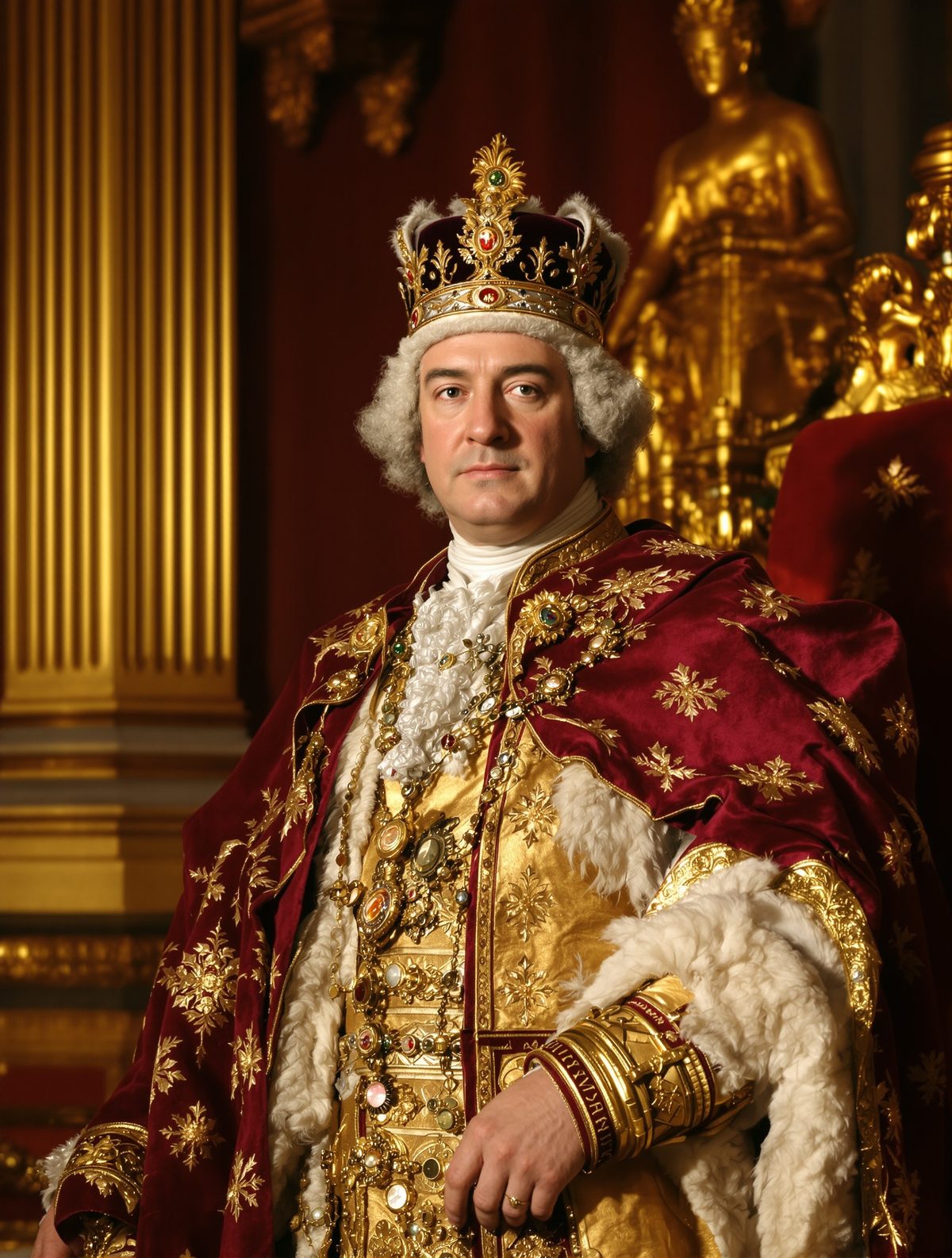
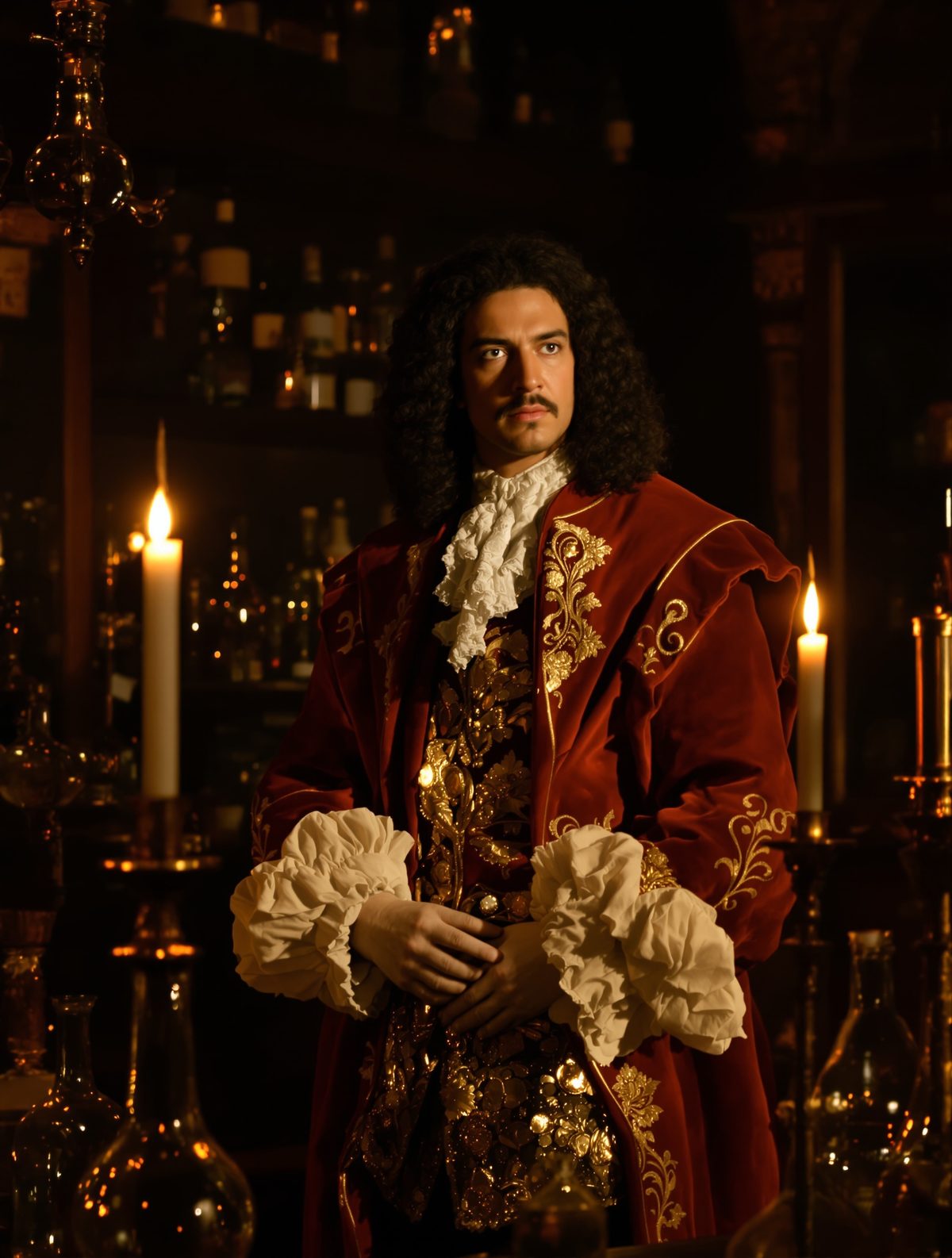
Behind the gilded doors of Whitehall Palace in the 1670s, candlelight flickered against glass vials filled with mysterious substances. The acrid smell of sulfur hung in the air as King Charles II, sleeves rolled up and hands stained with chemicals, bent over his secret laboratory equipment. What his courtiers dismissed as royal eccentricity was actually a passionate pursuit of the emerging science of chemistry—one that would nearly cost the Merry Monarch his life and plunge the nation into chaos.
While his subjects slept, Charles II transformed a hidden chamber of his palace into something that would have been unrecognizable to previous generations of monarchs: a fully equipped chemical laboratory. Here, the king who had charmed his way back from exile conducted experiments that his own courtiers whispered might be witchcraft, pushing the boundaries of 17th-century science with a curiosity that was both admirable and dangerously reckless.
The Royal Alchemist's Secret Sanctuary
Charles II's fascination with what was then called "chymistry" began during his years of exile in France, where he encountered some of Europe's leading natural philosophers. Upon his restoration to the throne in 1660, the king brought this passion back to England, establishing what may have been the most unusual royal hobby in British history. Deep within Whitehall Palace, he created a sophisticated laboratory that would have impressed even the most dedicated scholars of the day.
The king's secret chamber was fitted with furnaces, distillation apparatus, and shelves lined with bottles containing mercury, antimony, sulfur, and other volatile substances. Expensive and exotic chemicals were imported from across Europe at considerable cost to the royal purse. Charles invested in the finest equipment available, including specialized glassware and precision instruments that reflected his serious commitment to scientific inquiry.
What made these experiments particularly intriguing—and alarming to his courtiers—was the king's preference for conducting them in the dead of night. While his court slumbered, Charles would slip away to his laboratory, sometimes remaining there until dawn. The sight of flickering lights and strange odors emanating from the sealed chamber led to whispered speculation among servants and nobles alike about what their monarch was truly doing behind those locked doors.
Midnight Experiments and Royal Obsession
Charles's chemical pursuits went far beyond mere dabbling. He approached his experiments with the methodical precision of a trained natural philosopher, keeping detailed notes and corresponding with leading scientists of his era. His particular fascination lay with mercury and sulfur—two elements that featured prominently in both legitimate chemistry and the more mystical pursuit of alchemy.
The king's midnight sessions often involved heating these volatile substances to extreme temperatures, attempting to unlock their secrets through careful observation and experimentation. Mercury, with its peculiar liquid properties and silvery appearance, held particular appeal for 17th-century chemists who believed it might hold keys to understanding the fundamental nature of matter itself.
These nocturnal chemical adventures reflected Charles's broader intellectual curiosity. The same monarch who founded the Royal Society and patronized Christopher Wren's architectural genius was personally committed to advancing human knowledge through direct experimentation. His hands-on approach to science was revolutionary for a king, demonstrating that even absolute monarchs could contribute meaningfully to scholarly pursuits.
However, Charles's enthusiasm occasionally outpaced his caution. Working alone in his laboratory, without the safety protocols that modern chemists take for granted, he repeatedly exposed himself to dangerous fumes and explosive reactions. The combination of volatile chemicals, high temperatures, and inadequate ventilation created conditions that would horrify contemporary scientists.
The Night That Nearly Changed History
The most dramatic incident in Charles's chemical career occurred during one particularly ambitious midnight experiment in the mid-1670s. While attempting to combine mercury and sulfur under intense heat—possibly seeking to create what alchemists called the "red king"—the king triggered a violent reaction that filled his laboratory with toxic fumes and came dangerously close to causing a catastrophic explosion.
Contemporary accounts, though limited by the secretive nature of the king's activities, suggest that Charles was overcome by the poisonous vapors released during this experiment. Mercury fumes, in particular, could cause severe respiratory distress, neurological symptoms, and potentially fatal poisoning. The king apparently staggered from his laboratory in a state that alarmed the palace guards who discovered him.
For several anxious hours, the fate of the Stuart dynasty hung in the balance as royal physicians attended to their monarch's mysterious ailment. Charles's condition was serious enough to cause genuine concern about his survival, though the exact details of his symptoms remain unclear due to the secretive circumstances surrounding the incident.
The near-disaster served as a stark reminder of how the king's scientific passion could have unintended consequences for the entire nation. With no legitimate heir and the succession question unresolved, Charles's death from a laboratory accident could have plunged England back into the political chaos that had marked the previous decades.
Courtly Whispers and Royal Reputation
News of the king's chemical mishap, despite attempts to keep it quiet, inevitably spread through the gossipy corridors of Whitehall Palace. To many courtiers, the incident confirmed their worst suspicions about their monarch's mysterious nighttime activities. In an age when the line between chemistry and magic remained blurred, some genuinely wondered whether their king was practicing witchcraft.
The distinction between legitimate natural philosophy and supernatural practices was not always clear in the 17th century. Many chemical processes appeared magical to contemporary observers, and the transformation of base metals through heat and chemical combination seemed to border on sorcery. Charles's secretive approach to his experiments only fueled speculation about the true nature of his activities.
Some members of the court worried that the king's chemical pursuits reflected poorly on royal dignity. The image of their monarch, hands stained with chemicals and clothes reeking of sulfur, hardly matched traditional concepts of regal bearing. Others expressed more practical concerns about the safety risks posed by having volatile chemicals and open flames within the palace walls.
Despite the criticism and concern, Charles refused to abandon his scientific interests entirely. However, the near-fatal incident did lead to some modifications in his approach, including better ventilation in his laboratory and occasionally working with more knowledgeable assistants rather than experimenting entirely alone.
A Scientific Legacy Ahead of Its Time
Charles II's dangerous dedication to chemistry, despite its risks, reflected a remarkable aspect of his character that often gets overshadowed by his reputation as the pleasure-loving "Merry Monarch." His willingness to personally engage with cutting-edge science demonstrated an intellectual curiosity that would influence the development of British scientific culture for generations to come.
The same spirit that drove Charles to risk his life mixing chemicals in a midnight laboratory also inspired his founding of the Royal Society, his patronage of scientific research, and his support for the rebuilding of London according to the latest architectural principles. His reign marked a crucial period in the emergence of modern scientific thinking, and his personal example helped legitimize experimental inquiry among the English aristocracy.
Today, as we watch members of the royal family champion environmental science, medical research, and technological innovation, we can trace a direct line back to Charles II's fumbling but passionate experiments in that secret Whitehall laboratory. His near-fatal encounter with mercury fumes serves as a reminder that the pursuit of knowledge has always required courage—sometimes more courage than wisdom. The king who nearly poisoned himself in service of scientific discovery embodied the same spirit of curiosity and dedication that continues to drive human progress today, proving that even the most perilous royal hobbies can leave lasting legacies of genuine value.