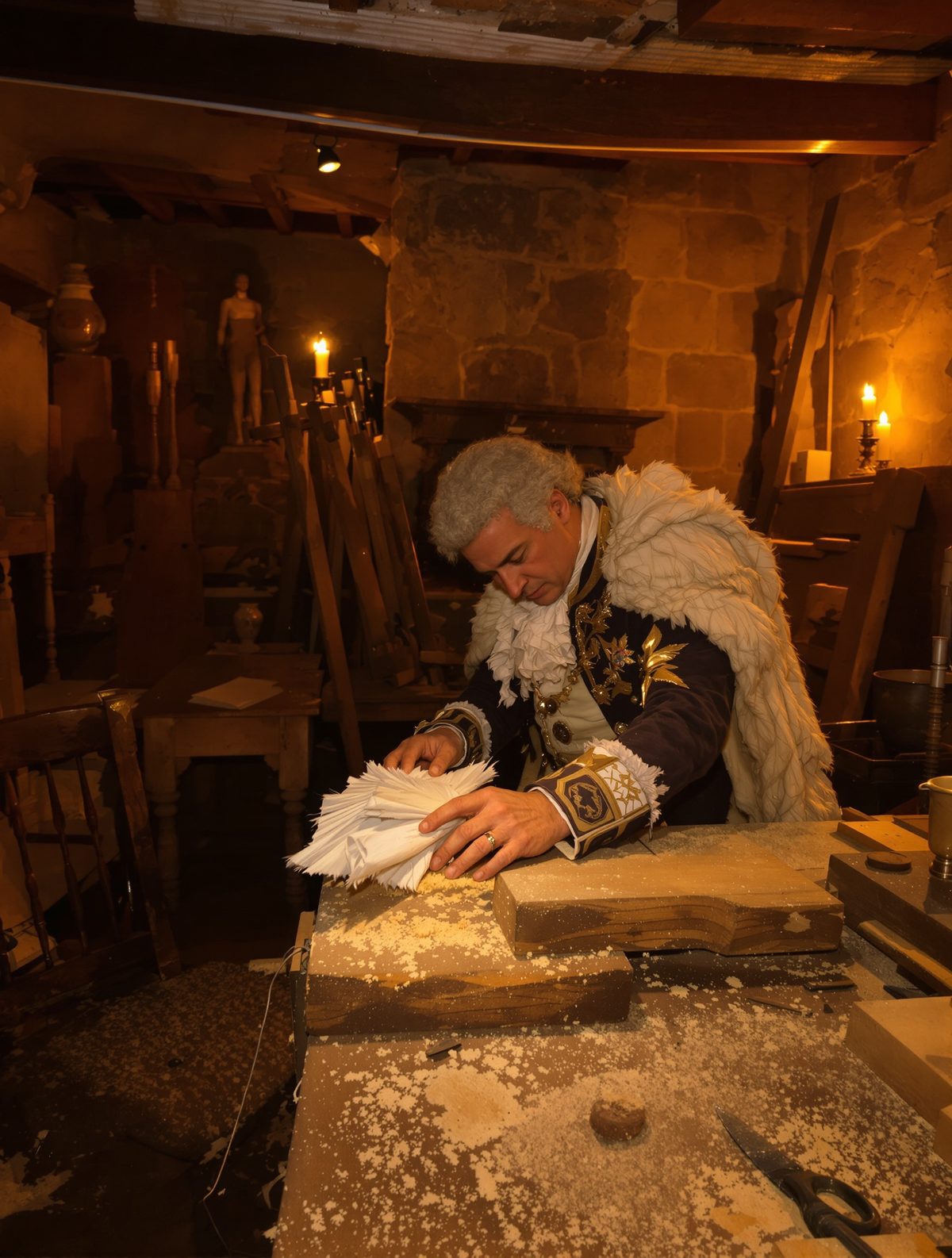
While his courtiers whispered about his growing madness in the gilded halls above, King George III found his truest moments of clarity in the most unexpected of places. Deep beneath the grandeur of Windsor Castle, in a basement workshop filled with wood shavings and the scent of pine, Britain's monarch discovered a sanctuary that scandalized his aristocratic court. Here, away from the suffocating protocols of royal life, the king who would lose America—and eventually his mind—created something beautiful with his own hands.
The King's Undignified Passion
In the rigid hierarchy of 18th-century court life, manual labor was considered beneath anyone of noble birth, let alone the sovereign himself. Yet George III, who ascended to the throne in 1760 at just 22 years old, harbored a secret passion that would have made his grandfather George II turn in his grave. The young king was utterly fascinated by carpentry, metalwork, and all manner of practical crafts that his courtiers deemed thoroughly undignified.
The discovery of the king's clandestine workshop sent shockwaves through the royal household. Imagine the horror of Lord Chamberlains and Ladies-in-Waiting upon learning that their sovereign—appointed by Divine Right to rule over a vast empire—was spending his precious hours wielding hammers and chisels like a common tradesman. The very notion challenged everything the aristocracy held sacred about the natural order of society.
The basement workshop at Windsor Castle became George III's refuge from the mounting pressures of his reign. Here, surrounded by his carefully arranged tools and works in progress, the king could escape the endless stream of ministers, courtiers, and political crises that plagued his waking hours. The repetitive motions of planning, sawing, and shaping wood provided a meditative quality that the formal rituals of court life could never offer.
A King's Hands-On Education
George III's passion for craftsmanship wasn't merely a royal whim—it reflected his genuine belief in the value of practical knowledge and honest work. Unlike many of his predecessors who viewed themselves as divinely removed from their subjects' daily concerns, George sought to understand the skills and trades that formed the backbone of his kingdom. He studied agriculture with the same intensity as statecraft, earning himself the affectionate nickname "Farmer George" from his subjects.
The king's workshop contained an impressive array of tools and equipment, much of it obtained through discreet channels to avoid the inevitable court gossip. Historical records suggest that George became remarkably skilled, creating furniture pieces that displayed genuine craftsmanship rather than mere royal dabbling. Some courtiers, grudgingly impressed by the quality of his work, found themselves quietly commissioning pieces from their sovereign—though such requests were handled with the utmost discretion.
This hands-on approach to learning extended beyond woodworking. George III maintained correspondence with leading scientists and inventors of his day, including meetings with the famous clockmaker John Harrison. The king's genuine curiosity about mechanical processes and his willingness to get his hands dirty earned him respect among Britain's emerging class of skilled craftsmen and early industrialists, even as it horrified his traditional courtiers.
Sanctuary in Sawdust
As the pressures of kingship mounted—the loss of the American colonies, ongoing conflicts with France, and increasing political turmoil at home—George III's workshop became more than a hobby; it became a lifeline. The physical act of creation provided a stark contrast to the abstract nature of royal duties, where decisions were made through intermediaries and results were often frustratingly intangible.
Contemporary accounts suggest that the king's most productive periods in his workshop often coincided with his most troubled times as a monarch. When political crises threatened to overwhelm him, George would retreat to his basement sanctuary, emerging hours later with sawdust in his hair and a renewed sense of purpose. The simple satisfaction of transforming raw timber into something beautiful and useful provided a therapeutic counterbalance to the complex machinations of 18th-century politics.
The workshop also offered the king a rare opportunity for solitude in a life otherwise governed by constant public scrutiny. Royal protocol demanded that the monarch be surrounded by attendants at virtually every moment, but the basement workshop became one of the few places where George III could truly be alone with his thoughts—and his tools.
The Court's Scandalous Whispers
The aristocratic establishment's reaction to their sovereign's manual pursuits revealed the deep class anxieties of Georgian society. In an era when social mobility was limited and class distinctions were considered divinely ordained, the sight of their king engaged in "common" labor threatened the very foundations of the social order. If the monarch could lower himself to carpentry, what did that mean for the carefully maintained distinctions between nobility and commoners?
Court gossip about the king's workshop reached fever pitch during the periods of his mental illness, which modern historians believe may have been caused by porphyria, a hereditary condition affecting the nervous system. Courtiers whispered that his "undignified" pursuits were both a symptom and a cause of his deteriorating mental state. Some suggested that the king's hands-on approach to learning was itself a form of madness, incompatible with proper royal deportment.
Yet the irony was unmistakable: while his critics questioned the king's sanity in his workshop, it was often in those very moments of creative focus that George III displayed his clearest thinking and most rational behavior. The rhythmic, purposeful work seemed to calm the storms in his mind rather than aggravate them.
Legacy of the Royal Craftsman
King George III's secret workshop represents a fascinating glimpse into the personal struggles of monarchy—the eternal tension between public duty and private fulfillment, between inherited privilege and earned accomplishment. In our modern era, when members of the Royal Family regularly engage with charitable causes and pursue personal interests, it's difficult to imagine the scandal that once surrounded a king who simply wanted to build furniture with his own hands.
The basement workshop at Windsor Castle, long since converted to other purposes, stands as a testament to one of the most human moments in royal history. Here was a king who, despite losing an empire and eventually his mental faculties, found profound meaning in the simple act of creation. His story reminds us that even those born to the highest positions sometimes find their greatest peace in the most humble pursuits—and that the measure of a person's worth isn't found in their title, but in their willingness to find purpose and meaning wherever they can, even in sawdust and wood shavings.