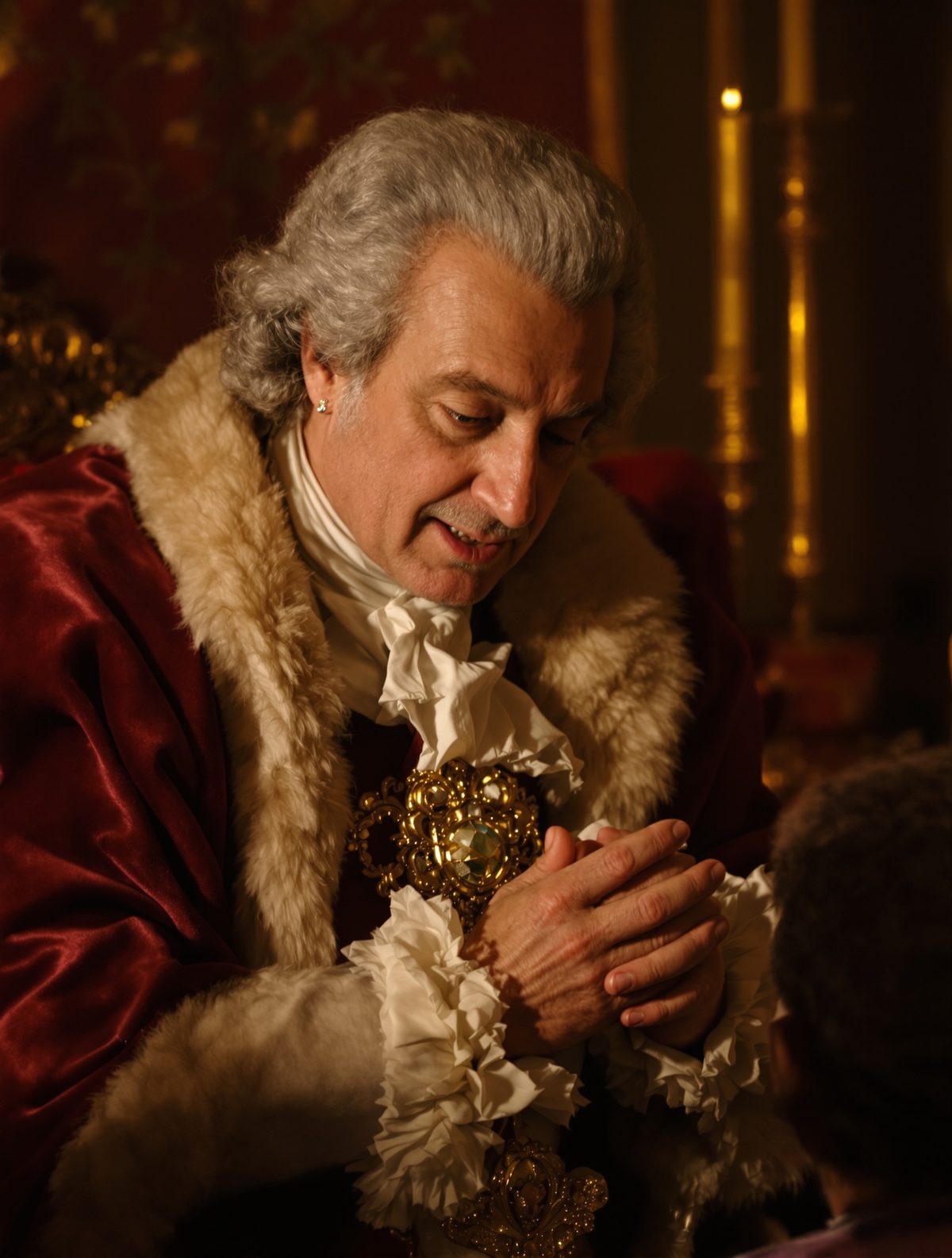
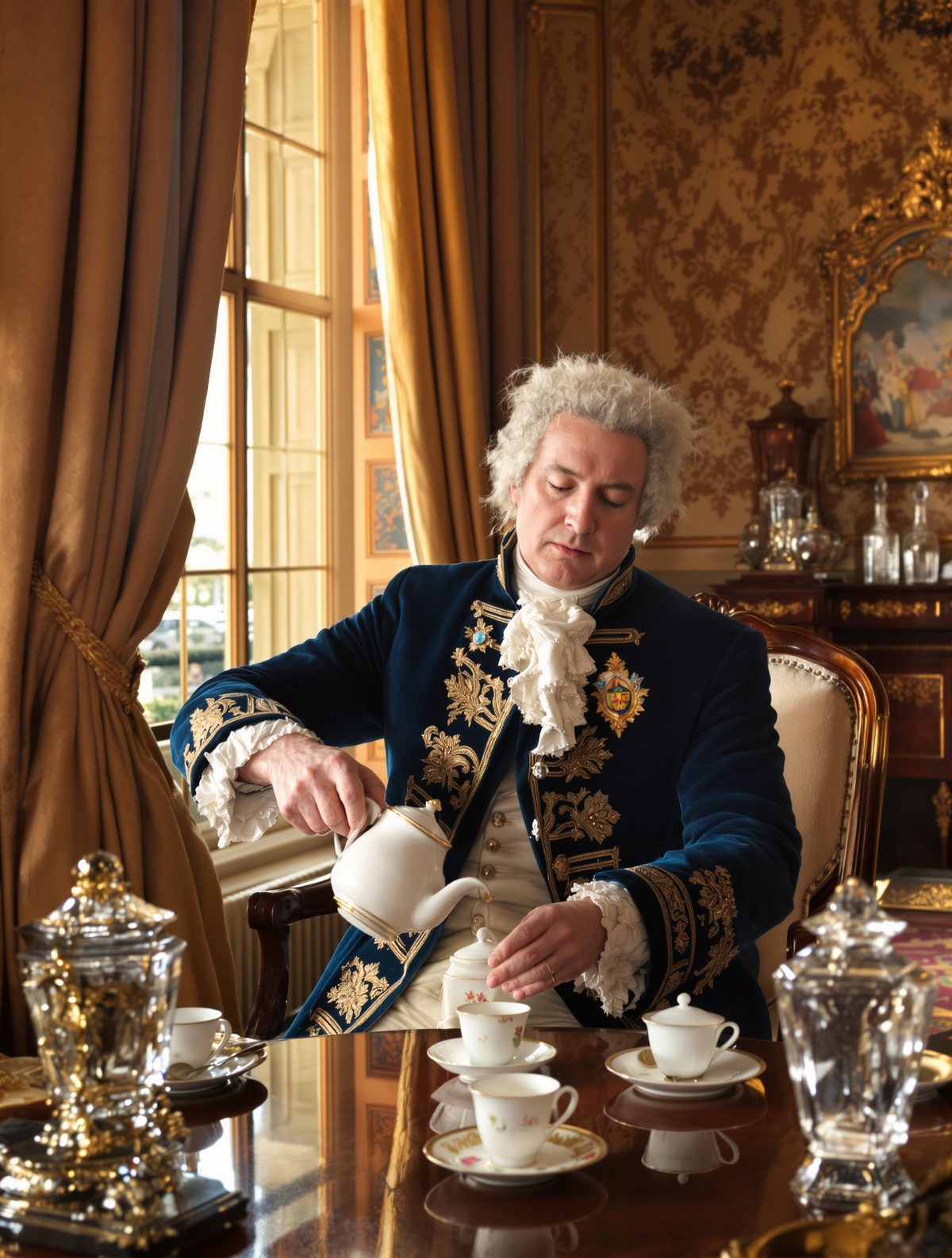
In the gilded corridors of Windsor Castle during the winter of 1788, something extraordinary was unfolding behind closed doors. While courtiers whispered anxiously about their sovereign's deteriorating condition, King George III was discovering an unexpected pathway back to clarity—one delicate porcelain cup at a time. What his bewildered physicians initially dismissed as another symptom of his mysterious affliction would prove to be the king's most ingenious act of self-preservation.
When the King's Mind Began to Fracture
The first signs appeared in October 1788, during what should have been routine royal business at Windsor. George III, the monarch who had already weathered the loss of the American colonies and numerous political crises, began exhibiting behavior that alarmed even his closest attendants. He spoke rapidly and incoherently for hours, suffered from severe abdominal pain, and displayed episodes of aggression that were entirely foreign to his typically measured character.
The royal household was thrown into chaos. Queen Charlotte, devoted after nearly three decades of marriage, watched helplessly as her husband transformed before her eyes. The king who had once been known for his methodical daily routines and scholarly pursuits now seemed trapped in a world of confusion and torment. Parliament began discussing the unthinkable—a regency that would effectively remove George III from power.
Dr. Francis Willis, the controversial physician summoned to treat the king, arrived at Windsor with revolutionary ideas about mental illness. Unlike many of his contemporaries who believed in harsh restraints and intimidation, Willis advocated for more humane treatment methods. Yet even he was puzzled when the king began insisting on a peculiar daily ritual that seemed to contradict his otherwise erratic behavior.
The Sacred Ceremony Emerges
It began simply enough. During one of his more lucid moments, King George III requested that tea be brought to his chambers—not for himself, but so that he might serve his medical attendants. Dr. Willis and his colleagues exchanged uncertain glances. The King of England, in his silk nightgown and with trembling hands, was arranging delicate china cups on a silver tray with the focused precision of a practiced host.
The ritual became sacred to the troubled monarch. Each afternoon, regardless of his mental state that morning, George III would insist on preparing and serving tea to his doctors, attendants, and occasionally to visiting family members. He would carefully measure the tea leaves, wait for the precise moment when the water reached the proper temperature, and pour with the ceremonial gravity befitting a royal function.
What struck observers was the transformation that occurred during these moments. The man who might have spent the morning in incoherent rambling would suddenly become the picture of royal composure. His hands steadied, his speech cleared, and for those precious minutes, he was once again the sovereign who had ruled Britain for nearly three decades.
The physicians initially dismissed it as another eccentricity, but Dr. Willis, ever the careful observer, began to notice patterns. The king's episodes of distress seemed less severe on days when the tea ceremony was observed without interruption. Conversely, when palace routine prevented the ritual, George III's condition appeared to deteriorate more rapidly.
A Lifeline to Royal Identity
The tea ceremony represented far more than a simple daily habit—it became the king's anchor to his identity as monarch and as a functioning human being. In the act of serving others, George III could temporarily reclaim the sense of purpose and control that his illness had stripped away. The familiar weight of the teapot, the predictable sequence of preparation, the social interaction it facilitated—all provided structure in a mind that had lost its moorings.
Dr. Willis began to encourage and protect these moments, recognizing their therapeutic value long before the medical establishment would understand the importance of routine and meaningful activity in treating mental illness. He instructed the royal household to ensure that proper tea service was always available and that the king's ritual was never to be interrupted or dismissed as unimportant.
The ceremony also served a crucial social function. During his illness, George III became increasingly isolated as courtiers and even family members struggled to interact with him. But the tea ritual created a safe space for connection. Queen Charlotte found that she could reach her husband more easily during these moments, engaging him in gentle conversation about their children or memories of happier times.
Palace records from this period, though discrete about the king's condition, hint at the importance placed on these daily gatherings. Orders for the finest tea leaves continued to arrive regularly, and specific instructions were given to ensure that the king's preferred china service remained available in his private chambers.
The Wisdom Hidden in Apparent Madness
Modern medical understanding suggests that King George III may have suffered from porphyria, a hereditary condition that can cause both physical symptoms and periods of mental disturbance. While 18th-century medicine could offer little effective treatment, the king's instinctive creation of a structured, purposeful ritual demonstrated a remarkable form of self-therapy.
The act of serving tea engaged multiple aspects of cognitive function—memory, fine motor skills, social awareness, and executive planning. It required the king to focus on the needs of others, temporarily shifting attention away from his own distress. The familiar sensory experiences—the aroma of the tea, the warmth of the cups, the comfortable weight of silver implements—likely provided grounding during episodes when reality felt uncertain.
Dr. Willis's decision to honor and protect this ritual was remarkably progressive for its time. While other physicians of the era might have seen the king's insistence on ceremony as a symptom to be eliminated, Willis recognized it as a coping mechanism to be preserved and strengthened.
The tea ceremony continued throughout George III's periodic episodes of illness, which recurred several times over the following decades. Each time, the ritual remained a constant—a thread of continuity that helped weave together the fragments of a brilliant but troubled mind.
Legacy of the Royal Tea Ceremony
George III's intuitive understanding of his own therapeutic needs offers a poignant glimpse into the human side of monarchy. Here was a man who had lost much—his American colonies, his political influence, and periodically his mental clarity—yet who found a way to maintain dignity and purpose through the simplest of acts.
The story resonates today as we better understand the importance of routine, purpose, and social connection in maintaining mental health. What the 18th century might have dismissed as the eccentric behavior of a mad king, we now recognize as a sophisticated form of self-care. George III's tea ceremony was, in its way, as revolutionary as any medical treatment of his era.
The image of the King of England, carefully pouring tea for his doctors with shaking but determined hands, reminds us that resilience often emerges in unexpected forms. In a world that demanded perfection from its monarchs, George III found sanity in service, clarity in ceremony, and strength in the simple act of caring for others—even when he could barely care for himself.
Perhaps most remarkably, his story suggests that even in our darkest moments, we possess an innate wisdom about what we need to heal. Sometimes salvation comes not from grand gestures or medical miracles, but from the quiet dignity of sharing a cup of tea.