King Henry I: The Lion of Justice
King Henry I of England, known as the Lion of Justice, was far from the monarch typically put on a pedestal. His reign, which spanned from 1100 to 1135, was marked by a formidable combination of ruthlessness and insight. Henry's rule was a testament to his ability to balance power with the intricacies of medieval governance. His court was awe-inspiring, filled with learned scholars and skilled warriors, yet the king himself was both feared and admired for his unwavering authority and legal reforms, which earned him his storied epithet.
However, despite his larger-than-life presence in matters of state, Henry's personal life contained weaknesses that would prove his undoing. His particular fondness for lampreys, a selection so reviled by his physicians, led to his untimely demise. This story of lavish indulgence not only illuminates the intersection of personal preferences and health but also shows the risks even royal prerogatives could not mitigate.
The Court and the Lamprey
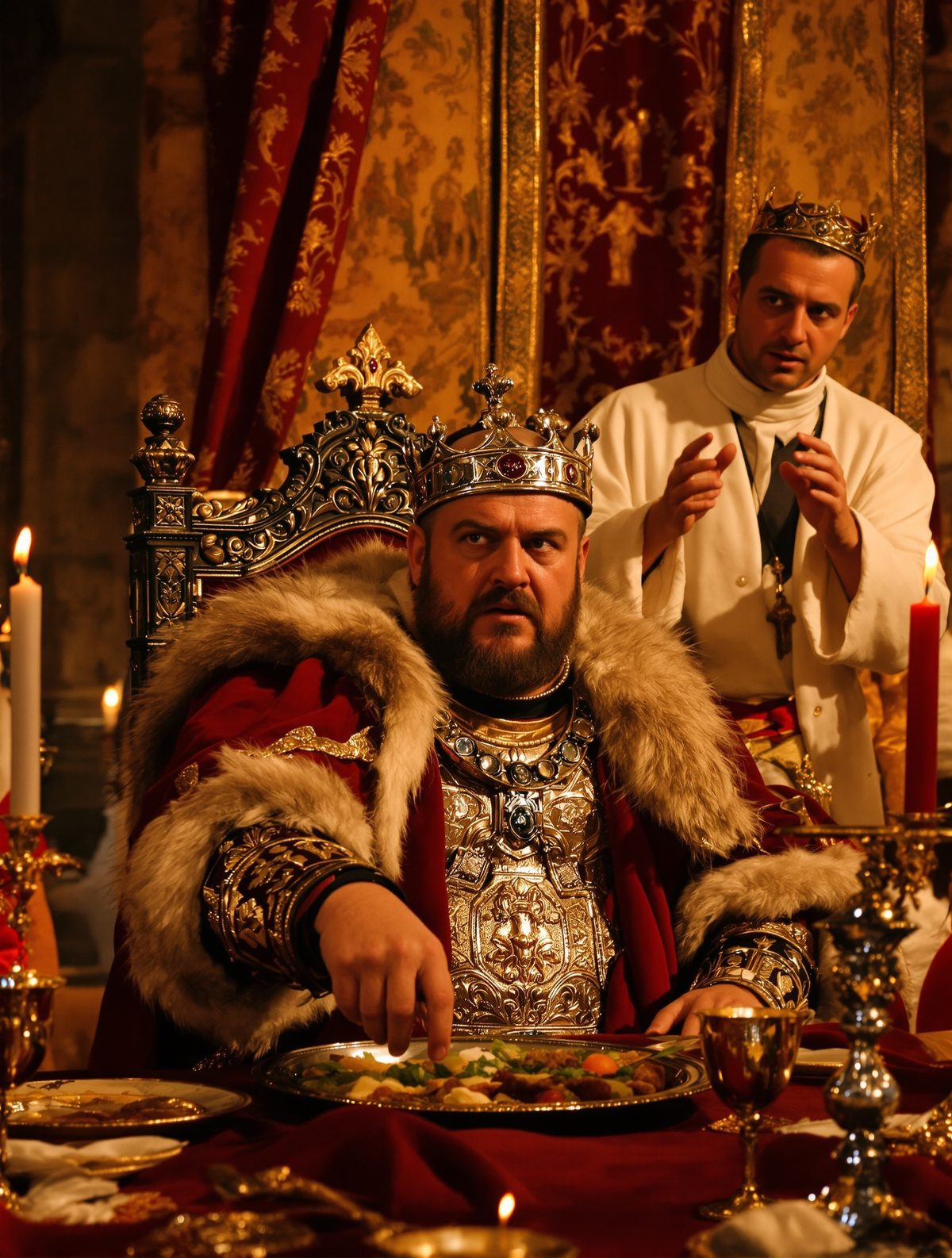
At the heart of any medieval kingdom was the royal court, and Henry's was no exception. The court was a bustling hub of political activity, cultural exchange, and culinary decadence. Banquets were events of ceremonious importance, a display of power and a testament to wealth. Here, amidst rich tapestries and the glitter of candlelit halls, sat the king — his presence as commanding at the banquet as it was on the field of battle.
Among the dishes presented at such feasts, the lamprey made frequent appearances. These eel-like fish, long considered a delicacy, were particularly favored by Henry. However, while the king’s love for lampreys was well-known, so too were the dangers of consuming this particular dish in excess. Historians suggest that Henry’s appetite for lampreys was legendary, to the point where his own doctors had pleaded with him to moderate his indulgence, warning of the severe digestive issues they could cause.
Note the irony in how a monarch with power over life and death could not escape the repercussions of his own gustatory passions.
Feast of Fate
December 1135 was to be a month of festive joy. It marked the advent of winter — a time rich with tradition and celebration. Despite the confines of medieval medicine and the persistent warnings from his physicians, Henry was resolute in his refusal to abstain from his favorite dish. He convened a grand feast devoid of worry, determined to indulge in the seasonal festivities.
According to historical accounts, it was in Normandy, at the regal fortress of Lyons-la-Forêt, that Henry II would succumb to his final, fatal repast. Ignoring the urgent entreaties of those mindful of his health, the King supped upon lampreys with abandon. It is said that the very richness which so delighted his palate ultimately overwhelmed him. In the following days, as the court moved with mourning and disbelief, King Henry I breathed his last — a victim of his own royal appetite.
A Kingdom Destabilized
The death of King Henry I did not simply end with a king lost to his own indulgence; it also precipitated a full-blown succession crisis. His only legitimate son, William Adelin, had tragically died years earlier in the White Ship disaster, leaving the English throne without a clear heir. This lack of succession planning opened England to a period of civil strife, known as The Anarchy, where his daughter Matilda and his nephew Stephen plunged the kingdom into turmoil over rightful claims to the throne.
This tumultuous period underlines how the personal choices of a monarch could have far-reaching effects, exacerbating already fraught tensions within the realm. Critics of the monarchy often cite these succession crises as symbols of instability; however, the enduring loyalty and dedication displayed by Henry’s supporters kept the flame of regal heritage alive, ensuring that royal authority would, in time, find stability.
The Lessons of Legacy
King Henry I’s reign was defined by profound achievements and notable flaws, reflecting the complex nature of leadership and legacy. The Lion of Justice’s ultimate fall to gastronomic indulgence serves as a poignant reminder of human mortality, a narrative as relevant today as it was in the 12th century. Even in our contemporary world, where power and pleasure often dance a precarious duet, Henry’s demise offers us a mirror through which to examine our desires and the obligations of those who lead.
In commemorating Henry I, we honor not only the reforms and tenacity that established strong monarchic traditions but also the caution that history offers in the appetites of humanity. Today, as we reflect on the past, we are reminded of what truly sustains the spirit of leadership: wisdom in moderation, the courage to uphold justice, and the grace to govern with both strength and humility.
Though centuries have passed, the story of King Henry I and his fatal feast of lampreys continues to enchant and instruct, resonating through time as a testament to the enduring allure and challenges of the royal life.