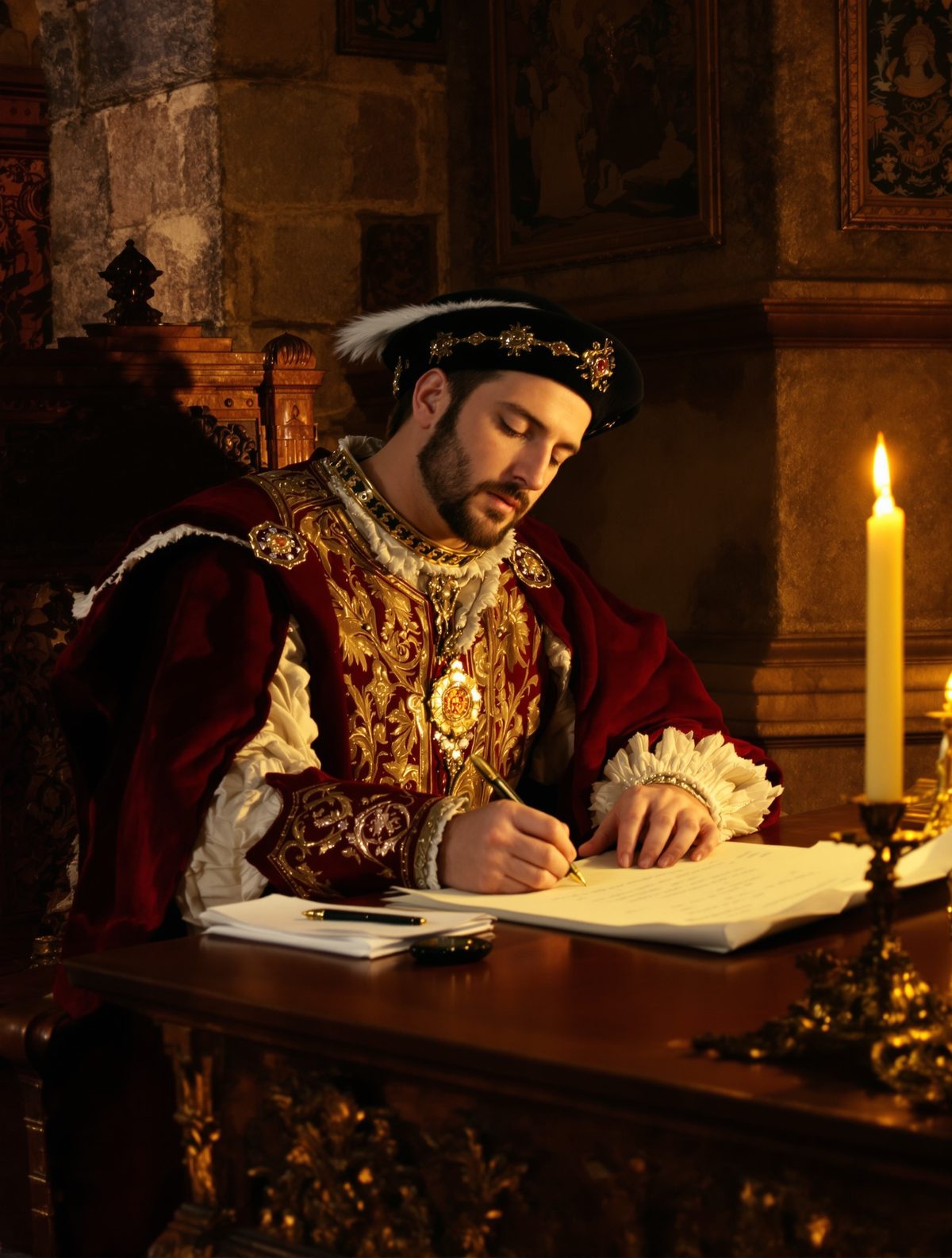
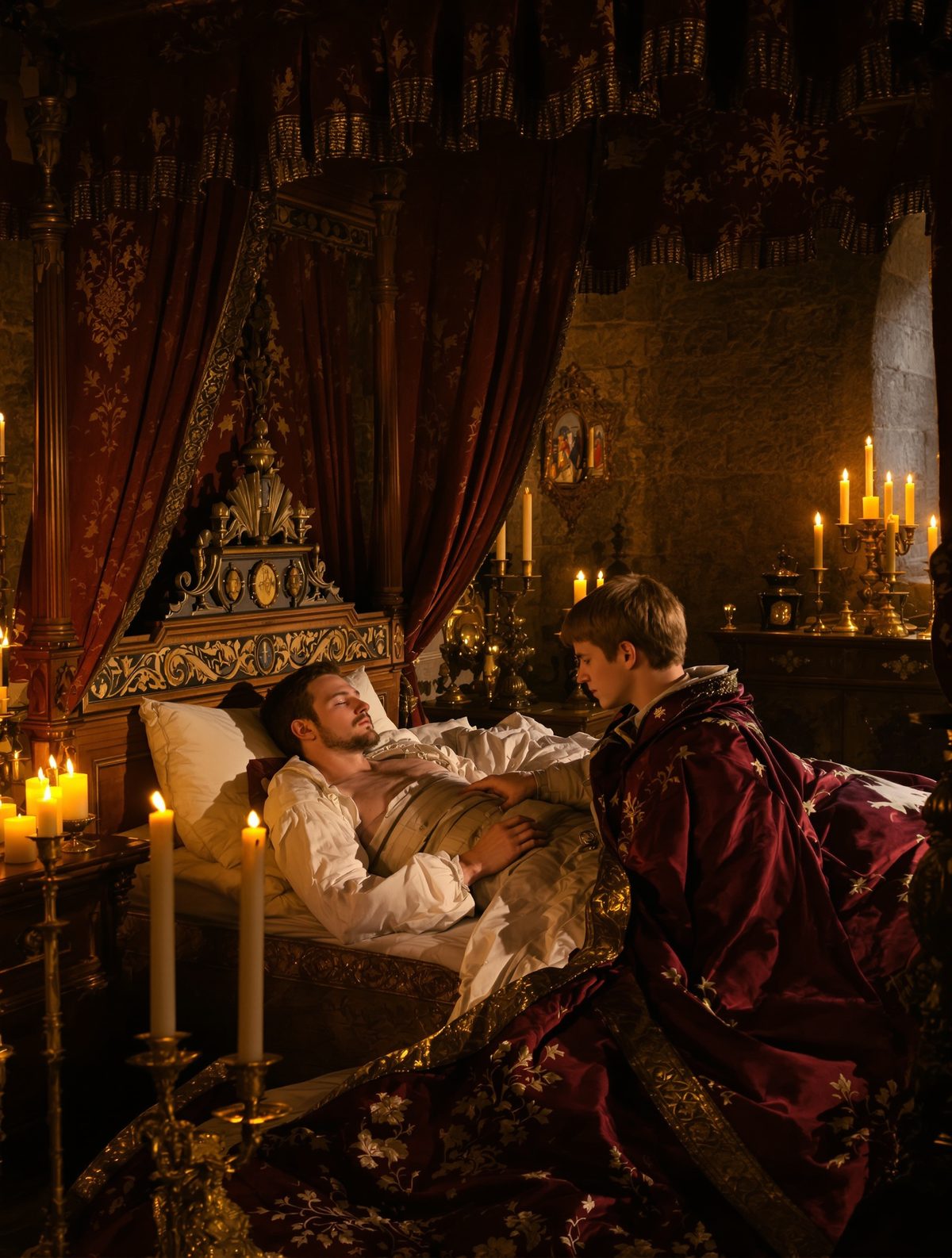
In the cold stone chambers of Ludlow Castle in April 1502, fifteen-year-old Prince Arthur of Wales lay dying. Just five months earlier, he had been a radiant bridegroom, wedding the Spanish princess Catherine of Aragon in a spectacular ceremony at St Paul's Cathedral that had cemented England's alliance with one of Europe's greatest powers. Now, as spring bloomed across the Welsh borderlands, the heir to the Tudor throne was slipping away from a mysterious illness that would remain undiagnosed for centuries. In those final, fevered hours, Arthur would extract a promise from his younger brother Henry that seemed like a simple act of brotherly devotion—but would ultimately ignite one of the most explosive royal dramas in English history.
A Dynasty's Golden Boy
Prince Arthur had been born to greatness in ways that few royal children ever experience. Named after the legendary King Arthur to emphasize the Tudor dynasty's connection to Britain's mythical golden age, he was the embodiment of his father Henry VII's ambitious vision for England's future. From his birth at Winchester Castle—deliberately chosen as the supposed site of Camelot—Arthur represented hope, continuity, and the promise that the devastating Wars of the Roses were truly over.
The young prince had been groomed for kingship with meticulous care. His education was overseen by some of the finest minds in Europe, and by age eleven, he was already being prepared for his role as Prince of Wales. When he was sent to Ludlow Castle to preside over the Council of Wales, it marked the beginning of what everyone assumed would be a long and glorious reign as Arthur I of England.
His marriage to Catherine of Aragon in November 1501 had been the social event of the decade. The Spanish princess, daughter of the formidable Queen Isabella and King Ferdinand, brought with her an enormous dowry and the promise of powerful continental alliances. Contemporary accounts describe a magnificent ceremony followed by weeks of tournaments, feasts, and celebrations that showcased the Tudor court at its most splendid.
Yet within months of this triumph, everything would change. The exact nature of Arthur's final illness remains one of history's medical mysteries—contemporaries described it as a "sweating sickness," possibly influenza or tuberculosis, though some modern historians have suggested everything from diabetes to testicular cancer. What we know for certain is that it struck swiftly and mercilessly.
A Brother's Sacred Vow
As Arthur's condition worsened, urgent messages were dispatched to Henry VII and Queen Elizabeth of York. The king, devastated by the prospect of losing his heir, sent physicians racing to Wales, while preparations were made for other family members to travel to Ludlow. Among them was Arthur's younger brother Henry, then just ten years old but already showing signs of the commanding presence that would later define his reign.
The scene at Arthur's deathbed has been reconstructed from various contemporary sources, though the exact details remain somewhat shrouded in the discretion typical of royal death chambers. What emerges clearly is that Arthur, perhaps recognizing the political catastrophe his death would represent, was deeply concerned about the fate of his young bride Catherine. The Spanish princess would be left in an impossible position—neither wife nor widow in any meaningful sense, her future entirely dependent on the goodwill of her in-laws.
It was then, according to historical accounts, that Arthur extracted from his little brother a solemn promise: that Henry would marry Catherine when he came of age, ensuring her protection and maintaining the crucial Spanish alliance. For young Henry, still more concerned with his lessons and games than with affairs of state, this seemed like a simple matter of family loyalty. He readily agreed to honor his dying brother's wishes.
Arthur died on April 2, 1502, at Ludlow Castle. His death sent shockwaves throughout Europe and left the Tudor dynasty in a precarious position, dependent now on a single surviving male heir who had never been prepared for kingship.
The Promise Fulfilled
The political ramifications of Arthur's death were immediate and complex. Catherine of Aragon found herself in diplomatic limbo—her marriage had been so brief that questions arose about whether it had even been consummated. This seemingly intimate detail would later become a matter of international importance, as it would determine whether a future marriage to Henry would require papal dispensation.
For seven years, Catherine remained in England in an increasingly uncomfortable position. Her parents, Ferdinand and Isabella, were reluctant to write off their investment in an English alliance, while Henry VII was equally unwilling to return Catherine's dowry. The widowed princess lived in relative poverty, her status uncertain and her future dependent on the goodwill of a court that seemed increasingly indifferent to her plight.
Everything changed when Henry VII died in 1509 and his younger son ascended the throne as Henry VIII. One of the new king's first acts was to fulfill the promise made to his dying brother nearly seven years earlier. Henry married Catherine in a private ceremony just weeks after his coronation, presenting it to his subjects and to Europe as both a political masterstroke and an act of personal honor.
The early years of their marriage appeared to vindicate Arthur's dying wish. Catherine proved to be an intelligent and capable queen, popular with the English people and respected by foreign courts. She served as regent when Henry campaigned in France, demonstrating the political acumen that had made the Spanish alliance so attractive in the first place.
When Sacred Promises Become Royal Nightmares
Yet by the 1520s, the promise that had seemed so simple in that Ludlow death chamber had become Henry VIII's greatest obsession and England's most consuming crisis. Catherine had suffered multiple miscarriages and infant deaths, producing only one surviving child—Princess Mary. As Henry grew increasingly desperate for a male heir, he became convinced that his marriage was cursed, that God was punishing him for marrying his brother's widow despite papal dispensation.
The king's interpretation of Leviticus 20:21—"If a man shall take his brother's wife, it is an unclean thing...they shall be childless"—became the theological foundation for what would become known as the King's Great Matter. Henry argued that his marriage to Catherine had never been valid in God's eyes, regardless of papal approval, and that this divine disapproval explained their failure to produce sons.
Catherine, for her part, maintained throughout the crisis that her marriage to Arthur had never been consummated, making her a true maiden when she wed Henry. Her dignity and steadfast refusal to accept an annulment transformed her from a diplomatic pawn into a figure of international sympathy. The question of what had really happened between Arthur and Catherine during their brief months together became a matter of European importance, with emperors and popes weighing in on the intimate details of a teenage marriage that had ended nearly three decades earlier.
When Pope Clement VII refused to grant the annulment Henry demanded, the king took the revolutionary step of breaking with Rome entirely. The Act of Supremacy in 1534 declared Henry the supreme head of the Church of England, fundamentally altering the religious and political landscape of the nation. Arthur's deathbed promise, made with the best of intentions, had inadvertently set in motion the English Reformation.
The Echoes of a Medieval Vow
The promise extracted by a dying teenage prince in a Welsh castle chamber reverberates through English history in ways that continue to shape the monarchy today. Henry VIII's break with Rome, triggered by his desperate need to escape the marriage he had entered to honor his brother, established the principle that the English monarch serves as Supreme Governor of the Church of England—a role still held by Elizabeth II and inherited by her successors.
The human cost of Arthur's well-intentioned request was enormous. Catherine of Aragon spent her final years in lonely exile, refused even the comfort of seeing her daughter Mary. Henry's subsequent marriages brought execution to Anne Boleyn and Catherine Howard, while his pursuit of male heirs created the succession crises that would dominate English politics for generations.
Perhaps most poignantly, Arthur's death and the promise it inspired remind us how the most pivotal moments in royal history often hinge on the most human of emotions—a dying boy's concern for his young wife, a little brother's desire to honor his sibling's memory. In our age of calculated public relations and carefully managed royal messaging, there's something both touching and terrifying about the raw power of personal promises made in palace bedchambers. The story of Arthur's final request serves as an eternal reminder that even in the most gilded of cages, the royal family remains fundamentally human—and that their most human moments can reshape nations.