In the glittering ballrooms of Edwardian London, one accessory ruled supreme: Princess Alexandra's magnificent pearl chokers that rose like ivory towers around her elegant neck. From state dinners at Buckingham Palace to grand society gatherings, the Danish-born Princess of Wales never appeared without her signature towering strands of lustrous pearls. What the fashionable ladies of the court didn't know was that beneath those glamorous jewels lay a secret the future Queen Consort had carried since childhood—a scar that told the story of a frightening encounter with a dog that left her marked for life.
The Princess Who Started a Pearl Revolution
Princess Alexandra of Denmark arrived in England in 1863 as the radiant 18-year-old bride of Albert Edward, the future King Edward VII. With her porcelain complexion, warm smile, and innate sense of style, she quickly captivated British society. But it was her extraordinary pearl chokers that truly set her apart from every other royal lady of her era.
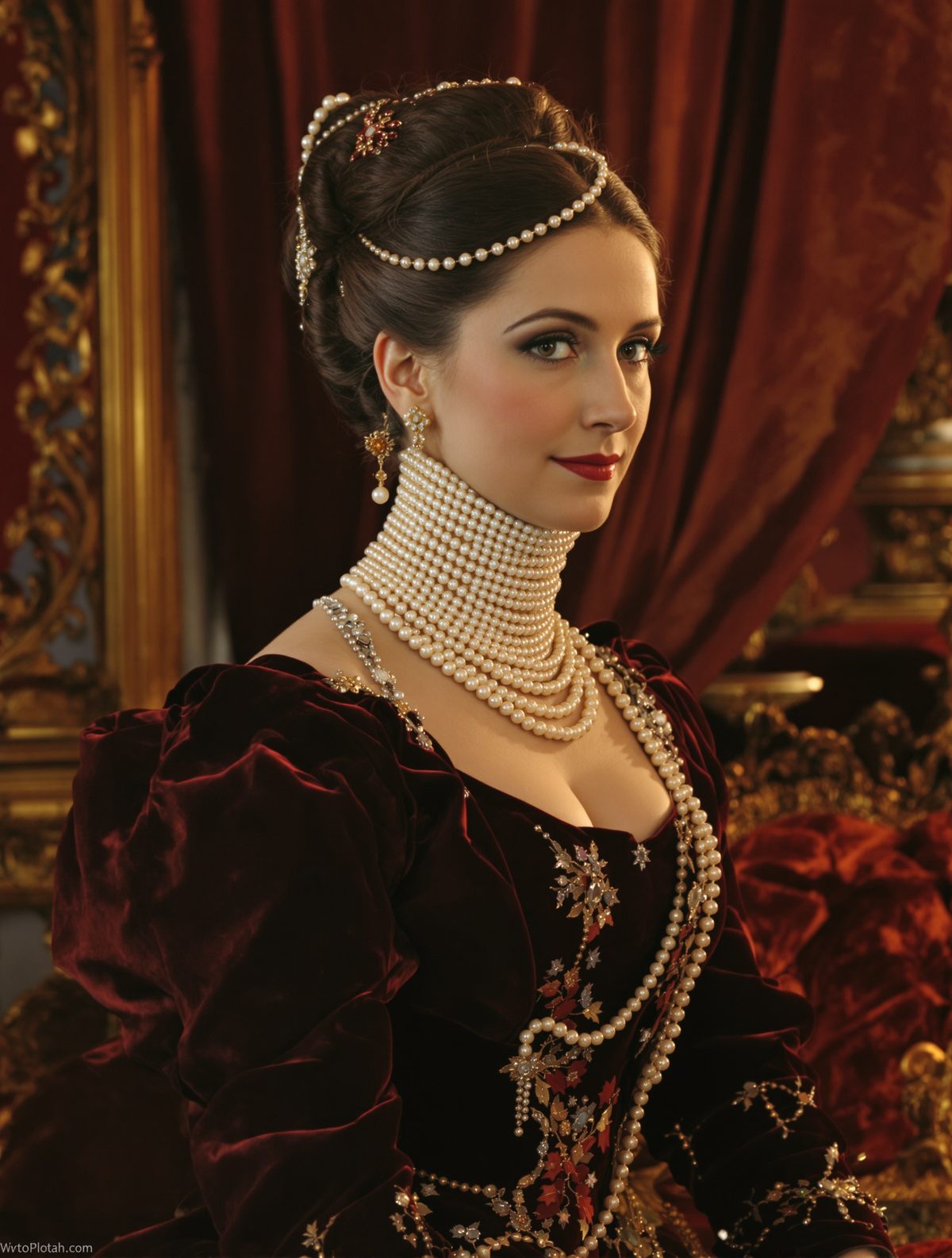
These weren't the delicate single strands favoured by previous generations of royal women. Alexandra's chokers were architectural marvels—sometimes featuring as many as ten or twelve rows of perfectly matched pearls that created an almost collar-like effect around her throat. The chokers were so distinctively tall that they required special engineering: hidden clasps, reinforced silk threading, and careful weight distribution to ensure comfort during long state occasions.
The Princess wore these pearl masterpieces with such confidence and elegance that they became her signature look. Society magazines of the day declared her pearl chokers the height of sophistication, and soon every fashionable lady in London was clamouring for similar designs. Jewellers reported unprecedented demand for multi-strand pearl necklaces, and the "Alexandra style" became synonymous with refined royal glamour.
A Childhood Secret Behind the Glamour
What none of Alexandra's admirers could have imagined was that this stunning fashion statement served a deeply personal purpose. As a young girl in Denmark, the future Princess had suffered a traumatic dog attack that left her with a prominent scar across her throat. The exact details of the incident remain somewhat unclear in historical records, as the Danish royal family maintained discretion about the accident, but the lasting impact on Alexandra was undeniable.
The scar was significant enough that it could not be easily concealed with powder or the light makeup techniques available to Victorian and Edwardian ladies. For a young woman destined for a life in the public eye—especially one who would become a style icon—this physical reminder of childhood trauma posed both practical and emotional challenges.
Rather than retreating from public life or allowing the scar to diminish her confidence, Alexandra made a brilliant decision that would define her look for decades to come. She would transform what could have been seen as a flaw into her greatest fashion asset. Those towering pearl chokers weren't just beautiful accessories; they were ingenious solutions that allowed her to appear in public with complete confidence and grace.
The Art of Royal Concealment
Alexandra's approach to hiding her scar was masterful in its execution. The height of her pearl chokers was precisely calculated to provide complete coverage while appearing entirely natural and fashionable. She worked closely with the finest jewellers of the day, including the legendary House of Garrard, to create chokers that were both functional and breathtakingly beautiful.
The pearls themselves were carefully selected for their lustre, size, and matching quality. Many came from the extensive royal collection, while others were gifts from foreign dignitaries or purchases made specifically for Alexandra's unique needs. Some of her most famous chokers featured not just pearls but also diamonds, sapphires, and other precious stones arranged in intricate patterns that drew the eye upward to her face rather than to her throat.
What made Alexandra's strategy so successful was her commitment to the look. She wore high chokers every single day, whether attending a grand state banquet or simply receiving visitors at Marlborough House. This consistency meant that no one ever saw her without them, so the chokers became as natural a part of her appearance as her famously kind smile or her graceful bearing.
Even in private photographs and informal portraits, Alexandra maintained her pearl-adorned appearance, ensuring that her secret remained safely hidden throughout her public life.
A Queen's Confidence and Global Influence
When Alexandra became Queen Consort in 1901 following the death of Queen Victoria, her pearl chokers took on even greater significance. As the first lady of the British Empire, every aspect of her appearance was scrutinised and copied around the world. Her towering pearl chokers became symbols not just of royal elegance but of confidence and sophistication.
The fashion influence extended far beyond Britain's shores. American society ladies commissioned replica chokers from New York jewellers, while European aristocrats sought to emulate the English Queen's distinctive style. Fashion magazines from Paris to St. Petersburg featured illustrations of "chokers à la Queen Alexandra," cementing her influence on international style.
What makes Alexandra's story even more remarkable is how she managed to turn a source of potential insecurity into a symbol of strength and elegance. Her chokers became so iconic that even today, when we see images of Edwardian fashion, those towering pearl collars immediately bring Alexandra to mind.
The Truth Finally Revealed
For nearly four decades, Alexandra successfully maintained her elegant deception. It wasn't until after her death in 1925 that the truth about her pearl chokers began to emerge. Royal biographers, working with previously private correspondence and the recollections of her closest ladies-in-waiting, slowly pieced together the real story behind the Queen's famous jewels.
The revelation added new layers of admiration for Alexandra's character. Here was a woman who had transformed a childhood trauma into a signature style that influenced fashion across the globe. Rather than allowing her scar to limit her public role, she had used creativity, determination, and impeccable taste to ensure it never held her back.
Princess Alexandra's story resonates powerfully today, in an age when we understand more about the psychological impact of visible differences and the importance of self-confidence. Her solution was both practical and inspiring: she refused to be defined by a childhood accident and instead created a look that made her one of the most stylish royals in history. The pearl chokers that once hid her secret have become timeless symbols of royal elegance, proving that sometimes our greatest challenges can become our most distinctive strengths. In transforming her vulnerability into glamour, Alexandra didn't just hide a scar—she created a legacy that continues to inspire royal fashion more than a century later.