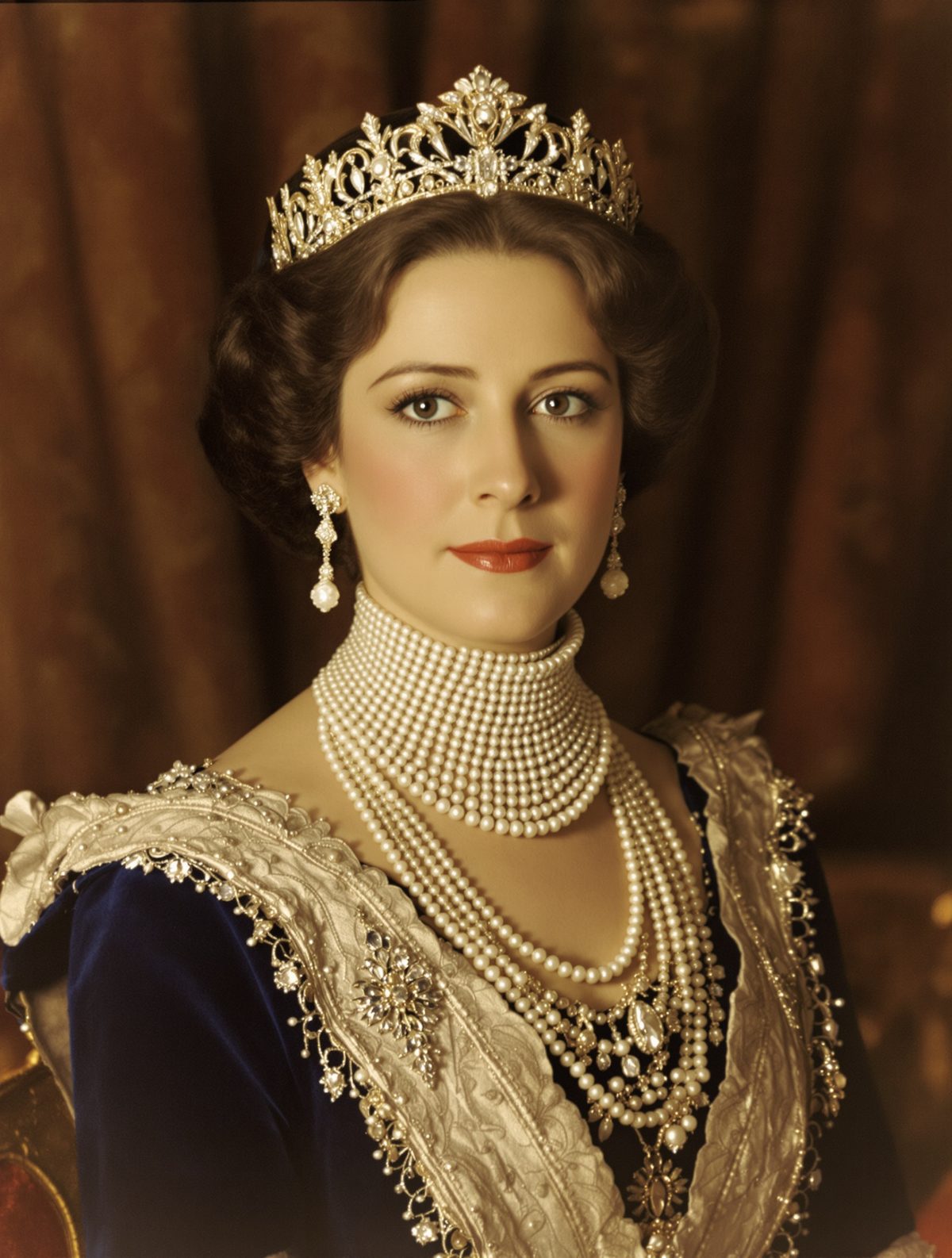
Picture the most elegant woman of the Edwardian era, draped in silk and adorned with jewels, her neck encircled by multiple strands of lustrous pearls that catch the gaslight of a grand ballroom. This was Queen Alexandra, wife of Edward VII, whose signature high pearl chokers became so iconic that every fashionable lady across Europe rushed to emulate her style. Yet beneath this seemingly effortless elegance lay a deeply personal secret—one that would inadvertently shape fashion for an entire generation.
What Edwardian society interpreted as the height of sophistication was, in reality, an ingenious solution to conceal a childhood scar that the Queen-Empress carried throughout her life. Queen Alexandra's pearl chokers weren't just a fashion statement; they were her armour, transforming a source of personal insecurity into the defining accessory of an age.
The Princess Who Became a Style Icon
Born Princess Alexandra of Denmark in 1844, the future Queen would arrive at the British court in 1863 as a radiant nineteen-year-old bride to the Prince of Wales. Even then, observers noted her preference for high necklines and elaborate neck jewellery, though few understood the reason behind this distinctive choice.
The scar that would influence decades of fashion reportedly stemmed from a childhood illness or accident—the exact details remain diplomatically shrouded in royal discretion, as was proper for the era. What we do know is that from her earliest public appearances, Alexandra demonstrated an remarkable ability to transform what might have been a source of embarrassment into an element of unparalleled grace.
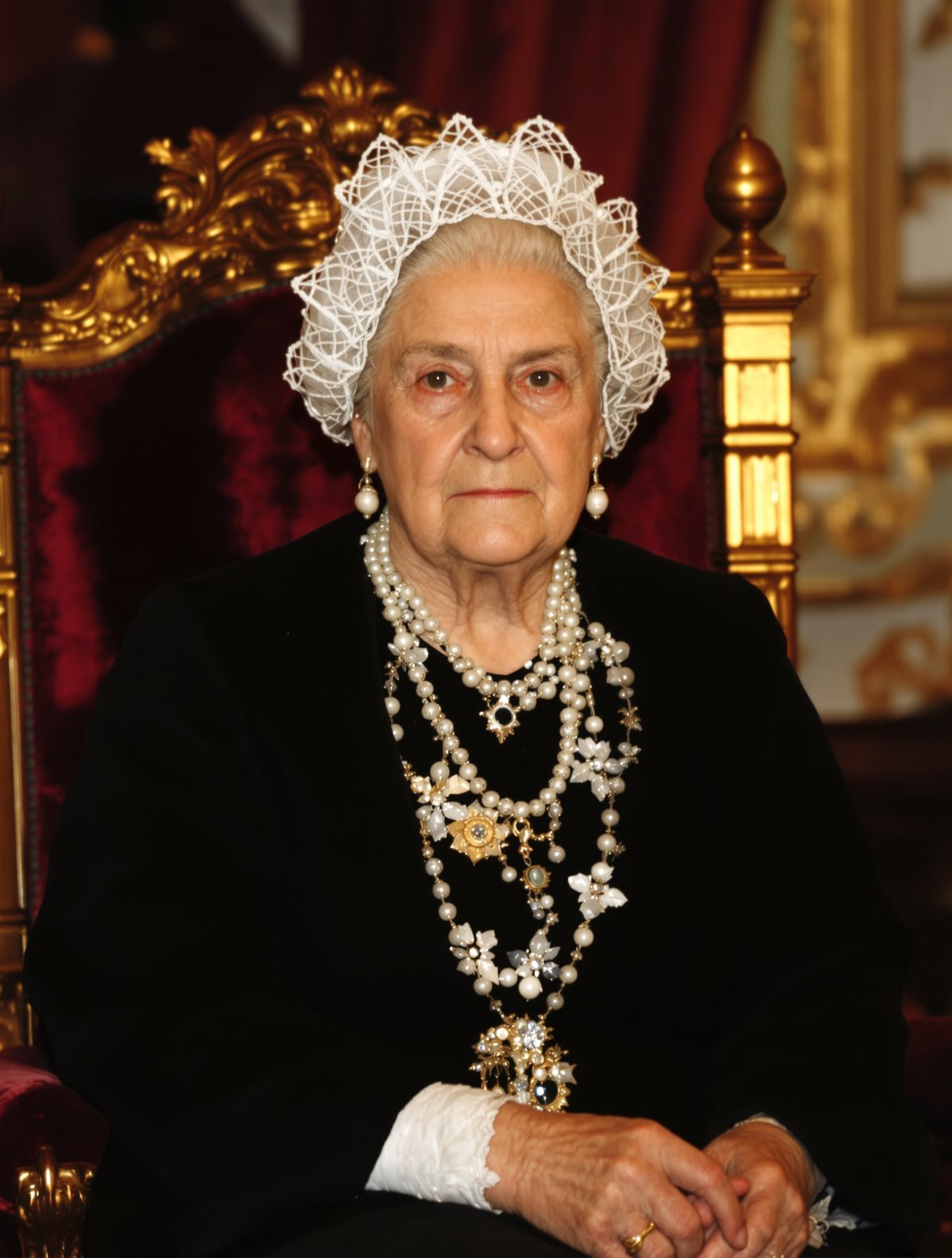
Her Danish heritage brought a fresh, continental sensibility to British court fashion. Where previous royal ladies might have favoured more modest, understated jewellery, Alexandra embraced the dramatic potential of pearls worn in abundance. She layered multiple strands at varying lengths, creating what would become known as the "Alexandra choker"—a style that sat high on the throat and often extended several inches down the neck.
The Royal Trendsetter's Clever Camouflage
Queen Alexandra's approach to concealing her scar was nothing short of masterful. Rather than simply covering the area with fabric, she turned to pearls—symbols of purity, elegance, and royal privilege that drew the eye while serving their practical purpose. Her chokers were often complemented by high-necked gowns featuring intricate lacework, elaborate collars, and strategic draping that created a seamless line from décolletage to throat.
The Queen's jewellery collection became legendary, featuring pieces from the finest European houses. Her pearl chokers were crafted from the most exquisite specimens, often incorporating diamonds, sapphires, or other precious stones as focal points. Some featured elaborate clasps positioned at the front, creating stunning centrepieces that further distracted from any imperfections she wished to conceal.
Photographs from the period show Alexandra's remarkable consistency in this style choice. Whether attending a state dinner, a court presentation, or a charity function, her neck was invariably adorned with her signature pearls. This wasn't mere vanity—it was strategic brilliance that allowed her to maintain her dignity and confidence in the most scrutinised role in the Empire.
How a Queen's Secret Sparked Global Fashion Fever
The ripple effects of Queen Alexandra's style choices extended far beyond the walls of Buckingham Palace. As photographs of the royal family became more widely circulated through advances in printing technology, fashionable women across Europe and America studied every detail of the Queen's appearance. Her pearl chokers quickly became the must-have accessory for anyone with social aspirations.
Fashion magazines of the era, such as The Lady and Queen magazine, regularly featured illustrations and descriptions of Alexandra's latest ensembles. Jewellers from Bond Street to the Rue de la Paix found themselves inundated with requests for "Alexandra-style" chokers. The demand was so intense that less expensive versions using cultured pearls and even clever imitations made the style accessible to the growing middle class.
Society photographers noted that virtually every woman of standing began wearing high pearl chokers to fashionable events. The style became so associated with Edwardian elegance that it appeared in portraits, fashion plates, and even advertisements for everything from soap to perfume. What had begun as one woman's solution to a personal challenge had become the defining fashion statement of an entire era.
The influence extended beyond mere copying. Alexandra's chokers inspired innovations in jewellery design, leading to more elaborate multi-strand pieces, the incorporation of other gemstones, and the development of new clasping mechanisms that allowed for more dramatic arrangements.
The Human Story Behind Royal Glamour
Understanding the true motivation behind Queen Alexandra's signature style adds a poignant dimension to her public image. Here was a woman who, despite occupying the most visible position in the Empire, dealt with personal insecurity just like anyone else. Her solution—to transform a perceived flaw into a fashion statement—speaks to remarkable creativity and resilience.
Those close to the royal family noted Alexandra's kind nature and genuine warmth, qualities that made her beloved by the public. Her ability to maintain such grace under the constant scrutiny of court life, all while managing her private concerns about her appearance, reveals the strength of character that made her such an effective queen consort.
The pearl chokers also reflected Alexandra's Danish heritage and her understanding of continental style. She brought a more relaxed, accessible glamour to the British court compared to the sometimes stern formality of previous eras. Her fashion choices helped modernise the monarchy's image while maintaining its essential dignity and grandeur.
Even as fashions changed around her, Queen Alexandra remained faithful to her signature style throughout her life. This consistency became part of her personal brand, making her instantly recognisable and reinforcing her status as a style icon. It also demonstrated how personal style, when authentic and consistently applied, can become more powerful than following fleeting trends.
A Legacy That Endures Beyond the Edwardian Era
Queen Alexandra's influence on fashion extended well beyond her lifetime, which ended in 1925. The pearl choker experienced revivals throughout the twentieth century, notably in the 1920s when shorter hairstyles made neck jewellery more prominent, and again in the 1950s when Grace Kelly and other style icons embraced similar pieces.
More recently, we've seen echoes of Alexandra's style in contemporary royal fashion. The late Queen Elizabeth II occasionally wore multi-strand pearl chokers for formal occasions, and the Princess of Wales has been photographed in pieces that clearly reference the Edwardian tradition. These modern interpretations connect today's royal ladies to a legacy of using jewellery not just for ornamentation, but as tools of confidence and identity.
Perhaps most remarkably, Queen Alexandra's story reminds us that some of fashion's most enduring trends emerge not from calculated marketing or designer vision, but from deeply human motivations. Her pearl chokers succeeded because they solved a real problem with genuine elegance, creating beauty from vulnerability and turning personal necessity into universal inspiration.
The next time you see a vintage photograph of an Edwardian lady resplendent in her pearl choker, remember Queen Alexandra's secret. What appears to be pure vanity often conceals deeper stories of human ingenuity, resilience, and the eternal desire to present our best selves to the world. In transforming her childhood scar into a symbol of imperial elegance, Alexandra gave us one of fashion history's most touching examples of how true style comes not from perfection, but from the graceful navigation of our imperfections.