The year 1966 marked a moment of unspeakable tragedy when a coal waste tip collapsed and engulfed the village of Aberfan in South Wales. The disaster claimed the lives of 116 children and 28 adults, leaving the small community shattered. In such moments of heartache, the British nation looked to their sovereign for compassion and hope. Although it took Queen Elizabeth II eight days to visit the site—a decision she reportedly always regretted—what followed quietly behind the scenes would reveal her profound empathy. Her solitary act of kindness towards a grieving miner’s wife gave us a glimpse into the humanity beneath the crown.
The Tragedy Unfolds
On the morning of October 21, 1966, a coal tip above Aberfan collapsed after heavy rain, sending waves of slurry and debris down the mountainside into Pantglas Junior School and nearby homes. The disaster shocked the nation and drew widespread media attention. Almost immediately, Her Majesty’s Government and the Royal Household were mobilized to provide support and assistance to the stricken community. As the Queen watched the horrendous aftermath unfold in newspaper headlines and newsreels, she felt the heavy burden of her role not just as monarch, but as a beacon of solace to her people.
The Northern American School of journalism descended upon Aberfan, reporting on the disaster with the urgency such a calamity demanded. But as quickly as it arrived, news coverage moved on, leaving the village to its overwhelming grief. Here was where the true impact of the disaster was felt: deeply personal and irreversible. Though initially criticized for her delayed presence, Queen Elizabeth II’s subsequent actions would reveal a depth of empathy and understanding that transcended any fleeting public perception.
A Personal Act of Compassion
In the weeks that followed the disaster, Queen Elizabeth II made the deeply personal decision to reach out to the families affected by the tragedy. Together with her husband, Prince Philip, she visited Aberfan and met with those who had endured unimaginable loss. For one widow in particular, the magnitude of her loss was compounded by the destruction of her family home. In the engulfing torrent of coal, she not only lost her child but also all the photographs and keepsakes that remembered his short life.
The details of this particular story were quietly relayed back to Buckingham Palace, where they reached the Queen. This was not a woman given to grand public gestures, but one who understood the poignancy of small, personal acts. Delving into the royal archives, a photograph of the child was uncovered; a memento likely captured during a school visit or community event.
"Pictures preserve and make tangible the ephemeral nature of childhood. It was an effort to restore a fragment of what the family had lost," one royal aide recounted.
A Gesture Beyond Protocol
The tumult of life in the royal court is one where tradition and protocol are deeply entwined. Yet, in this instance, Queen Elizabeth II acted beyond the dictates of formality. She personally arranged for the photograph to be duplicated, framed, and accompanied by a handwritten note of condolence. The photograph was then dispatched to the widow, all done inconspicuously—no public recognition sought, no royal banners waved.
This personal, solemn act went unrevealed to the outside world for many years. Within the walls of Buckingham Palace, it was often said that the Queen took quiet comfort in these intimate acts of kindness, believing that at the heart of duty lay a simple human connection. It was, perhaps, her gift of empathy and introspection that fueled such decisions—traits not always visible under the weight of a crown.
Legacy of Compassion
The decades have passed, and the Queen's quiet gestures continue to ripple through history. These small yet profound moments of empathy reveal the insight and depth of character that defined her reign—qualities sometimes overshadowed by the ceremonial grandeur expected of the British monarchy. In contemporary times, her legacy of compassion is reflected in the ongoing work of the Royal Family, both in the UK and abroad.
Today, as we revel in the regal life of the British crown, stories like this remind us of the seamless thread of humanity that binds monarch and subject. The Queen's gesture in Aberfan remains a testament to the power of compassion over ceremony, an example of the monarchy's enduring human touch.
In the hallowed halls of the palace, amidst the royal regalia and centuries-old traditions, Queen Elizabeth II exemplified a fundamental truth: it is in the quietest gestures that we often find the deepest understanding. It’s a resonance that connects the regal past with the living present—ensuring that the monarchy remains not merely an emblem of history but a treasure of the heart.
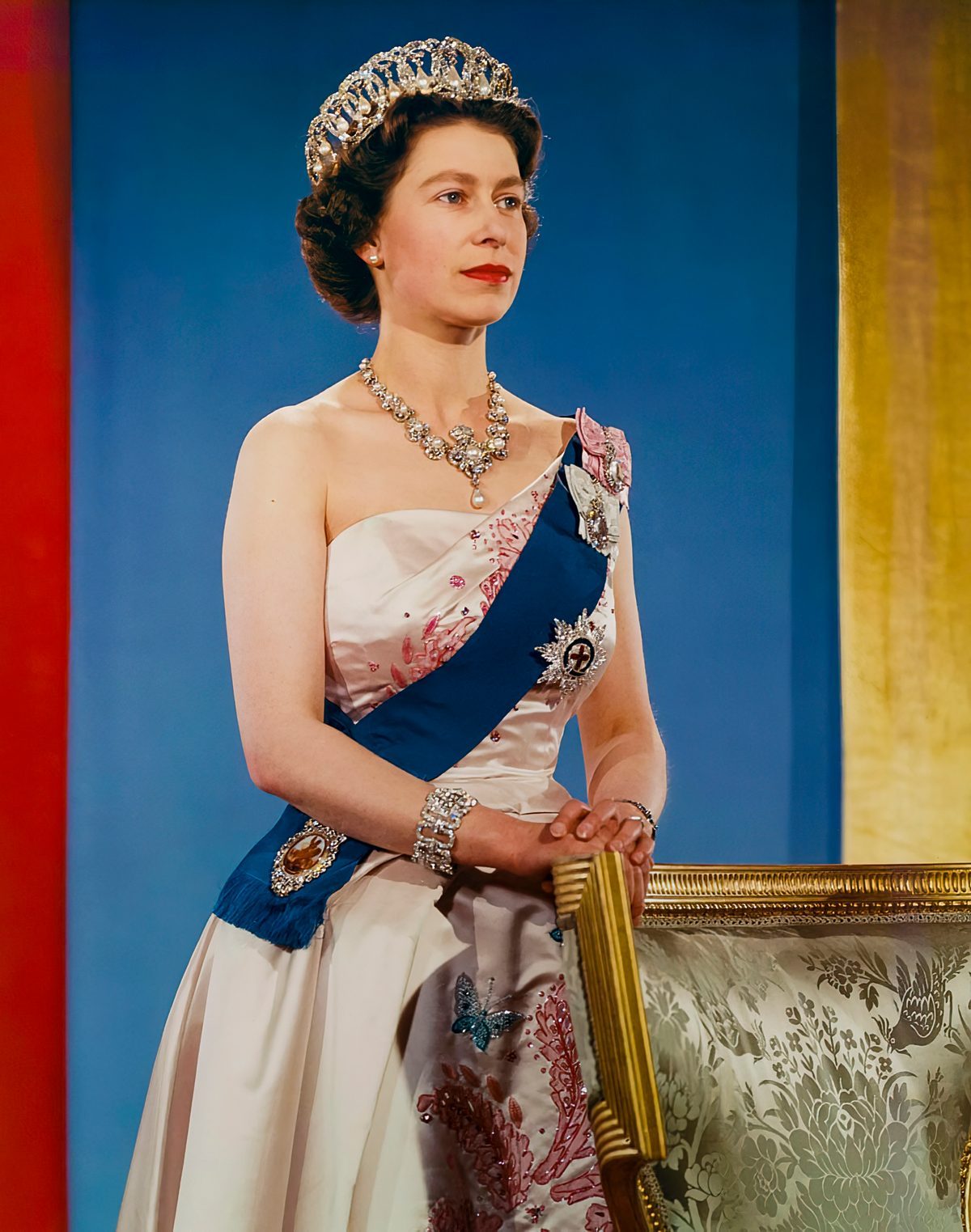
📷 Photo: Donald McKague. Public domain via Wikimedia Commons.