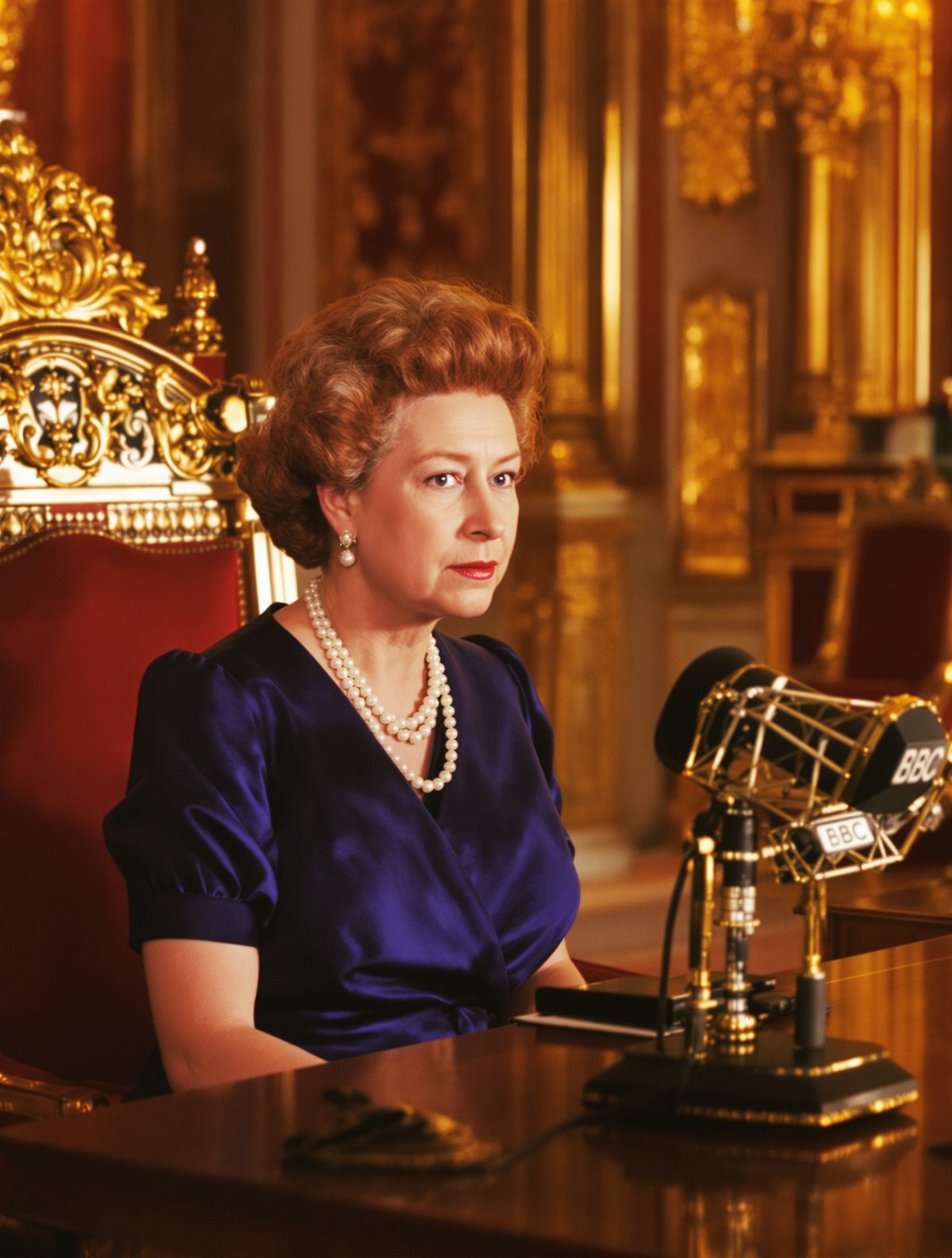
Picture this: it's Christmas Day 1983, and millions of British families are gathering around their television sets for the Queen's annual Christmas broadcast. They see their beloved monarch in the familiar setting of Windsor Castle, offering comfort, reflection, and hope for the year ahead. But what they don't know is that just hours earlier, in that very same room, wearing the same elegant outfit, Her Majesty had recorded an entirely different message—one that would only be heard if nuclear war had torn Britain apart.
This extraordinary secret remained locked away in government vaults for three decades, a haunting reminder of just how close the world came to unthinkable catastrophe during the height of the Cold War.
The Secret Recording That History Nearly Forgot
The year 1983 marked one of the most dangerous periods of the Cold War. Tensions between East and West had escalated dramatically, with NATO's "Able Archer 83" military exercise so realistic that some Soviet leaders genuinely believed it was cover for an actual first strike. Against this backdrop of international fear, the British government quietly activated some of its most sobering contingency plans.
Among these preparations was a request that would have seemed almost surreal to anyone outside the highest circles of government: would Her Majesty record a special Christmas message for a Britain that might be facing nuclear devastation?
The Queen, with her characteristic sense of duty and unflappable composure, agreed without hesitation. After completing her traditional Christmas broadcast that December—a warm message that spoke of reconciliation and the importance of understanding between nations—she remained in position to record what government officials euphemistically called "the alternative Christmas message."
The secret recording was part of Britain's CHANTICLEER protocol, a comprehensive plan for government continuity in the event of nuclear attack. While the details of the Queen's words in this recording have never been publicly released, we know it was designed to provide comfort and guidance to any survivors who might still have access to radio broadcasts in the aftermath of nuclear war.
A Monarch's Grace Under Unthinkable Pressure
To truly appreciate the remarkable composure this required, one must consider what the Queen was being asked to do. She was not merely reading a speech about policy or ceremony—she was preparing to address her people from the ashes of civilization itself. The weight of such a responsibility would have crushed many, yet those present during the recording noted her complete professionalism and calm demeanor.
This extraordinary moment reveals something profound about Queen Elizabeth II's understanding of her role. Throughout her reign, she had promised to serve her people in times of joy and sorrow, in peace and conflict. Here was the ultimate test of that promise—a willingness to provide comfort even in humanity's darkest hour.
The Queen's participation in these contingency plans wasn't just symbolic. Government planners understood that in a post-nuclear Britain, traditional structures of authority might collapse entirely. The monarch's voice, beamed across whatever communication networks might survive, could provide the only remaining link to constitutional government and national identity.
Royal biographers have noted that this period required the Queen to contemplate scenarios that most of her subjects never imagined. While families across Britain worried about mortgage rates and unemployment, their monarch was quietly preparing for the possibility that the Britain she had sworn to serve might cease to exist entirely.
The Cold War's Royal Dimension
The secret recording illuminates a lesser-known aspect of the Cold War: how the nuclear threat shaped even the most traditional British institutions. Buckingham Palace and Windsor Castle weren't just royal residences during this period—they were potential targets that featured on Soviet nuclear planning maps.
Security arrangements around the Royal Family during the early 1980s reflected these stark realities. The Queen's protection officers had to consider not just traditional threats like assassins or protesters, but also the possibility of nuclear attack with just four minutes' warning—the estimated time between Soviet missile launch and impact on British soil.
Yet the Queen continued her public duties with remarkable normalcy. She opened Parliament, hosted state dinners, and traveled across Britain and the Commonwealth as if the nuclear sword of Damocles wasn't hanging over the world. This ability to project calm stability while privately preparing for catastrophe exemplified the royal virtue of service above self.
The royal court of this era operated with an almost surreal duality. In public, there were the familiar rituals of monarchy: garden parties, investitures, and ceremonial occasions that stretched back centuries. Behind the scenes, however, royal staff were briefed on emergency procedures that read like something from a science fiction novel.
When Secrets Finally Surface
The existence of the Queen's secret recording only became public knowledge in 2013, exactly thirty years after it was made. The revelation came through the gradual declassification of Cold War documents, as government archives slowly released materials that had once been considered too sensitive for public consumption.
When the story finally emerged, it sparked fascination rather than alarm. The Cold War was history, the Soviet Union had long since collapsed, and the nuclear standoff that had defined a generation had faded into memory. What remained was admiration for a monarch who had been prepared to fulfill her duties even in circumstances too terrible to contemplate.
The timing of the revelation was particularly poignant. By 2013, Queen Elizabeth II was well into her ninth decade, having served her people for over sixty years. The secret recording served as a powerful reminder of the burdens she had carried—burdens that extended far beyond the ceremonial aspects of monarchy that the public typically saw.
Palace officials, when asked about the recording decades later, maintained their characteristic discretion. They neither confirmed nor denied specific details about what the Queen had said, respecting both the sensitivity of nuclear planning and the monarch's privacy. This discretion itself reflects the royal approach to service: doing what duty requires without seeking credit or recognition.
A Testament to Duty Beyond Measure
The story of Queen Elizabeth II's secret Christmas message reveals something timeless about the nature of constitutional monarchy. In an age when leadership often seems transactional or performative, here was someone prepared to fulfill her responsibilities even in circumstances where there might be no one left to witness them.
This wasn't about politics or policy—it was about the deepest meaning of service. The Queen understood that her role transcended personal comfort or even personal survival. She was the living embodiment of the nation's continuity, and she was prepared to fulfill that role regardless of the cost.
Today, as we face different but equally daunting global challenges, there's something profoundly reassuring about this glimpse into royal duty at its most fundamental level. It reminds us that true leadership isn't about fair-weather service—it's about remaining steadfast when everything else falls apart.
The secret recording, locked away for thirty years, stands as perhaps the ultimate symbol of Queen Elizabeth II's extraordinary reign: a willingness to serve her people not just in times of celebration and prosperity, but even in circumstances too dark to imagine. It's a testament to duty that transcends circumstance, and to a promise of service that even nuclear war could not break.