When Prince Albert died in December 1861, Queen Victoria's grief transcended the familiar rituals of mourning into something extraordinary, something the world had never seen from a monarch. In the heart of her sorrow, the Queen did not simply mourn her beloved husband; she built an entire daily ritual around his absence. Every morning, every night, for forty years thereafter, Albert's presence lingered, painstakingly preserved through ritual and memory, until the day Victoria herself passed away.
The Death That Shook Buckingham Palace
The serene chill of December 1861 brought a shattering blow to Buckingham Palace. Prince Albert, Queen Victoria's confidant, co-ruler, and cherished love, succumbed to what was diagnosed as typhoid fever. He was only 42 years old. His demise left a gaping void not only in the Victorian court but also in the heart of the monarch he so lovingly partnered.
Albert had been more than just a prince consort; he was an industrious presence whose influence steered Britain through early Victorian turbulence towards a flourishing age of reforms. His death was not just a personal tragedy for Victoria; it was a loss for an empire that was gradually adjusting to his visionary foresight. Yet, beneath the political and physical realities of his absence was a deeper, more profound human loss that engulfed the Queen.
Victoria’s response to mourning broke boundaries and shattered precedents. Immediately after his death, she cloistered herself in an extensive period of mourning, shrouding herself in black garments—a tradition she would maintain for the rest of her life. But it was her nightly rituals that truly epitomized the depth of her sorrow.
A Ritual of Eternal Matrimony
Each evening, Victoria instructed her devoted staff to lay out Albert’s clothes beside her bed as if he would soon return to don them. His bedchamber was maintained immaculately, kept just as it was when he was alive, with fresh shaving water placed on his washstand every morning. This constant perpetuation of normalcy bespoke a yearning beyond words, a shared life that Victoria resolutely refused to relinquish.
For Victoria, the continuation of these rituals served not as a denial of his death but as a reaffirmation of his influence and presence in her life. The Queen's bedchamber echoed with whispered conversations between absent figures, diligently forged through the simple glide of a hand across neatly pressed trousers, the soft placement of a shirt on a chair.
"His spirit is quite near me, and I try, so far as is possible, to live at least spiritually with him, and also with my beloved children," Queen Victoria reportedly once reflected privately. The Queen's realm became a perpetual homage to her soulmate, evident in these tenderly designed gestures.
The Royal Court in Mourning
The Queen’s profound grief radiated outward, casting a somber hue across the royal court and beyond. Her official withdrawal deepened a somber atmosphere amongst Britain’s upper echelons, while her personal staff and confidants adjusted their own lives around her routines of remembrance. Key figures within the court, including Prime Ministers and advisors, found themselves navigating a monarchy deeply entrenched in personal sorrow.
While some advisors urged for a return to public appearances, Victoria remained resolute in her mourning, stepping out only when absolutely necessary and dressed in her widow’s attire for decades. Her treasured country retreats, such as Osborne House on the Isle of Wight and Balmoral in Scotland, became secluded sanctuaries where she could reflect and preserve her husband's memory in peace.
The melancholic shadow cast by her mourning influenced cultural practices across Britain. It was during this period that the wearing of black for mourning gained widespread adoption, and cremation—once regarded with suspicion—began to develop as a response to her entrenched expressions of bereavement.
The Unyielding Bond of Love
Queen Victoria's dedication to Prince Albert’s memory was as unwavering as it was poignant. On each December 14, the anniversary of his death, she withdrew even further in solemn remembrance, emphasizing a connection that neither death nor time could erode. Her devotion was neither feigned nor performative; it was a testament to an unbreakable bond that transcended the physical realms of life and death.
Despite the gravitational pull of grief, Victoria wielded her sorrow as a form of strength, turning her gaze outwards on behalf of her vast kingdom. Her captivating public persona—one intrinsically laced with the dignity of a royal widow—serviced an evolving British society with deliberate, if somber, stewardship. That devotion, perceived as both touching and formidable, continues to resonate through tales and histories shared to this day.
The Eternal Legacy
Queen Victoria's life intertwined love and loyalty with the ballast of responsibility, weaving a tapestry of history rich with emotional depth and reverence. The legacy of her unwavering attachment to Prince Albert serves as an enduring reminder of the immense power of love—and its ability to shape life, history, and even an empire.
The Queen’s story invites reflection on how personal loss, when carried with the dignity and devotion exhibited by Victoria, has the potential to transcend the immediate confines of personal experience and project a resonance that history will echo for generations. Today, as storytellers and admirers, we look back on her reign and see not just an era of significant transition but also a hauntingly beautiful testament to enduring love.
In our own lives, Queen Victoria's enduring, boundless love for Prince Albert inspires us to cherish the bonds we create. Her life remains an indelible chapter in the ever-unfolding story of the British monarchy, a tale of heart and history, woven with both regality and deeply personal humanity.
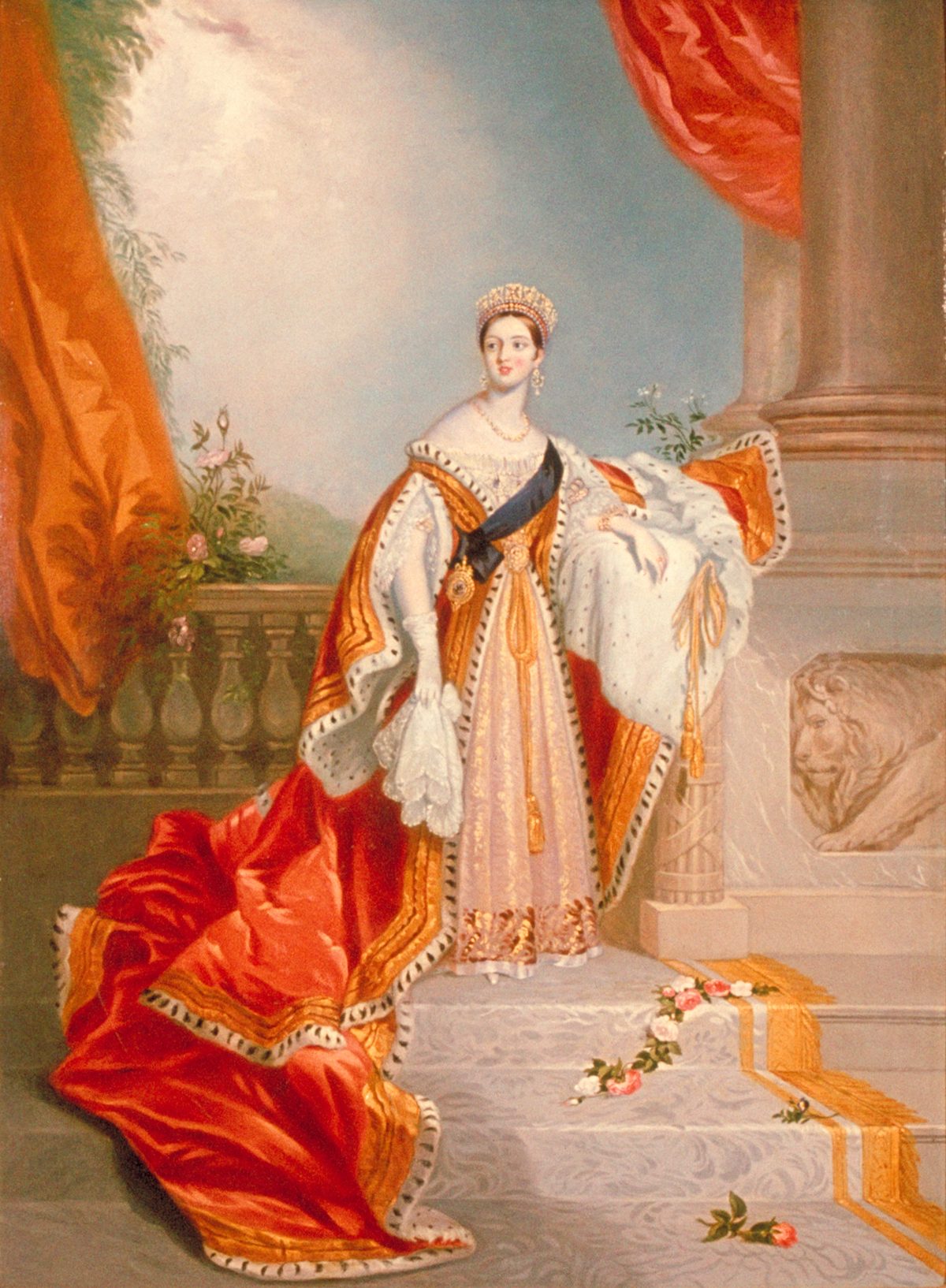
📷 Photo: Alfred Edward Chalon. Public domain via Wikimedia Commons.