She faced parliaments, presidents, and a watching world of millions. Yet in the quiet hour before the cameras rolled and the nation listened, Queen Elizabeth II had one ritual nobody expected. It was not solemn. It was not regal. And it reveals everything about the woman behind the crown. As the clock ticked closer to the moment when she would appear as the unifying symbol of her people, Her Majesty would retreat into a world of butlers, aristocrats, and their absurd misadventures—turning to the charming universe of P.G. Wodehouse. While thousands imagined her hunched over briefing notes, it was the comedic genius of Jeeves that truly steadied her nerves and prepared her to face the nation with poise.
From Court Duties to Wooster's Antics
Imagine stepping back into time, into the magnificence of Buckingham Palace during the 1950s. Amidst the swirl of royal duties, preparations for state visits, and endless meetings with advisors, Queen Elizabeth II would carve out a personal moment of tranquility. It was during these moments that she reached for one of her cherished copies of a P.G. Wodehouse novel—an unusual literary choice, perhaps, for a queen about to address her subjects or stand before the world. But therein lies the delightful contradiction that made Elizabeth the formidable yet relatable figure she was.
Wodehouse, the mastermind of comedic literature, was renowned for his wit and satirical take on the British aristocracy through characters like Bertie Wooster and the inimitable butler, Jeeves. For Her Majesty, delving into Wodehouse's humor was akin to stepping into a sanctuary, where laughter dispelled the tension of upcoming speeches, and the light-hearted follies of the characters offered a stark, necessary contrast to the gravity of her responsibilities.
The Windsors' Love for Laughter
For the Windsors, humor has always been a touchstone of resilience. Queen Elizabeth, known for her sharp wit and occasional mischief, shared a mutual appreciation for humor with her family. Her husband, Prince Philip, Duke of Edinburgh, was famously adept at lightening formal occasions with a well-timed quip, while her mother, the Queen Mother, was beloved for her jovial spirit and penchant for laughter. In this context, the sovereign’s choice of reading material speaks volumes about her character. Laughter wasn't merely recreation; it was sustenance, a vital component in maintaining the equilibrium amidst the pomp and expectations of royal life.
Through the decades, as the world changed remarkably from the 1950s to the early 2000s, this understated habit of the Queen remained a constant. It subtly underscored her human side, an aspect much celebrated by her people who often saw her steadfastness, yet understood so little of the private rituals that fortified such strength.
The Joy of P.G. Wodehouse's Universe
P.G. Wodehouse's work is as quintessentially British as it is timeless, brimming with a whimsical charm that transcends eras. His narratives, though often focused on the antics of the privileged, portrayed a world where silliness and clever lines infused life with brightness. The Queen's penchant for these stories demonstrates a wonderful contrast—while her life was dictated by duty and decorum, Wodehouse reminded her of the blessed absurdity of life and its foibles.
“The fascination of a Wodehouse story lies in its ability to transport readers into a world where the greatest problems can be solved by the ingenuity of a butler, where misunderstandings comically spiral before petering out into splendid resolutions. For Queen Elizabeth II, this escape enabled courage in the moments leading up to addresses of great import.”
Such habits are emblematic of the broader truths about Elizabeth’s reign. Here was a monarch deeply committed to tradition and duty but more than adept at finding modern solace in laughter and human foibles. As the years passed, this literary escape became an endearing symbol of her reign—one characterized by a balance of tradition and a personal undercurrent of enjoyment in life's simple pleasures.
The Literary Ritual with a Lasting Legacy
Elizabth's literary ritual of choosing P.G. Wodehouse is far more than an enchanting footnote to her storied reign; it is a testimony to her wisdom and quiet strength. Her love for Wodehouse's humor inspired others within the palace and beyond it to find solace in laughter, to appreciate reruns of life's comic side even amidst the greatest state obligations.
As we reflect on the Queen's remarkable life and legacy, it becomes clear that her reading choices were not merely personal indulgences but part of cultivating an environment and mindset that valued levity alongside solemnity. Her calmness in addresses and engagements often masked the light-hearted moments she enjoyed away from the public eye—a trait that made her deeply relatable to her subjects.
In a century as brittle and dynamic as the one over which she presided, knowing that Her Majesty found humor in the pages of Wodehouse reassures us all of the enduring power of laughter. Our challenges might differ markedly from the past, but the saving grace of a good laugh remains ever relevant. As we turn the pages of history, Queen Elizabeth II's choice of literature reminds us to embrace joy and style—and perhaps, to find our own version of Jeeves in the gentle art of laughter.
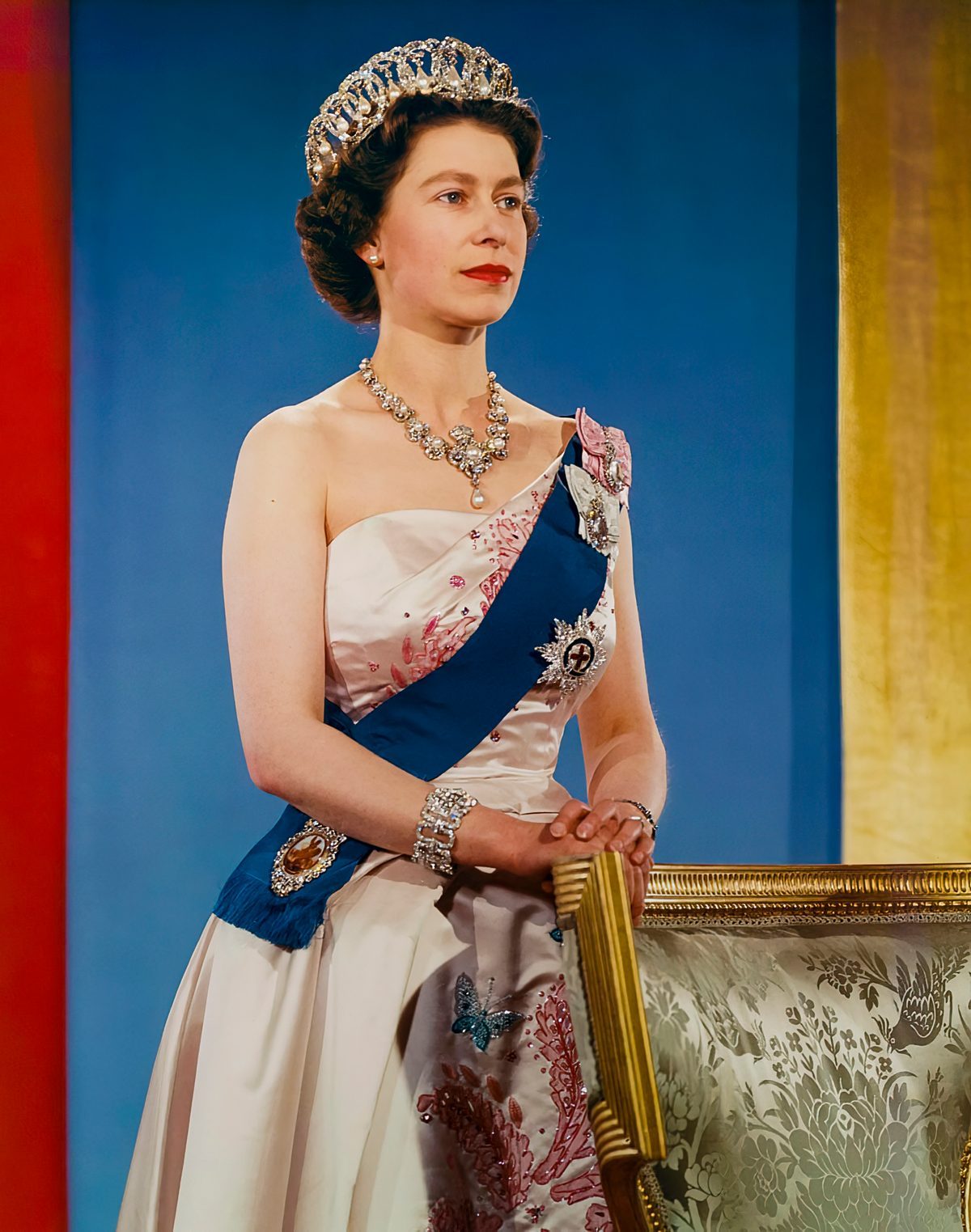
📷 Photo: Donald McKague. Public domain via Wikimedia Commons.