As dawn approached on June 2, 1953, the world held its breath. An estimated 277 million people in front rooms, village halls, and community squares around the globe prepared to witness the most anticipated royal event of the century — the coronation of Queen Elizabeth II. It was a moment of grandeur, tradition, and solemnity. Yet, amid the pomp and pageantry, a lesser-known tale unfolded under the cover of night within the opulent halls of Buckingham Palace. Backstage, a 27-year-old woman, poised to ascend to the throne, faced an unexpected challenge — a small but urgent task that required her resolute and steady hands.
The Queen's Most Private Hours
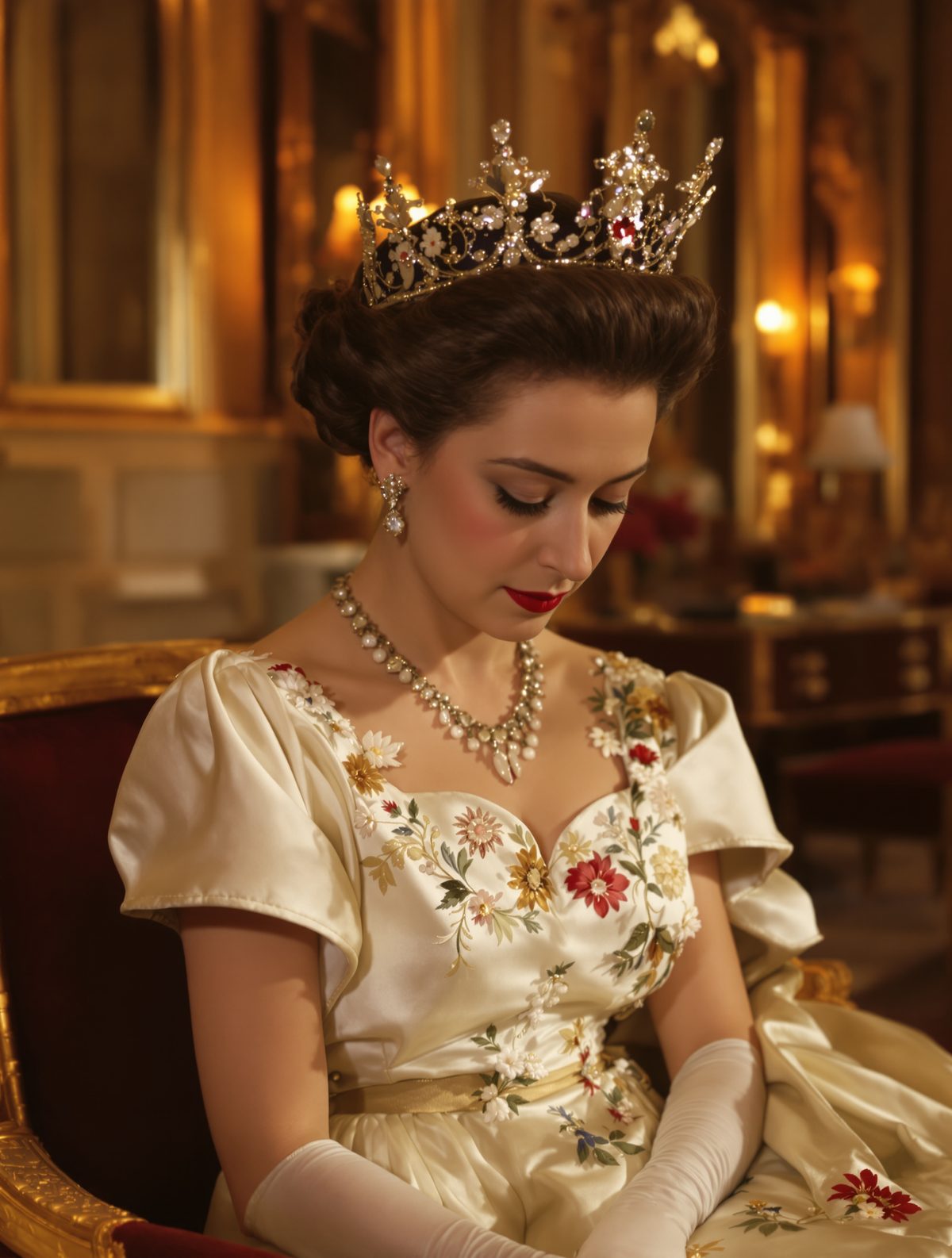
The eve of the coronation was a night steeped in hushed anticipation within Buckingham Palace. For Her Royal Highness Princess Elizabeth, it was a deeply personal time of reflection and preparation. The gown designated for what would be one of the most watched events in history—designed by the renowned Norman Hartnell—was a masterpiece. Months had been spent selecting the finest materials, and an international ensemble of embroiderers contributed to the majestic garment. Yet as the witching hour descended over London, a discreet issue arose requiring immediate attention.
A loose thread had appeared, not as an indication of any mishandling, but rather as a testament to the gown’s extensive elaboration. Any queen, or soon-to-be-queen, might have sought assistance from the palace's array of attendants and experts. However, Elizabeth, already embodying the grace and self-reliance that would define her reign, opted for solitude in resolving this minute crisis.
A Needle, Thread, and Royal Resolve
In the privacy of her room, far from the ceremonial voices echoing through the palace, Elizabeth retrieved a modest sewing kit. From childhood, the young queen had been versed in the home arts, a skill passed down through generations of royal women who valued practicality as much as pageantry. Alone in the tranquil confines of the Queen's apartments, Elizabeth set to work on the elaborate embroidery that adorned her coronation gown.
“A steadying breath,” she might have thought, borrowing strength from the countless queens before her, each facing trials both grand and seemingly minute.
Her resolve that night spoke volumes of her character. The palace may have housed armies of staff, dressers, attendants, and courtiers, but Elizabeth chose this quiet moment to anchor her destiny with a personal touch. The needle in her hand became a symbol not just of the immediate fix but of the industriousness, resilience, and humility that would guide her reign.
The Gown: A Symbol of Majesty and Multiculturalism
To fully appreciate the significance of that night, one must step back to view the creation of the coronation gown itself. Norman Hartnell’s intricate design incorporated embroidered emblems representing the nations of the United Kingdom as well as members of the Commonwealth. Drawn with threads of silver and gold, the gown was a tactile narrative representing Elizabeth’s vision for a unified kingdom and a global community.
The delicate Sprigs of Australian wattle, Canadian maple leaves, Kiwi fern, and other motifs stitched into the fabric symbolized the bond between the nations, meticulously designed to reflect both heritage and the promise of a new era under Elizabeth's reign. In that midnight hour, Elizabeth not only sewed a thread back into place but also reinforced her pledge to dutifully serve a rapidly changing world.
From Lullaby to Anthem
As dawn broke over London, the city teemed with excitement. The grand spectacle of the coronation was a dazzling display of regal tradition, a meticulously orchestrated tableau of velvet and gold, trumpets and choirs. With the rising sun emblazoning the British sky, the understated, now-complete gown emerged into history alongside its sovereign.
For those privy to its clandestine midnight rite, that tiny story of needle and thread quietly accompanied the grandeur of the day. It signified not just an heir ascending a throne but a young queen affirming her quiet resolve in her vocation of lifelong service, every stitch a vow to her future subjects.
Legacy of an Early Morning
Queen Elizabeth II’s coronation is a milestone etched into the annals of history. The ceremony itself set records in viewership and scale, yet it was the scarcely known tale from the eve of it that speaks so poignantly of the woman who came to symbolize the enduring legacy of British monarchy.
In an era where royals are often perceived from afar, as figures of unattainable grandeur, stories like this draw us closer. Behind the crowns, robes, and rituals lies a human story of dedication, commitment, and modesty. The sovereign who, on the eve of her reign, attended personally to an errant stitch is the monarch who would become beloved for her unwavering devotion to duty throughout times of profound change.
Looking to the present day, Elizabeth’s tenure serves as an emblem of continuity and stability in a world that often finds itself in flux. Her actions that quiet night remind us of the essential human qualities that reside at the heart of leadership. They provide a bridge between queen and country, and between Britain's royal past and its unfolding present.