Twenty years after the end of the Second World War, Queen Elizabeth II stood on German soil as a guest of the nation Britain had fought to defeat. She wore no words. She needed none. The gown she chose that evening carried a message no diplomat could have scripted — and the room fell silent the moment she entered.
An Evening of Silence and Significance
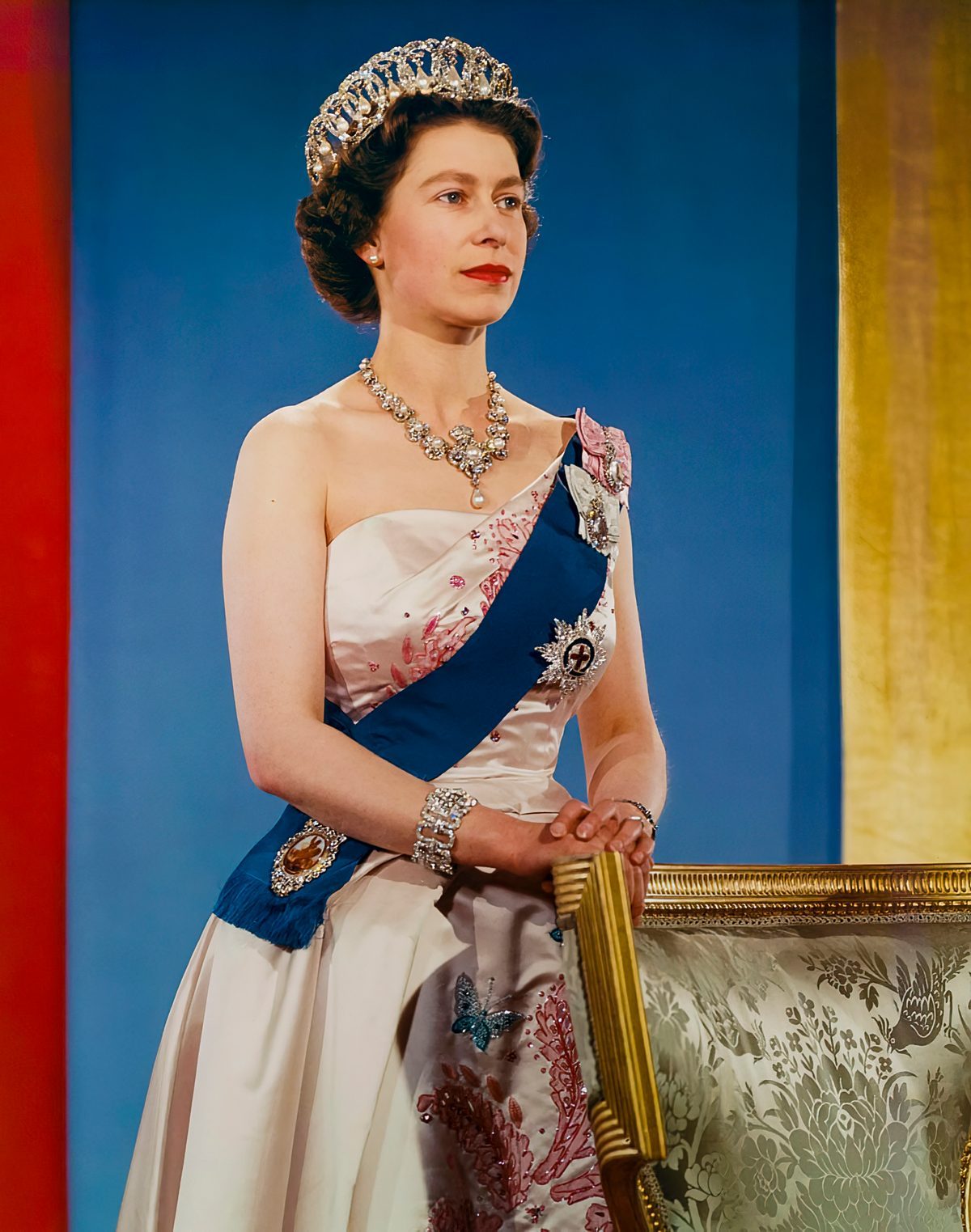
The air was thick with anticipation as Queen Elizabeth II arrived in West Germany in 1965, embarking on a state visit laden with historical resonance and the weight of reconciliation. This wasn't just another royal visit; it was a remarkable moment of healing, a post-war gesture echoing through the corridors of time. In the grand ballroom, under the sweeping chandeliers, all eyes were on the Queen, resplendent in a gown that was itself a piece of art, a testament to peace and unity. Her dress, more so than any speech, embodied the profound message of goodwill and friendship between two once-warring nations.
The Queen's dress was a masterwork of subtlety and symbolism. Crafted from silk, it was embroidered with delicate flowers representing both Britain and Germany. English roses mingled with German cornflowers, and together, the motif spoke of shared beauty and a blossoming future. As the Queen moved gracefully through the hall, the gown whispered of reconciliation, earning its place not just in fashion history, but in the history of great diplomatic gestures.
The Royal Court's Deliberate Elegance
The decision to wear such a meaningful dress did not come without significant deliberation. The Royal Court, led by Her Majesty's trusted advisers and the meticulous designer Norman Hartnell, embarked on a carefully choreographed plan to ensure this moment left an indelible impression. Hartnell, a court favorite known for his ability to craft garments that tell stories, understood the assignment perfectly.
The choice of embroidery was particularly striking; each flower was placed with painstaking care, creating a delicate tapestry that merged two nations' identities. The design process reflected not just artistic flair, but a deep understanding of the potential for fashion to speak when words are inadequate. Hartnell’s genius lay in his ability to infuse traditional craftsmanship with contemporary relevance, all while conveying a message that resonated far beyond the fabric.
Queen Elizabeth's role was pivotal in every stitch and every thread. Known for her nuanced understanding of royal duties, she had always possessed a keen eye for the power of symbolism. Her gown was far more than a sartorial choice; it was a quiet proclamation, a regal embrace extended across a chasm of wars and loss.
The Power of Symbolism Amid Historical Tensions
To fully appreciate the gown's impact, one must understand the backdrop against which this visit took place. The scars of World War II were still healing, and memories of conflict remained vivid in the minds and hearts of millions. The visit was the first by a British monarch to Germany since the war's end, a monumental step in rebuilding a relationship fraught with pain and history.
For many, Queen Elizabeth's presence in Germany was a powerful symbol of a changing world — a world that was choosing diplomacy and unity over division. Her strategic, thoughtful approach to her duties was never more evident than during this visit. By wearing a gown that highlighted the shared beauty of both nations, she honored the fallen and looked forward to a more harmonious future.
The dress was a tangible extension of the reign that had been defined by grace under pressure and unwavering commitment to peace and prosperity. It reminded onlookers of the monarchy's enduring ability to inspire and unite, even in the most challenging of times.
A Legacy of Peace and Goodwill
The reaction to Queen Elizabeth's gesture was one of deep respect and admiration, both in Germany and back at home. It was a testament to the subtle power wielded by the monarchy, a reminder that sometimes, the simplest of gestures can bridge the deepest of divides.
With her visit, Queen Elizabeth did not merely symbolize a renewed alliance with Germany; she embodied the hope and promise of future generations. Her dress became a metaphor for the quiet, steadfast resolve that has always characterized her reign. It was an unspoken commitment to leave behind a legacy of peace, an era illuminated by understanding rather than conflict.
The 1965 state visit to Germany is remembered fondly in the annals of royal history, a time when the Queen's attire spoke volumes and inspired a room filled with former foes to find a shared path. Her uncompromising dedication to her role, her country, and her people was never more evident than on that evening, as she stood gracefully, wrapped in layers of history and hope.
The Enduring Influence of a Gown
Even today, Queen Elizabeth II's dress remains emblematic of the transformative power of thoughtful diplomacy. The world continues to look upon such moments as a reminder of the monarchy's unyielding capacity to foster reconciliation and unity through poignant acts of symbolism.
The Queen taught us that at times, the most profound messages require no grand speeches or proclamations. Instead, they come wrapped in silk, embroidered with flowers, and carried quietly across rooms filled with past adversaries turned friends. Her visit in 1965 serves as a powerful example of the royal family's enduring influence, showing that sometimes, the best way forward can be sewn into the very fabric of our shared history.
The gown's legacy endures as a testament to Queen Elizabeth II's understanding of her role as a stabilizing figure in an ever-changing world. It’s a legacy that is cherished and respected, a reminder of the royal family's unique ability to illuminate the path toward a future defined by peace and friendship.
📷 Photo: Donald McKague. Public domain via Wikimedia Commons.