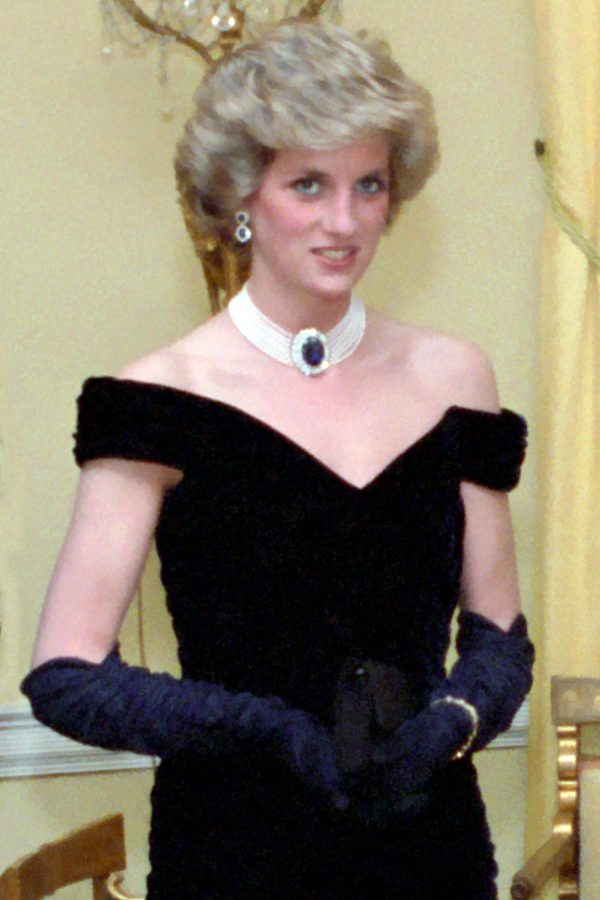
On a day charged with the potency of new beginnings and symbolic closures, Princess Diana clothed herself not in the somber tones of parting, but in a vibrant white that transformed silence into a powerful statement. It was July 1996 when the princess who had captured the world's heart, signed her divorce papers, thus legally ending her union with Prince Charles. Yet, later that evening, as the sun dipped graciously over London, Diana emerged at a fundraising gala in a brilliant white Catherine Walker column gown, glowing with a renewed strength and ethereal grace. Her ensemble was more than mere fashion; it was a spectacle, unmatched and unforgettable—a deeply personal proclamation of resilience and quiet rebellion.
The Princess and the Gown: A Fusion of Elegance and Declaration
This event, held in the lavish confines of the Serpentine Gallery, marked a defining moment not just in Diana's personal narrative but in fashion history. As she swept across the room, the luscious white fabric of her gown followed suit, shimmering under the gentle caress of chandeliers. Catherine Walker, Diana's long-time collaborator and favored couturier, had crafted this piece with unparalleled precision and understanding of the princess's evolving style—a style that mirrored her journey from sheltered royal consort to independent global humanitarian.
Stripped of excessive ornamentation, the gown was simplicity incarnate, featuring elegant lines that celebrated Diana’s statuesque silhouette. Its gleaming hue was a deliberate choice. Unlike the conventional shades of mourning or somberness often employed for occasions burdened with personal loss, Diana chose white—a color symbolizing purity and hope. This was fashion as art, a clothing-born revolution that communicated her quiet refusal to be overshadowed by the dissolution of a royal marriage.
The Royal Court and the Shadow of Change
The timing was nothing short of extraordinary. The British royal court, steeped in tradition and historical continuity, was at a pivotal juncture. As spectators of ceremony and guardians of protocol, they watched, often with restrained unease, as Diana seemingly sidestepped tradition. Her marriage—and its demise—had dominated headlines, making her personal progress and public engagements a matter of widespread fascination.
For centuries, British consorts have been tasked with embodying an ideal of serene but silent elegance. Yet Diana broke the traditional mold early on, becoming a poignant figure not due to her title or alliances but through her approachability and compassionate endeavors. She embraced the public with an openness unusual in the stiff upper echelons of aristocracy, bringing color, warmth, and humanity to a role often perceived as quintessentially ceremonial. This evening, the dazzling white gown was less a sartorial choice than it was a self-anointed armor, projecting confidence and casting a spell of awe across the room.
Fashion as Empowerment: The Diana Influence
What Diana understood intrinsically—and executed with mastery—was the transformative power of fashion. Through her, the world saw clothing not merely as a formality but as a medium to communicate identity, status, and emotion. Her white gown was not just attire for a gala; it was an assertion of her identity beyond royal preset definitions. The choice of Catherine Walker, a designer known for her understated but sublime designs, highlighted how Diana navigated public life with acute awareness and personal input.
The impact of this appearance was profound, as the fashion industry and royal enthusiasts took note of her bravery and brilliance. Her decision to wear white in the wake of her divorce sent a ripple through societal norms, depicting her story not as one of defeat, but as the rebirth of an iconic persona. In doing so, she inspired countless women to view divorce or personal upheavals not as tragic ends, but transitions—a space for rediscovery and personal assertion.
A Legacy of Style and Strength
Princess Diana left an indelible mark on the British monarchy as she traversed her public duties and displayed a deeply personal style coupled with genuine humanity. Her life, though tragically short, taught the world of royalty about the strength found in vulnerability and authenticity. That enchanting July evening, the loudest message Princess Diana conveyed was not through mere garments, but through her presence—a radiant smile and an assured stride indicative of someone fully embracing life’s complexities with grace and determination.
In modern times, the echoes of Diana's choices—both in fashion and in life—continue to reverberate with unwavering clarity. The 1996 white gown moment endures as a testament to her ability to turn personal tribulations into empowering public displays. Her approach to dressing, always imbued with thoughtful significance, acts as enduring inspiration for royals and non-royals alike, affirming that elegance transcends fabric. It is an inherent trait emanating from within, one that Diana wore as dazzlingly as any gown.
To this day, Princess Diana's sartorial choices are celebrated within the annals of history as true moments of regal poise and unique expression. And as we look back, her stance serves as an enduring reminder that royals are more than titles or lineage. They are individuals with the capacity to inspire through both silent poise and spectacular declaration, illuminating the world stage—just as Diana did so luminously that July night.
📷 Photo: L.H and H. Public domain via Wikimedia Commons.