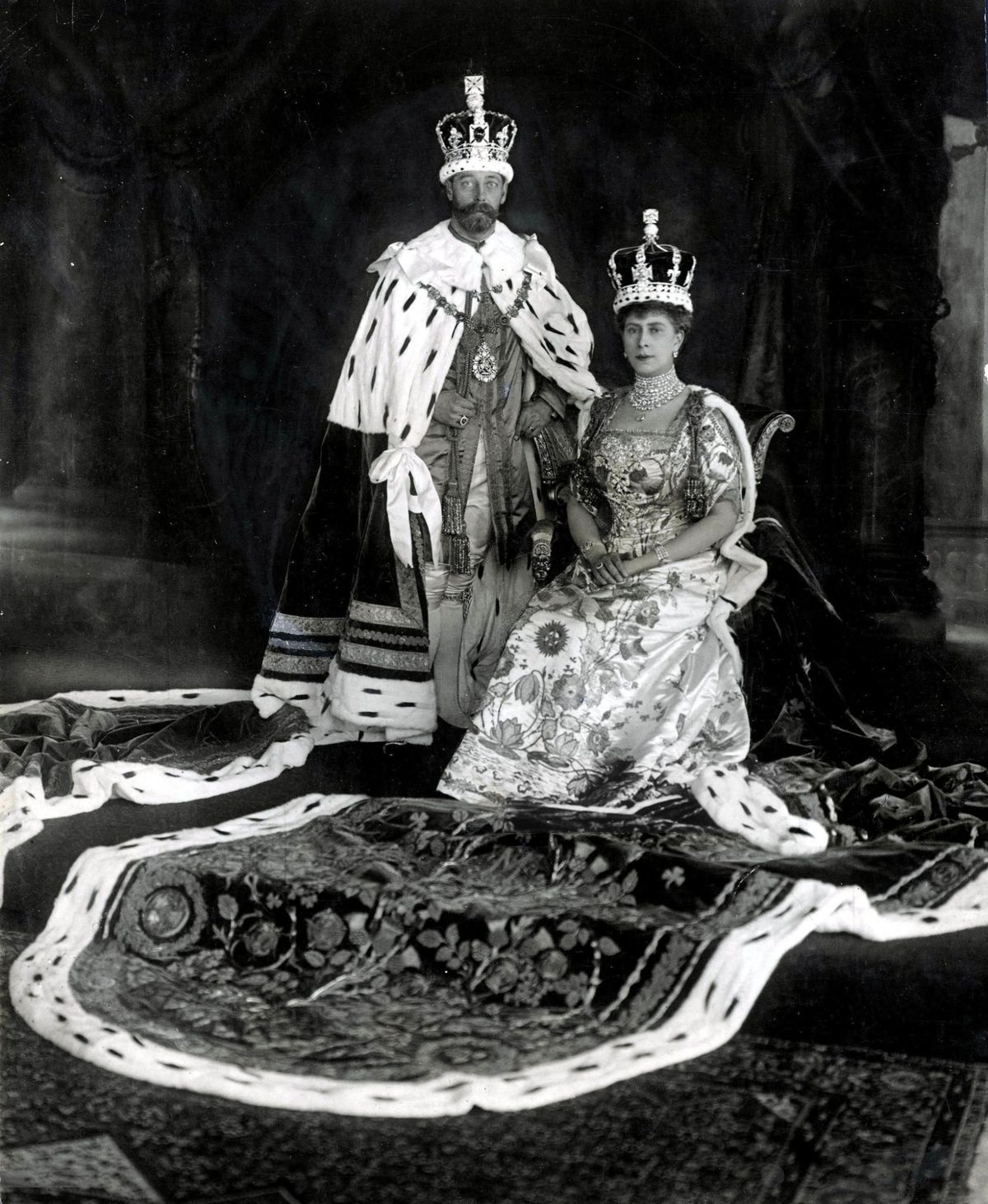
When King Edward VII passed away in May 1910, the British monarchy faced an uncertain future. The nation mourned the loss of “Bertie,” a beloved king credited with modernizing the monarchy. His death marked not only the end of an era but also the rise of his reserved son, George V, and his equally disciplined wife, Queen Mary. In a solemn moment following the king’s death, Queen Mary had to stand in front of the grieving royal household, embodying calm and reassurance in her widow's regalia, a gleaming silver-grey court gown. Unseen by the gathered courtiers, hidden in the hem, lay a poignant tribute — a single violet, Edward VII’s favourite flower, lovingly stitched by Mary’s own hand.
Grace Amidst Grief
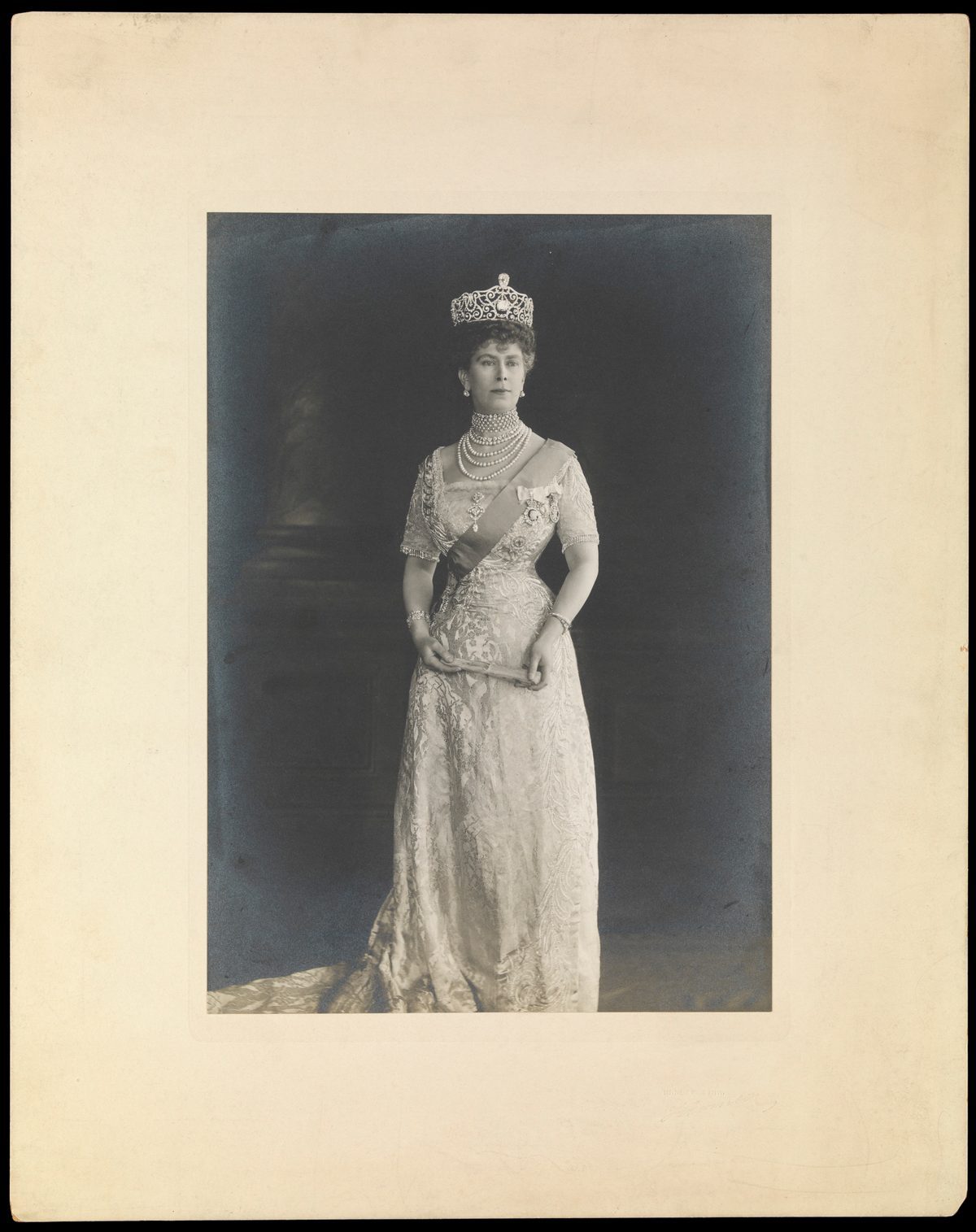
Queen Mary of Teck, who became consort to King George V, was the embodiment of duty, cohesion, and tradition. Her upbringing was steeped in the values of Victorian propriety, granting her a unique resilience that would serve the monarchy well during turbulent times. As she stepped into her new role as queen during the Edwardian and early Windsor periods, she brought with her not only a steely determination but also a grace overshadowed by unexpected warmth.
In May of 1910, when she had to face the freshly-bereaved household, this represented an almost theatrical moment of high drama. Draped in silver-grey, a colour spoke softly to mourning’s restraint, Queen Mary became an icon of sublime dignity. The dress, crafted by her own dedicated hand, was a testament to her attention to detail. Her choice of attire was elegant, with a calmness that belied the magnitude of her bereavement and the weight of the empty throne. Those present could not know of the small act of sentimentality sewn secretly into the gown’s hem — a fitting metaphor for Queen Mary’s reign: steadfast emotion concealed by public strength.
A Touch of Violet: The Language of Flowers
The violet sewn into the hem of Queen Mary’s gown was more than a nod to her late father-in-law’s preferences; it was an expression of love and remembrance. In the language of flowers, violets symbolize faithfulness and modesty. This simple yet touching gesture of sewing a small violet into her garment exemplified these qualities perfectly: the eternal loyalty Queen Mary held towards her royal family and her commitment to the duties she embraced.
This subtlety of emotion rendered into simple acts was customary for Queen Mary. Her attention to such meaningful details resonated deeply, albeit quietly, amidst the often majestic rituals of royal life. It signaled a break from the past and a subdued celebration of her own authenticity within the monarchical traditions. The hidden violet carried not just personal significance but symbolized her discreet approach to handling roles within the monarchy’s duties.
The Royal Household: Between Duty and Devotion
The royal household at the time of Edward VII’s death had the outward appearance of finely-tuned machinery, proceeding with the careful choreography expected of them during this changeover period. Yet, beneath the surface, members of the household were faced with the deeply personal emotions tied to the passing of a monarch who was both a leader and a lodestar in their lives.
Queen Mary’s presence in her court dress with little outspoken demonstration spoke to her understanding of the balance necessary to maintain royal composure in the face of profound emotional shifts. By not openly acknowledging the violet, Mary communicated through empathetic action — crafting connections with her late king through silent, symbolic gestures rather than overt expression. This allowed the royal household to see not just a queen, standing confidently before them, but a woman very much in mourning, grappling with the same heartache affecting them all.
Historical Threads Woven Into New Beginnings
The fabric of British history is frequently stitched with the golden threads of its monarchs and their families. This particular moment — Queen Mary standing in that carefully chosen gown, a hidden violet marking her path — serves as a symbol of transitions, reminders of the continuity inherent within change itself. Her symbolic link to Edward VII highlights the ongoing interplay between past and present within the monarchy, merging a bygone Victorian age with an emerging modernity.
In the broader historical context, the reign of King George V, supported loyally by Queen Mary, saw not only significant changes within Great Britain but also challenges that reshaped the institution they headed. The quiet testament of Mary’s violet helped to preserve the legacies while simultaneously moving forward into a new era. Her understated yet profound gestures illustrated how royalty is not solely about the splendor of courts and ceremonies, but also the subtle underpinnings of human emotion lying beneath royal duty.
Today, elements of Queen Mary’s decorous approach to monarchy linger on, revered as part of the broader royal tradition. As modern eyes examine the complexities of regal responsibilities, they also can find inspiration in the small acts of personal reconciliation Queen Mary undertook. Her legacy endures, a blend of fidelity, tradition, and emotional depth, offering a poignant reminder that beneath the grand stories of monarchs lie the tender narratives of memory and respect.
The simplicity of a violet sewn into the hem of Queen Mary’s court gown remains a powerful reminder of the intricate human stories intricately woven into the grander narrative of the British monarchy, allowing tradition to thrive through warmth and nuance. They continue to keep alive those acts of compassion and personal dedication that have shaped and continue to define the monarchy for current and future generations, keeping history alive in the quiet presence of symbols found in silver-grey folds and whispered memories.
📷 Photo: John Thomson. CC BY 4.0 via Wikimedia Commons.