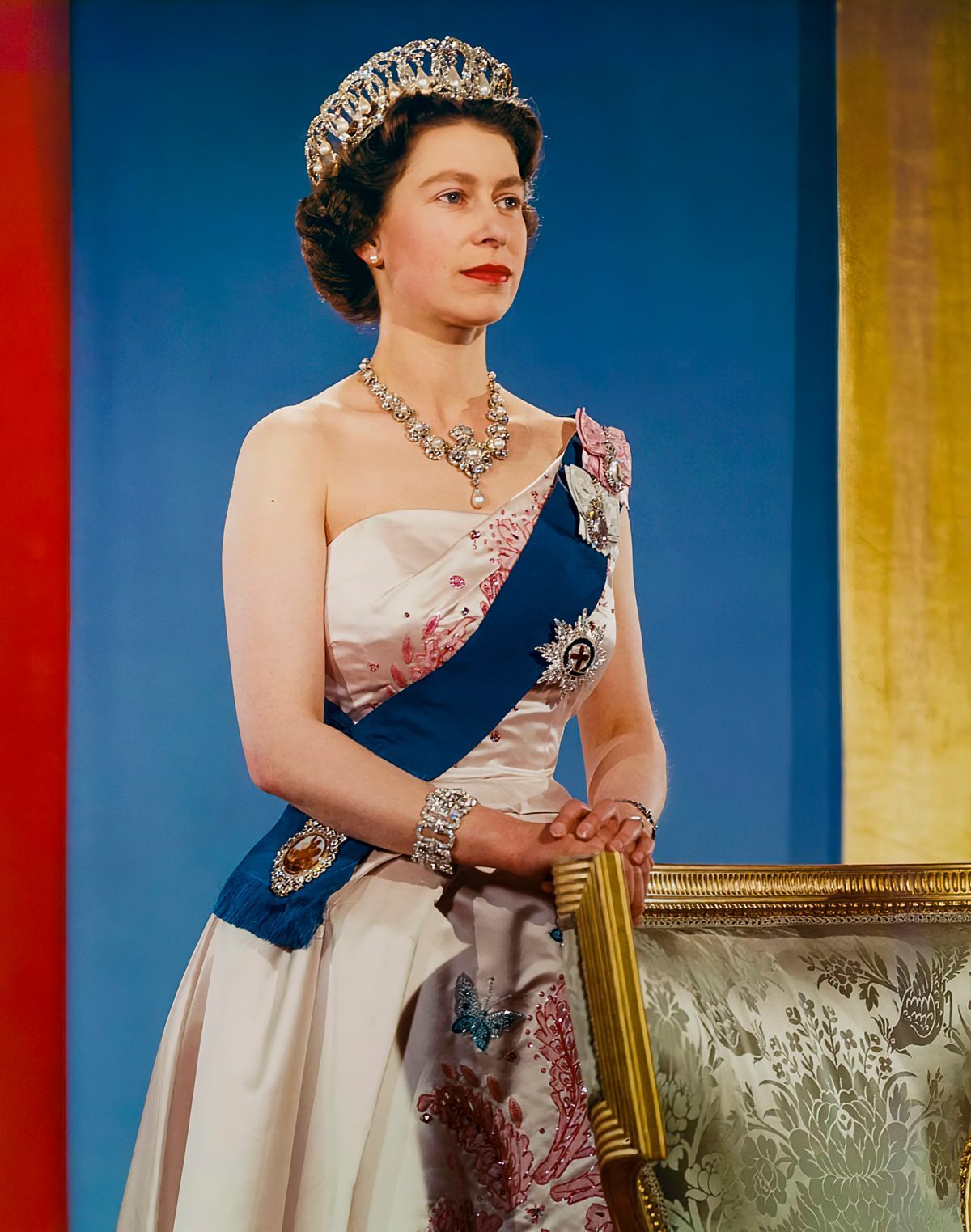
There exists a rule, timeless in its authority, governing interactions with the British monarch: you do not touch the Queen unless invited. This protocol is not enforced out of coldness but rather a respect for the storied institution she represents. Yet, in 1992, a brief encounter on the sunlit tarmac in New Zealand broke this age-old norm, revealing a moment of pure humanity. It involved none other but the venerable Queen Elizabeth II and a vivacious five-year-old named Benji Nicholas. The scene was captured in a brief snapshot, but the warmth and spontaneity of the moment spoke volumes beyond the reach of protocol.
The Royal Tour: A Tradition of Elegance and Duty
Royal tours have been an essential part of the monarchy's connection to the Commonwealth realms, a living thread woven through lands across oceans from the United Kingdom. In 1992, another chapter in this illustrious voyage was written as Queen Elizabeth II embarked on a journey that, while meticulously planned, could never fully account for the emotional tapestry of human interaction.
Pomposity and grandeur were to be expected; the pageantry of the monarchy demands it. The Queen's every movement on these trips is meant to embody the dignity and grace of the British crown. From scheduled appearances to state dinners, all interactions are carefully designed to reflect the traditions of the British monarchy, a dance both majestic and rigorous.
Yet, this carefully waltzed choreography of duty and decorum was delightfully disrupted by a child's impulsive gesture, a beautiful anomaly in the symphony of royal proceedings.
Breaking Protocol: A Child's Simple Gesture
In the whirlwind bustle of a formal welcome in Wellington, New Zealand, the Queen, maintaining her stately poise, emerged to meet a crowd of admirers. The air was filled with excitement and the anticipation that always accompanied a royal arrival. It was a routine event by royal standards, but five-year-old Benji Nicholas, unburdened by such expectations, brought with him a refreshing wave of spontaneity.
As the Queen approached the gathered crowd, Benji, with all the heartfelt simplicity of childhood, rushed forward past the stanchions intended to uphold the invisible walls of royal decorum. He did not see the crown; he saw kindness in the Queen’s eyes, warmth in her smile, and embraced her with the unabashed affection that only a child could possess. To those who witnessed this unfold, it was a delightful, unscripted moment that transcended the usual formalities.
Their eyes met before she knelt down to return his embrace. Cameras clicked rapidly as this singular moment of unguarded human connection was immortalized in time.
The Queen’s Response: A Heartfelt Embrace
Queen Elizabeth II's response was immediate but gentle. Without a trace of hesitation, she bent down and enveloped young Benji into her arms. For a monarch whose life had been shaped by duty, tradition, and the expectations of an entire nation, this gesture was a charming deviation from her usual regal demeanor.
This heartfelt hug shattered an invisible barrier. It revealed beneath her crown, the tenderness and affection of a grandmother and a human being. Such spontaneous moments were rare, but they illuminated the Queen’s capacity for warmth and her instinctive understanding of the hearts of her people — young and old alike.
The hug, though brief, exemplified that beyond the Westminster protocols and platinum tiaras, the Queen was as deeply human as those who admired her. She herself often said she viewed her reign as a duty to serve the people, and here was service in its simplest, purest form: a genuine touch, a comforting gesture that needed no words.
The Impact: Resounding Through Time
The incident quickly made headlines, capturing international attention and hearts alike. Photographs of the encounter advertised a different sort of sovereignty, one based not only on tradition and authority but also on empathy and warmth. This unscripted exchange added a human dimension to an otherwise formal visit, serving to endear the sovereign even deeper into the hearts of the Commonwealth.
In a world often ruled by decorum, Benji and the Queen’s brief embrace carried echoes of a touching lesson: the best connections are heartfelt and genuine, regardless of royal codes. This would not be the last time that an unplanned moment during a royal tour revealed the personal stories behind official duties; indeed, it was but one in a life of a Queen whose gestures have often spoken louder than words.
Legacy of Humanity in Monarchic Leadership
As we look back at such moments years later, we see how they helped shape and soften the image of the British monarchy, forging a nuanced understanding of ultimate authority balanced with genuine compassion. Queen Elizabeth’s reign was marked by such instances of quietly monumental significance, telling a story not just of history observed but of humanity felt and shared.
These stories don't just entertain or inspire us today; they remind us that the monarchy, while a bedrock of tradition, is also evolving, adaptable, and deeply connected to its people. The embrace between a Queen and a young boy defied expectations but in so doing, strengthened the enduring and intricate bond between the crown and the Commonwealth, reminding us of the profound impact a spontaneous moment can have in the arc of history.
📷 Photo: Office of the President of the United States. Public domain via Wikimedia Commons.