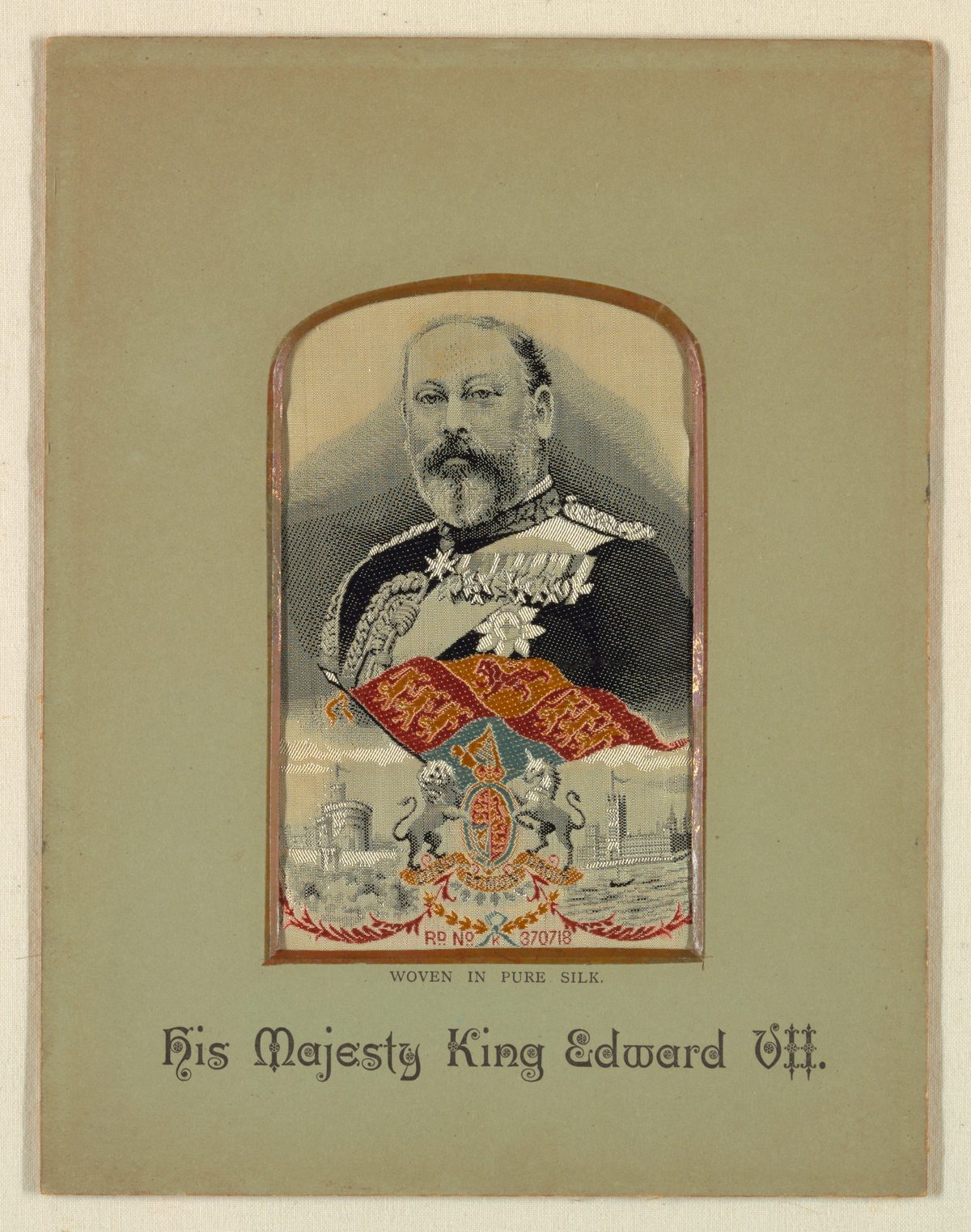
He was King of the greatest empire on earth. He commanded armies, received prime ministers, and dined with heads of state. But every morning, behind closed doors, Edward VII quietly broke his own court's rules — for a small, scruffy fox terrier who never cared about protocol.
A Canine Companion in a Regal World
In a realm where regal protocol was as dense as the fog over the River Thames, one might assume that a pampered pooch would have little influence on the routines of a king. Yet Caesar, King Edward VII's beloved fox terrier, defied expectations, charming not only the King but the entire court. Renowned for his nonchalance about rules, Edward VII unofficially sanctioned a peculiar morning ritual in a world governed by decorum and schedule: he would secretly feed Caesar at the royal table.
Caesar wasn’t just any dog; he was a staple of Edward’s daily life and a companion who offered unconditional love away from the eyes of the public. Against the opulent backdrop of early 20th century Buckingham Palace and Sandringham House, Caesar’s presence provided a sense of warmth and humor that lightened the king’s schedule of formality and duty. While the grand chandeliers sparkled overhead and liveried footmen padded silently along the corridors, Edward made a quiet rebellion with every piece of ham and kipper he surreptitiously slipped to his furry friend, much to the amusement of his inner circle.
Beyond the Palace Walls
The early 1900s catapulted the British monarchy into a modern era. King Edward VII’s reign, from 1901 to 1910, was characterized by societal transformations and the balancing act between constitutional monarchy and a burgeoning modern state. While these years bore witness to international diplomacy and domestic progress, life behind the palace walls maintained a semblance of timeless tradition. Yet, beneath the veneer of royal formality, were moments of endearing humanity, exemplified by the king’s relationship with his diminutive canine companion.
Caesar epitomized not only loyalty and companionship to Edward but also a personal defiance of the era’s formality. As the sun streamed through silk-draped windows, Caesar’s joyful antics and wagging tail offered a gentle rebellion to the court’s unyielding decorum. While state matters were discussed over breakfast, it was often the tiny snout of this fox terrier appearing over the table's edge that evoked genuine smiles amid royal appointments.
Of Manners and Mornings
Every morning, breakfast was a ceremonious affair, laden with crystal, china, and all the grandeur expected of a royal table. The monarch’s morning couldn’t have begun without a full spread — a testament to British culinary variety and Edward’s personal tastes. Still, beneath the polished silver and regal conversations, another ritual unfolded. Neither the Duchess of Marlborough's sparkling voice nor the Chancellor’s grave discussions halted Caesar’s mischief. Each morning, the king would weave morsels of his breakfast – eggs, bacon, sometimes a slice of toast slathered in marmalade – from the age-old porcelain to Caesar’s waiting mouth.
Such acts were witnessed by the eagle eyes of footmen and advisors, yet spoken of only in whispers and with warm nods. For Caesar, royal privileges included curling up at the king’s feet during meetings or sauntering under grand dining tables. Despite the sovereign’s breach of table etiquette, no one dared to suggest the terrier was out of place; after all, he had seemingly become a court mascot by royal decree.
The Canine Heart of a King
The undeniably significant presence of Caesar in Edward’s life signified something deeper than mere companionship; it was the intertwined story of a king and his most faithful subject. Edward VII was known for his gregarious nature and charm, his appreciation of life’s pleasures, and an unparalleled ability to connect with an ever-evolving society. Amidst his packed schedule of speeches, diplomacy, and even the strenuous sympathy required by his court role, he sought solace in the simplest of relationships—one not clouded by politics or propriety. He found it with Caesar.
It speaks volumes that Caesar was not just a presence during Edward’s life but also during his death. So profound was their bond that when the king passed away in 1910, Caesar walked directly behind his casket, a sombre emblem of mourning at the grand state funeral, a testament to their unbreakable bond. In silent tribute, he became the symbol of the king’s personal joys and the silent bearer of his private confidences.
A Modern-Day Reflection
The charming and poignant tale of Edward VII and Caesar resonates beyond the annals of royal history. It humanizes a king often portrayed through the grandeur of his reign, reflecting perhaps on every pet owner’s cherished familiarity. As the world continues to be enchanted by the British monarchy’s blend of tradition and humanity, stories like these endure, illustrating how even the most powerful hearts are touched by the loyal companionship of a pet.
Edward VII’s quiet moments with Caesar remind us of the innate spirit within royalty—resilient yet gentle, powerful yet compassionate. In the small acts of rule-breaking over breakfast, King Edward VII subtly reshaped the notions of monarchy and intimacy right from the confines of his elaborate dining hall. Today, as we picture a gentler facet of regal life, his morning ritual serves as a rich reminder of how a simple act of love can transcend time, bringing the once unreachable world of royalty a little closer to our own hearts.
📷 Photo: Made by W.H. Grant & Company. Public domain via Wikimedia Commons.