She would become the most photographed queen in history. But before Queen Elizabeth II could ascend the throne in all her regal glory, she had to master a challenge more mundane yet profoundly symbolic — balancing the weight of the crown. With quiet determination and an eye toward the grand future she was about to embark upon, she turned breakfast into a rehearsal for sovereignty. With nothing but rolled newspapers atop her head, a young Elizabeth prepared in the mornings for the historic day the world would watch. This is the story of how the soon-to-be queen readied herself for the weight, both literal and metaphorical, of wearing the Crown Jewels in her June 1953 coronation.
The Rituals of a Royal Morning
In the spring of 1953, as dawn broke over Buckingham Palace, the soon-to-be-crowned Queen Elizabeth II began her mornings in a unique fashion. With her hair sometimes still in pins and her tea quietly steaming beside her, she affixed a rolled-up newspaper to her head. The unassuming accessory was a stand-in for one of the most remarkable pieces of royal regalia: St Edward’s Crown. This iconic piece, heavy with history and literally weighing nearly five pounds, required strength and acclimation. Elizabeth's morning ritual — a practice that seamlessly combined the ordinary and the extraordinary — was emblematic of the humility and dedication she would demonstrate throughout her reign.
St Edward’s Crown, created in 1661 for the coronation of King Charles II, represented more than just royal authority; it was a symbol of continuity and tradition. Crafted with gold and adorned with an array of precious stones, its weight was a testament to its significance and the responsibilities it symbolized. For the young Elizabeth, preparing to become the sovereign after her father's untimely death, netting experience with the weight of the crown became a necessity rather than a formality.
Rehearsing for History
The notion of a monarch rehearsing might seem quaint — even unexpected — to those unfamiliar with the intense precision involved in royal ceremonies. But for Elizabeth, every minute detail of the coronation was significant. The ritual of wearing the crown at breakfast was a discreet yet powerful preparation for the grandeur of the coronation day, scheduled meticulously for the second day of June. It was not merely an indulgence in pomp, but a dedication to craft, emphasizing the deep care the Queen had for the integrity of the crown and all it symbolized.
The grand procession had been planned down to the last detail, with the royal family and esteemed guests from across the globe set to attend. Yet behind the scenes of grandeur, Elizabeth's determination to play her role to perfection was evident. By practicing with newspaper-weighted nuances in the privacy of her breakfast nook, she was shielding herself from missteps on the day she was to become queen to millions. The preparation was not just about physical endurance, but a meditation on the responsibilities she was about to inherit.
The Symbolism of a Crown
For Queen Elizabeth II, the preparation for her coronation transcended physical practice; it was a journey into the heart of royal symbolism. The crown signified authority, duty, and an unbroken historical lineage that she was to uphold. Elizabeth II's dedication to mastering the nuances of wearing a crown can be seen as a reflection of her dedication to duty and service — principles that would define her long reign.
The newspaper, a temporary replica for gold and jewels, symbolized a bridge between reality and representation. While St Edward’s Crown dazzles with its 444 stones, the modest newspaper encapsulated the quiet determination of a young woman poised to take on a world stage. In her choice to use such ordinary materials, Elizabeth was perhaps grounding herself in a moment that was as much about service as it was about spectacle. As her breakfast rituals continued, so too did her understanding of monarchy as a blend of visibility and humility, a duty she embodied throughout her life.
A Queen of Grace and Duty
For the public who would watch her every move over the next decades, Elizabeth’s balance of duty and grace was seamless. This legacy was foreshadowed in the simple yet profound act of practicing with a newspaper crown. Becoming queen was not merely an inheritance but an assumption of a role that required resolve and constant learning. The private preparations of a young monarch revealed a profound respect for her position and for the people she was about to lead.
The coronation itself became an indelible piece of history, viewed by millions around the world, marking not only the beginning of her reign but also the inauguration of televised royal events. It was a moment when tradition met modernity, and the young queen's reassuring presence became a constant in a rapidly changing world.
Reflections on Tradition and Change
Today, as we look back at the enduring image of Queen Elizabeth II, crowned on that fateful day in 1953, it is crucial to remember that her rule was not solely defined by the grandeur of her surroundings, but also by the humble beginnings of her preparations. The newspaper crown serves as a poignant metaphor for the monarchy’s ability to balance tradition with an ever-evolving society. Throughout her reign and well into the modern era, Queen Elizabeth remained a symbol of stability and continuity, offering a life-long dedication to her role and her people with grace and dignity.
In celebrating Queen Elizabeth II’s reign, we find inspiration in the way that elegance can spring from simplicity, that strength is often cultivated in quiet moments away from the glaring lights of spectacle. It is in those moments, with a newspaper crown atop her head, that a determined young woman transformed into the monarch who would become one of the most revered figures of the 20th and 21st centuries.
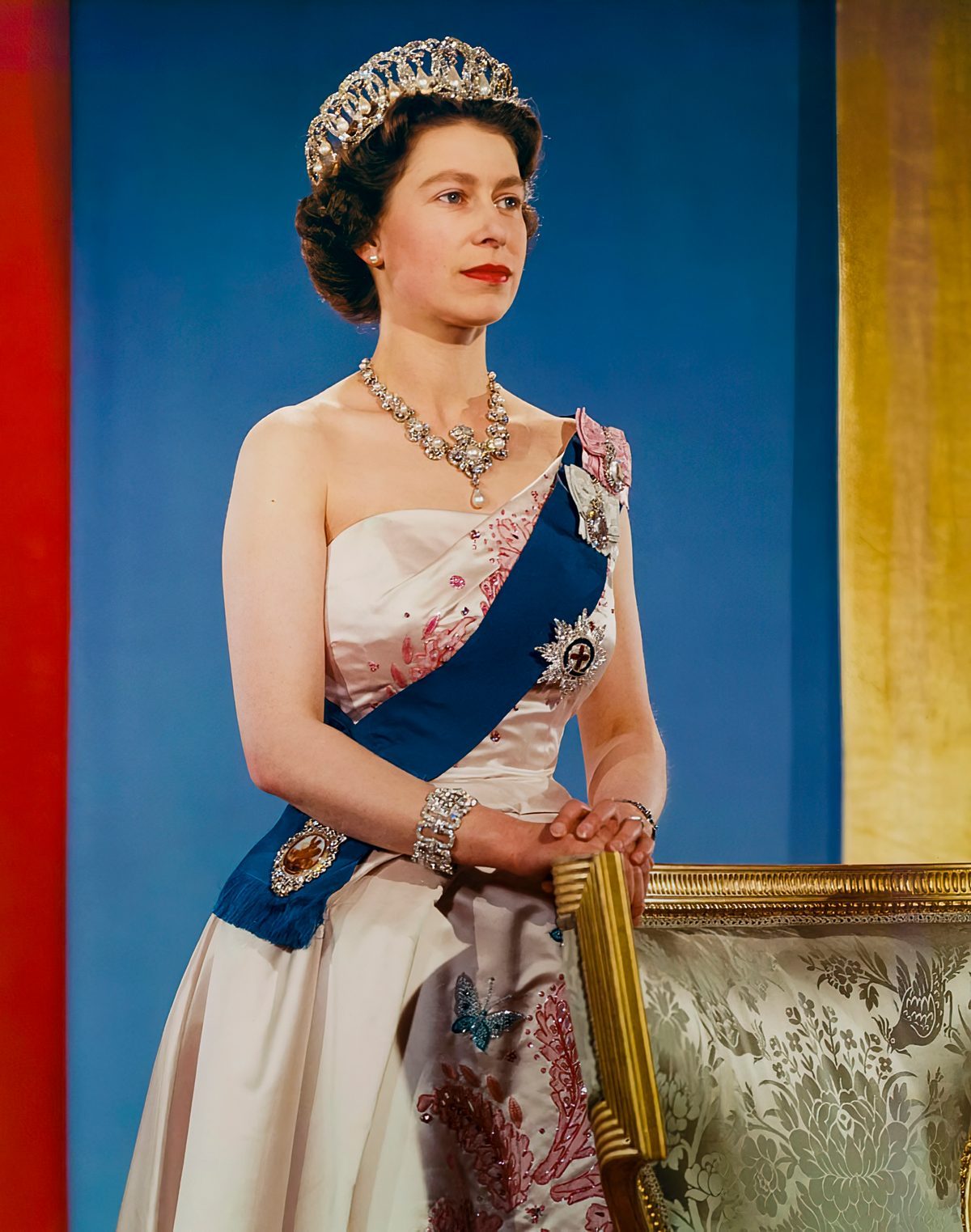
📷 Photo: Donald McKague. Public domain via Wikimedia Commons.