In the hushed moments before one of Britain's most anticipated coronations, King Edward VII stood paralyzed at the entrance to Westminster Abbey. The weight of a crown he had waited 60 years to wear suddenly felt crushing. His hands trembled uncontrollably, his breathing grew shallow, and the thousands of spectators who had traveled from across the Empire to witness this historic moment seemed to fade into a blur of expectant faces.
It was August 9, 1902, and Britain's new monarch was experiencing what we would now recognize as a full-blown panic attack. The ceremony that should have been his moment of triumph was threatening to become a royal catastrophe of unprecedented proportions.
A Crown Too Long Awaited
Edward VII's journey to the throne had been unlike any monarch before or since. At 60 years old when he finally ascended to the throne in 1901, he had endured the longest apprenticeship in British royal history. Queen Victoria's iron grip on power had left her eldest son perpetually waiting in the wings, criticized for his love of luxury, questioned for his judgment, and doubted by politicians who wondered if he possessed the gravitas necessary for kingship.
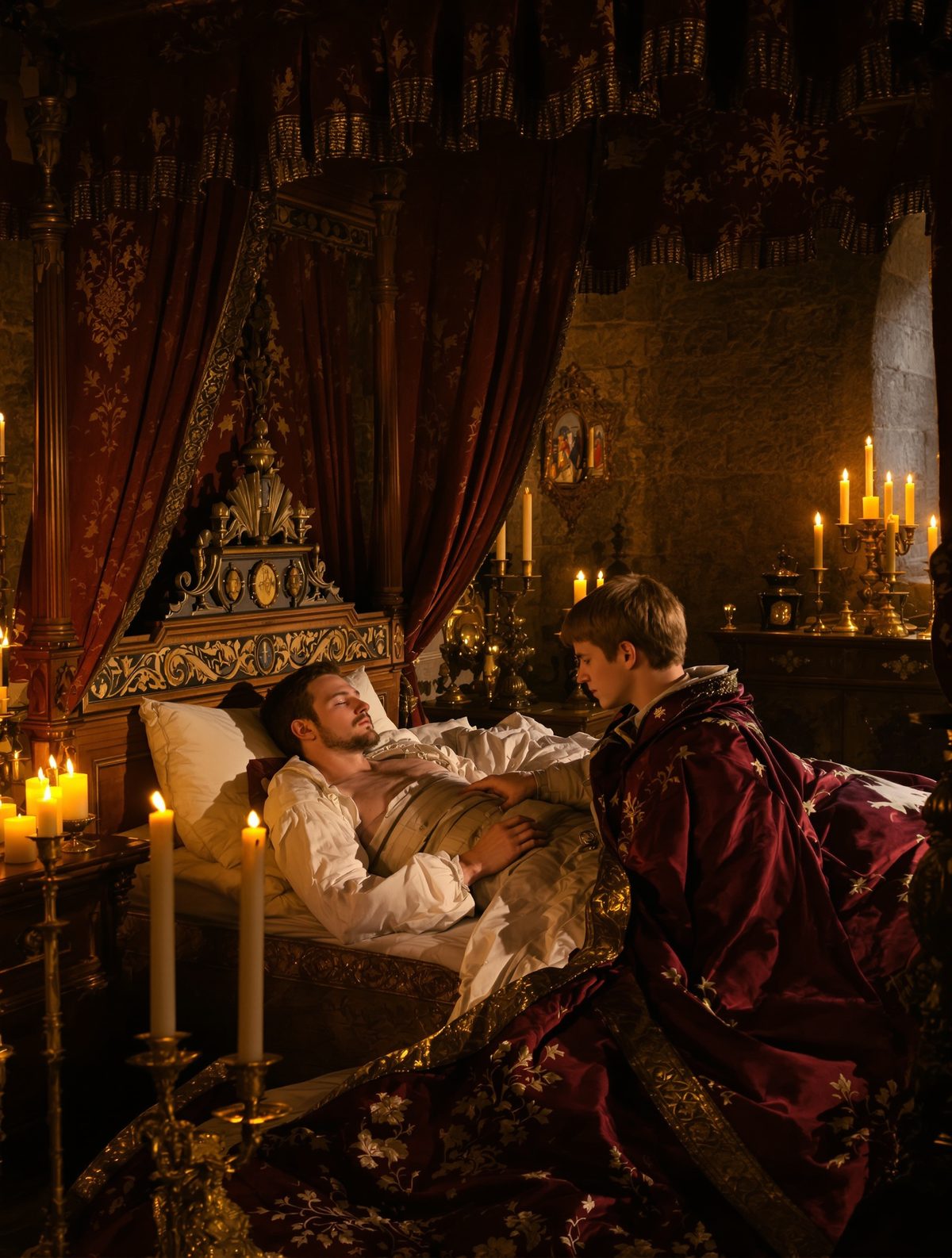
The coronation itself had already faced dramatic setbacks. Originally scheduled for June 26, 1902, the ceremony had to be postponed when Edward was rushed into emergency surgery for appendicitis just two days before the event. The operation, performed on a billiard table at Buckingham Palace, was so risky that many feared the new king might not survive. The Times had prepared his obituary, and the elaborate coronation preparations—including mountains of food for the post-ceremony banquet—had to be hastily canceled.
By August, Edward had recovered physically, but the psychological pressure had intensified. The postponement had created an atmosphere of almost unbearable anticipation. Foreign dignitaries had rearranged their schedules, the British public had worked themselves into a patriotic fervor, and the eyes of the world were focused on Westminster Abbey with laser-like intensity.
The Moment of Crisis
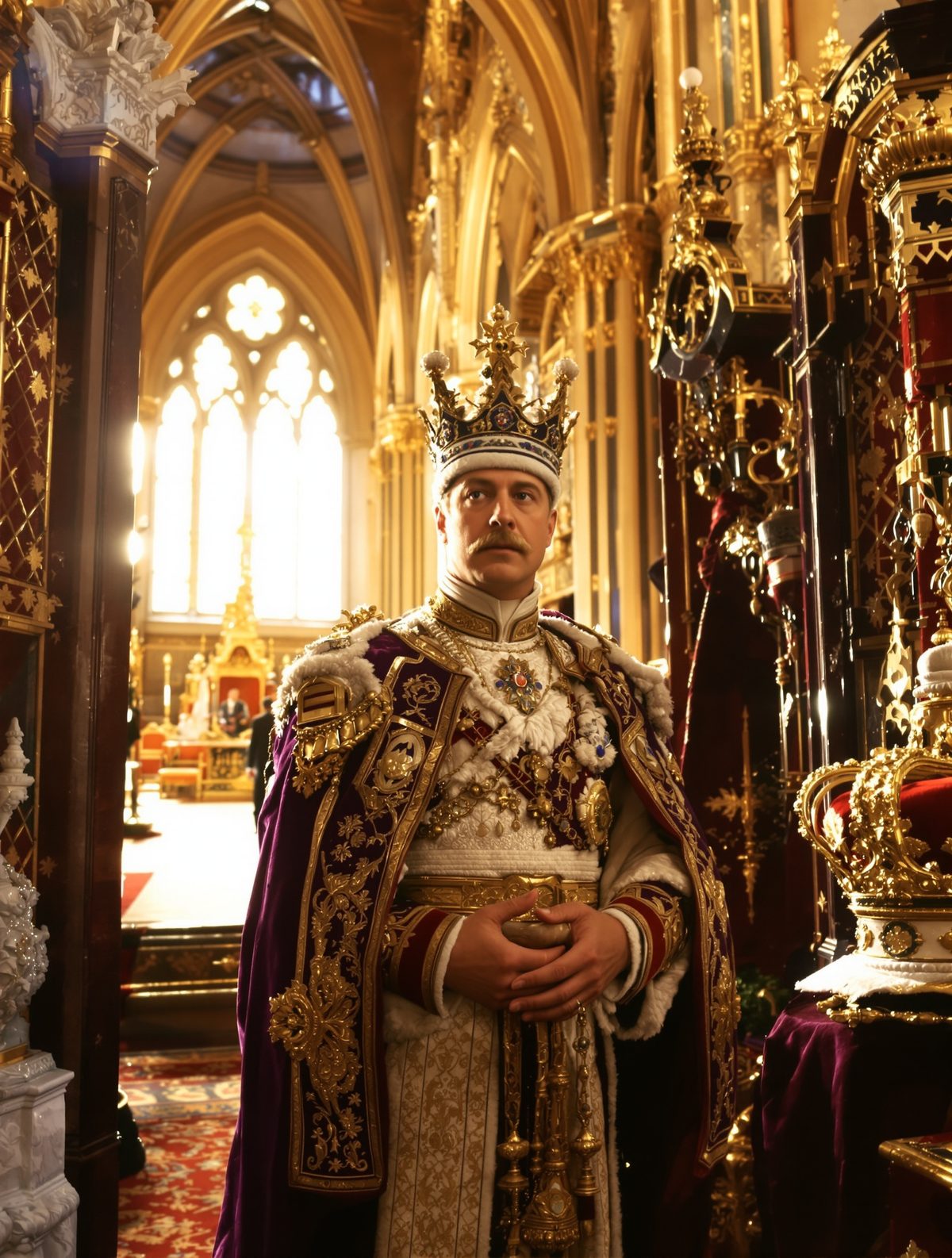
Contemporary accounts from courtiers and church officials paint a vivid picture of those terrifying moments before the ceremony began. Edward, resplendent in his crimson velvet Parliament robes, had arrived at the Abbey's west entrance as planned. But as the great doors prepared to open and the processional music began to swell, something went catastrophically wrong.
Those closest to the King observed his face drain of color beneath his carefully groomed beard. His famous confidence—the easy charm that had made him the most popular Prince of Wales in memory—simply evaporated. According to several witnesses, including his private secretary Sir Francis Knollys, Edward began to hyperventilate and his hands shook so violently that he struggled to maintain his composure.
The Archbishop of Canterbury, Frederick Temple, himself 81 years old and in frail health, waited at the altar as precious minutes ticked by. Inside the Abbey, 7,000 guests representing the pinnacle of British society and international royalty began to murmur with concern. The carefully choreographed ceremony, planned down to the minute, was grinding to a halt before it had even begun.
It was at this critical juncture that Edward reportedly whispered to his aide-de-camp that he could not go through with the ceremony. The magnitude of the moment—becoming Emperor of India, Supreme Head of the Church of England, and ruler of the largest empire in human history—seemed to overwhelm him entirely.
Quick Thinking Saves the Crown
What happened next has become the stuff of royal legend, though the exact details remain somewhat shrouded in the discretion that surrounded all royal crises of the era. According to the most reliable accounts, it was Sir Francis Knollys who provided the intervention that saved the day. The King's private secretary, who had served the royal family for decades and understood Edward's psychology better than perhaps anyone, took decisive action.
Rather than offering platitudes about duty or destiny, Knollys reportedly reminded Edward of something far more personal and immediate: his mother's legacy. Queen Victoria had died just over a year earlier, and her final years had seen a remarkable reconciliation with her eldest son. She had come to rely on his judgment and had explicitly expressed confidence in his ability to rule.
The exact words exchanged in those crucial moments may never be fully known—royal discretion ensured that the most sensitive details were never recorded for posterity. However, courtiers noted that Edward's demeanor changed almost instantly. His breathing steadied, his hands stopped shaking, and the familiar look of determination returned to his eyes.
Within minutes, the King had composed himself sufficiently to begin the procession. The great doors of Westminster Abbey opened, the coronation march began, and Edward VII walked down the aisle to claim his destiny. Those closest to him later remarked that once he began moving, his natural showmanship took over, and he carried himself through the ceremony with the dignity and presence that the occasion demanded.
A Coronation Transformed
What followed was one of the most magnificent coronations in British history. Edward, once he had overcome his initial panic, threw himself into the ceremony with characteristic enthusiasm. The service, conducted by Archbishop Temple with shaking hands but unwavering voice, included all the ancient rituals that had crowned English monarchs for nearly a thousand years.
The moment when the St. Edward's Crown was placed on Edward's head marked not just the official beginning of his reign, but a personal triumph over the demons that had nearly derailed the entire ceremony. Contemporary observers noted that the King seemed to grow in stature as the service progressed, his confidence returning with each ritual completed.
The coronation banquet that followed was a spectacular affair, featuring dishes that had been prepared twice due to the earlier postponement. Edward, now fully in his element, charmed foreign dignitaries and British nobles alike, giving no hint of the crisis that had nearly prevented the entire event from taking place.
The Human Face of Majesty
Edward VII's secret panic attack reminds us that even those born to the highest positions are fundamentally human, subject to the same fears and anxieties that affect us all. The immense pressure of royal duty, magnified by decades of waiting and public scrutiny, had momentarily overwhelmed even this most gregarious and confident of monarchs.
The incident also highlights the crucial role played by those behind the scenes in royal life. Sir Francis Knollys's quick thinking and intimate understanding of his royal master quite literally saved the day, preventing what could have been a constitutional crisis and a personal humiliation for Edward.
Perhaps most remarkably, Edward's recovery demonstrates the resilience that has characterized the British monarchy through centuries of challenges. Despite his momentary crisis, he went on to become one of Britain's most beloved kings, earning the nickname "Edward the Peacemaker" for his diplomatic skills and transforming the monarchy's relationship with the British public.
Today, as we witness modern royals facing their own moments of pressure and public scrutiny, Edward VII's story offers a compelling reminder that the Crown has always been worn by human beings with human frailties. The difference between a successful reign and failure often lies not in the absence of fear, but in the courage to overcome it when the moment demands. That courage, whispered encouragement from a trusted aide, and perhaps the lingering influence of a formidable mother, transformed what could have been Edward VII's greatest failure into the beginning of a remarkable reign that would help define the modern British monarchy.