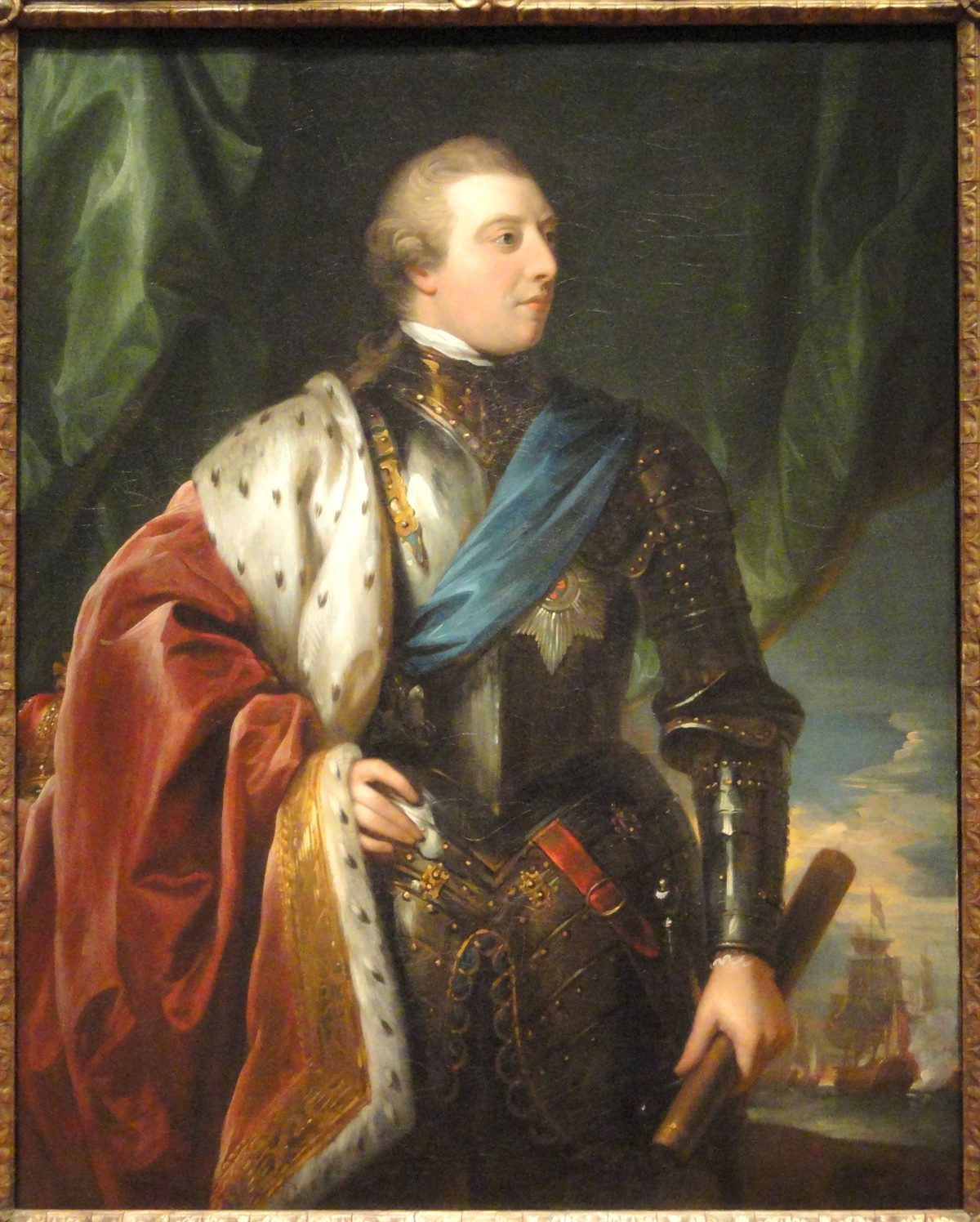
In the vibrant tapestry of British history, few moments sparkle as brightly as that summer of 1769 when King George III, often caricatured as the unfortunate monarch of American independence, unfolded a dimension of his persona that was both regal and revolutionary. Stepping into the rarefied realm of the empirical sciences, George III did what no king before him had attempted—he donned the robes of an astronomer, producing data so precise it earned him the respect of England's most elite scientific circle: the Royal Society.
The Royal Stargazer: A Passion Beyond Politics
George III's infatuation with the stars wasn't a mere distraction from the political trials of his reign, but a profound, personal passion. Already burdened by the strains of governance and public perception, particularly with whispers of madness shadowing him, George sought solace and serenity in the heavens’ eternal dance. His Royal Observatory at Richmond, constructed with the meticulous care of a man driven by genuine curiosity rather than royal pomposity, became a retreat where he could engage in scientific inquiry and exploration.
Surrounded by gardens that stretched majestically across Richmond Hill, the observatory was designed as a temple of learning. Here, George did more than just observe; he crafted and polished his own lenses with the precision and dedication of a true scientist. His approach to astronomy wasn’t merely royal indulgence but a tangible demonstration of a king's desire to contribute something of enduring value to the realm of human knowledge.
A Celestial Event: The Transit of Venus
On the 3rd of June, 1769, the skies were set for a spectacle that no astronomer wished to miss—the Transit of Venus. This rare event, where Venus passes directly between Earth and the Sun, was crucial for calculating the distance from the Earth to the Sun. Such measurements were paramount not just for scientific understanding but also for the more practical purposes of navigation, vital for Britain’s development as a maritime power.
George III, perched in his observatory, meticulously recorded the transit, noting with precision the moments of contact and duration. It was an endeavor that demanded not only patience but rigorous attention to detail, qualities not always attributed to monarchs of the time. The King’s diligence paid off when his observations matched the best data collected globally, earning him the commendation of the Royal Society. His regal signature on the data sheets was more than just symbolic—it was a testament to the fact that the King of England had, in that moment, secured a place among the legitimate ranks of astronomers.
The Royal Society's Acknowledgment
Even in the hallowed halls of the Royal Society, where skepticism often ran high regarding noble dabbling in the sciences, George’s findings were regarded with respect. This wasn’t simply an act of deference to a king, but a genuine recognition of his skill and contribution. The data he presented was well-documented, precise, and credible, standing shoulder-to-shoulder with that of renowned astronomers like Edmund Halley and James Cook.
For a king whose reign had seen both triumphs and tribulations, including the American colonies' declaration of independence, this acknowledgment provided a refreshing narrative. Here was proof that George was not only sovereign by birth but also by merit as a contributor to the Enlightenment's growing body of knowledge. The Royal Society, known for its stringent standards, inadvertently bestowed upon him a crown of its science—recognizing his work not simply because he was king, but because he was a competent astronomer.
A Monarch’s Legacy Beyond the Crown
The tale of King George III’s astronomical achievements is more than a quirky footnote in history; it’s a lens through which we can view the monarch in a new light. While political caricatures of George III often simplify his image to that of a "mad king," the reality is far more layered. His dedication to science demonstrates an intellectual curiosity and a commitment to the pursuit of knowledge that complements his royal duties.
Today, in an age often overshadowed by fleeting social media moments, George’s story reminds us that the pursuit of passion and knowledge can transcend titles and conventional boundaries. It’s a timeless narrative of human curiosity and resilience—capturing a king not only enthroned by birthright but acclaimed in fields far beyond the domain of politics or power.
Thus, as we gaze upwards, hopefully with as much fascination as George did from his Richmond observatory, we’re reminded of the boundless realms of discovery that still await us, inspired by a king who, for a summer day in 1769, looked beyond the Regency’s immediate horizon to embrace the celestial magnificence of the stars.
📷 Photo: Daderot. CC0 via Wikimedia Commons.