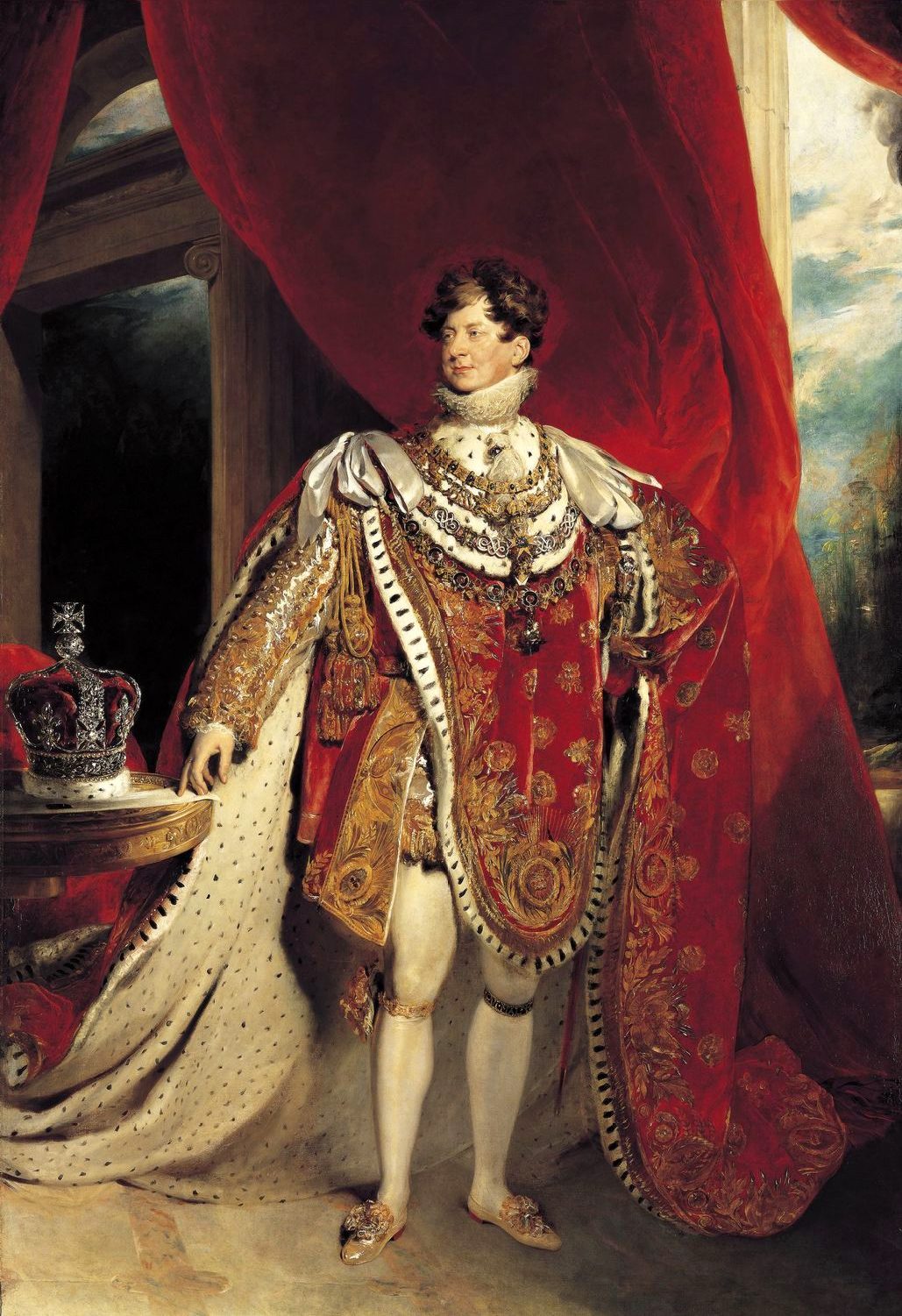
July 19, 1821. Westminster Abbey was a stage like no other, and King George IV was its dazzling lead actor. His coronation was the epitome of regal exuberance, an opulent tableau etched into history books and whispered through corridors of power. As his procession made its way, the crowd gasped — not merely at the spectacle but at the king himself, ensconced in a sartorial masterpiece that told of his grandeur. However, it was backstage, in the pre-staged pandemonium of his dressing room, where the true drama unfolded.
The Price of Majesty
The coronation of King George IV wasn't just an event; it was an extravaganza of unparalleled magnitude. The King, known for his love of excess and flair, ensured that his coronation would be a benchmark of opulence. The total expenditure was so extravagant that it made headlines and took breaths away — figures that today would convert into millions made 1821 a year to remember.
At the center of this monumental production stood a man whose sense of fashion was as flamboyant as his taste for life's luxuries. George had been the Prince Regent for years, shouldering the duties fit for a king before officially donning the crown. His ascension to the throne was long anticipated, and with it came a relentless determination to leave a legacy of magnificence.
The meticulous planning wasn't solely about splendor for splendor's sake; it was a demonstration of power, a reassurance of continuity and tradition in the wake of Europe’s turbulent socio-political landscape. This theatrical display, George believed, would solidify the monarchy's stability and immortalize his vision of sovereignty that dazzled far and beyond Britain's archipelago.
Dressing the King: A Teeming Troupe
The King awoke that fateful July morning in a flurry of anticipation, surrounded by a profusion of fabric, jewels, and the hushed bustle of attendants putting together a royal tapestry of sartorial splendor. The pièce de résistance of his attire was a corset so temperamental, it demanded the collective force of four men to lace.
George IV, known for his portly figure, was no longer the lithe prince of his youth. His corset served not only to shape his physical presence but to embody the disciplined lineage he represented. Tightly laced, almost to the point of restricting his breath, it embodied the peculiar pain of beauty and the weight of the crown. The tension in the dressing room was as tactile as the binds of the corset itself, the silence only interrupted by the swishing of fabric and the groans of men tasked with the daunting challenge.
The elaborate robe, made from gold and crimson embroidered velvet, added layers of spectacle. Jewel-adorned sword at his side, and crown of literary and literal weight atop his powdered wig, George emerged transformed into the near-mythical embodiment of monarchy, ready to take the stage before an audience of thousands.
A Ravenous Audience Awaits
As the coronation approached, Westminster Abbey became a magnet for dignitaries, nobility, and commoners alike, all eager to witness this unparalleled show of sovereignty. The atmosphere was charged with a palpable electricity — anticipation mingled with the expectation of greatness.
The Abbey’s interiors were decorated with colossal draperies and regal insignias, its pews swelling with a who's who of European aristocracy and notable architects of power. To the British people, this was more than mere ceremony; it was a reassuring pageant reinforcing that their king was not merely a ruler, but an aesthetic delight surmounting Napoleonic shadows.
When George entered, flanked by regal attendants, an audible gasp resonated through the hallowed edifices. The King was a vision of decadence and refinement, exhibiting a gown heavy with the weight of royal duty and ornamented with centuries of tradition. Undoubtedly, George IV had achieved his crowning glory — surpassing all expectations with an exhibit of royal pageantry that would be whispered about for generations.
The Burden and Radiance of Royal Apparel
Yet, beneath the extravagant layers of velvet and gold was a human story — the narrative of a king who bore the indomitable weight of an empire and the conspicuous weight of his clothing with strained, laced breaths. While George relished in his role, he was also a man navigating his own private burdens in public at its core — an element often interwoven with both sympathy and scrutiny.
His corset, in its intricate architecture, was more than a fashion statement; it was a poignant metaphor of a monarchy that bore both the solace and struggle of absolute visibility. The echoes of courtiers’ whispers spoke of a monarch trapped in his own opulence, a man buoyed and bound by the vestments of his vocation.
Nonetheless, the grandeur and the challenges it accompanied underscored the resilience and adaptability of a monarchy that despite all whispers of reform, yielded not to such forces. This moment was a vivid testament to George IV's tenacity, theatrics, and the complex love for a nation mirrored in costume, color, and ceremony.
From Majesty to Memory
King George IV’s coronation remains a benchmark of supreme royal presentation, an evocative scene that oscillates between magnificence and humanity. Revered or critiqued, he offered a vivid portrayal of the perpetual balancing act that defines the British monarchy — between transcendental ideal and the tangible reality of leadership.
While today’s monarchs may not don corseted silk and velvet with quite the same flourish, the spirit of George IV’s epoch-defining moment echoes in every modern ceremony — a reflection of enduring traditions adapted to the pulse of contemporary society. It reminds us of the transformative power of ritual and the captivating story of a king committed to availing himself as a human canvas for the nation’s aspirations and heritage.
📷 Photo: Thomas Lawrence. Public domain via Wikimedia Commons.