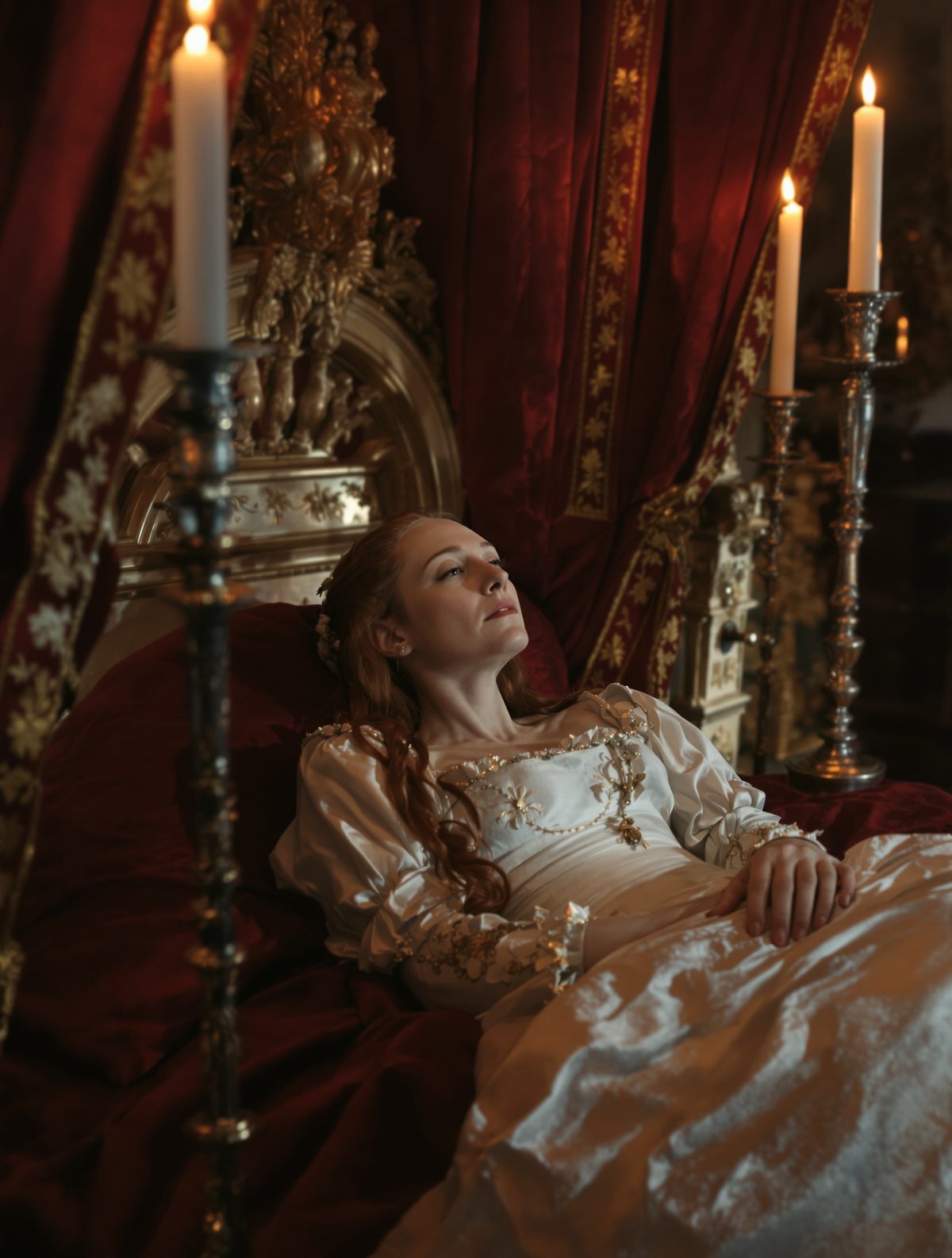
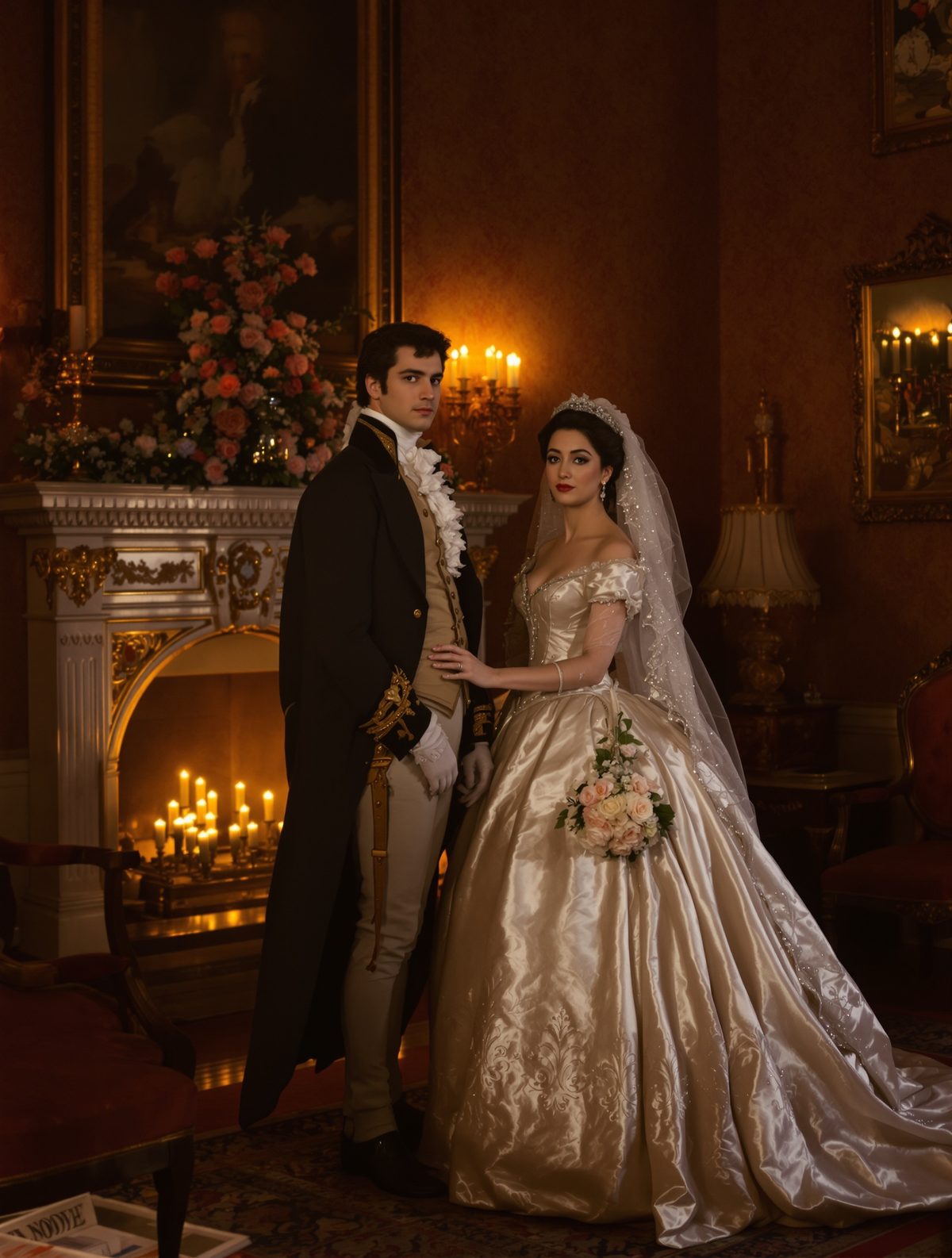
In the flickering candlelight of a modest London drawing room on December 15, 1785, the future King George IV made a decision that would haunt him for decades and nearly bring down the British monarchy. With trembling hands, the 23-year-old Prince of Wales took the hand of Maria Fitzherbert, a twice-widowed Catholic beauty, and spoke wedding vows that violated every law governing royal succession. This wasn't merely a romantic indiscretion—it was an act of constitutional treason that, if discovered, would have stripped him of his birthright forever.
The Prince and His Forbidden Love
George Augustus Frederick was everything a prince shouldn't be: extravagant, passionate, and utterly indifferent to the constitutional chains that bound the royal family. By his early twenties, he had already scandalised court society with his gambling debts, his lavish lifestyle, and his string of romantic entanglements. But nothing prepared the establishment for his obsession with Maria Anne Fitzherbert.
Maria was, in every possible way, the wrong woman for the heir to the throne. At 29, she was six years older than the Prince, a Catholic in a Protestant realm, and—perhaps most damaging of all—a commoner who had already buried two husbands. Born Maria Anne Smythe to an old Catholic family, she possessed an intoxicating combination of beauty, intelligence, and moral rectitude that drove the dissolute Prince to distraction.
The Prince's pursuit of Maria became the stuff of Georgian legend. He bombarded her with love letters, staged dramatic fainting spells outside her home, and—in his most theatrical gesture—allegedly stabbed himself in a fit of passion when she refused his advances. Whether the wound was real or merely an elaborate performance remains a matter of historical debate, but the bloodstained shirt he sent to Maria certainly convinced her of his desperation.
The Weight of the Royal Marriage Act
What made this romance so constitutionally explosive was the Royal Marriage Act of 1772, passed by George's own grandfather, King George III. This legislation decreed that no member of the royal family under the age of 25 could marry without the monarch's explicit consent. More crucially, the Act of Settlement of 1701 declared that any heir to the throne who married a Catholic would forfeit their claim forever.
The Prince of Wales was caught in an impossible bind. His father, already showing signs of the mental instability that would later manifest as full madness, despised both his son's lifestyle and his choice of bride. The idea of granting permission for marriage to a Catholic widow was utterly unthinkable. Yet George found himself so desperately in love that constitutional law seemed a trivial obstacle.
Maria herself was acutely aware of the dangers. A devout Catholic, she initially fled to the Continent to escape the Prince's relentless courtship, understanding better than he did the catastrophic consequences their union could bring. For months, she resisted his pleas, knowing that their love affair could destroy not just his future, but hers as well.
A Secret Ceremony in Park Street
The clandestine wedding took place at Maria's home in Park Street, Mayfair, with all the secrecy of a spy operation. Only a handful of people knew of the ceremony: Maria's uncle, Henry Errington, her brother, Jack Smythe, and the Anglican clergyman who performed the service—a Reverend Robert Burt, who was reportedly languishing in debtor's prison when the Prince secured his release in exchange for conducting the illegal marriage.
The ceremony itself was deliberately modest, a far cry from the grand state occasions that usually marked royal unions. There were no trumpets, no crowds, no official records—just a simple exchange of vows that could have changed the course of British history. The Prince gave Maria a ring, and she gave him her heart, even as both understood they were stepping into a constitutional minefield.
Following the wedding, the couple lived as husband and wife in all but public acknowledgment. Maria moved in grander social circles, her status subtly elevated though never officially recognised. The Prince showered her with gifts and attention, and for a brief time, seemed genuinely reformed by her moral influence.
The Price of Royal Rebellion
For nearly a decade, the secret remained largely intact, though whispers circulated through London society like wildfire. The Prince's political allies, particularly the Whig opposition, found themselves in the uncomfortable position of simultaneously supporting their royal patron while knowing he had committed what amounted to constitutional suicide.
The crisis came to a head in 1787 when the Prince's mounting debts forced him to seek parliamentary assistance. Charles James Fox, the Prince's close friend and political ally, publicly denied in Parliament that any marriage had taken place—a statement made without consulting either the Prince or Maria. The denial devastated Maria, who saw it as a repudiation of their union and her honour.
The Prince faced an agonising choice: acknowledge the marriage and forfeit his throne, or allow the denial to stand and preserve his inheritance at the cost of his beloved wife's reputation. In one of the most painful compromises of his life, he chose a middle path, privately reassuring Maria of his devotion while publicly maintaining the fiction that no legal ceremony had occurred.
The relationship would continue for years, surviving multiple separations, the Prince's disastrous official marriage to Caroline of Brunswick in 1795, and endless political storms. Maria remained the love of his life, even as duty forced him to marry another and eventually ascend the throne as George IV in 1820.
A Love Story That Shaped History
The secret marriage of 1785 reveals the human heart beating beneath the crown's constitutional constraints. George IV's willingness to risk everything for love demonstrates that even those born to unimaginable privilege face impossible choices between personal happiness and public duty—a theme that resonates through royal history to our present day.
When George finally became king, he kept a miniature of Maria by his bedside until his death in 1830. Found among his personal effects was every letter she had ever written to him, tied with ribbon and marked "Papers of particular privacy." The monarchy survived his youthful rebellion, but the story reminds us that behind every crown lies a person capable of both extraordinary sacrifice and breathtaking folly in the name of love.