Behind the formidable whiskers and stern countenance of King George V lay a secret that would have surprised even his most devoted subjects. Each morning at precisely eight o'clock, while courtiers awaited his presence in grand reception rooms and ministers prepared their briefings, the King of England would quietly slip away from the marble corridors of power. His destination wasn't the throne room or the council chamber—it was the palace kennels, where a pack of eager canines waited for the most important appointment of their day.
The Morning Ritual That Defined a Reign
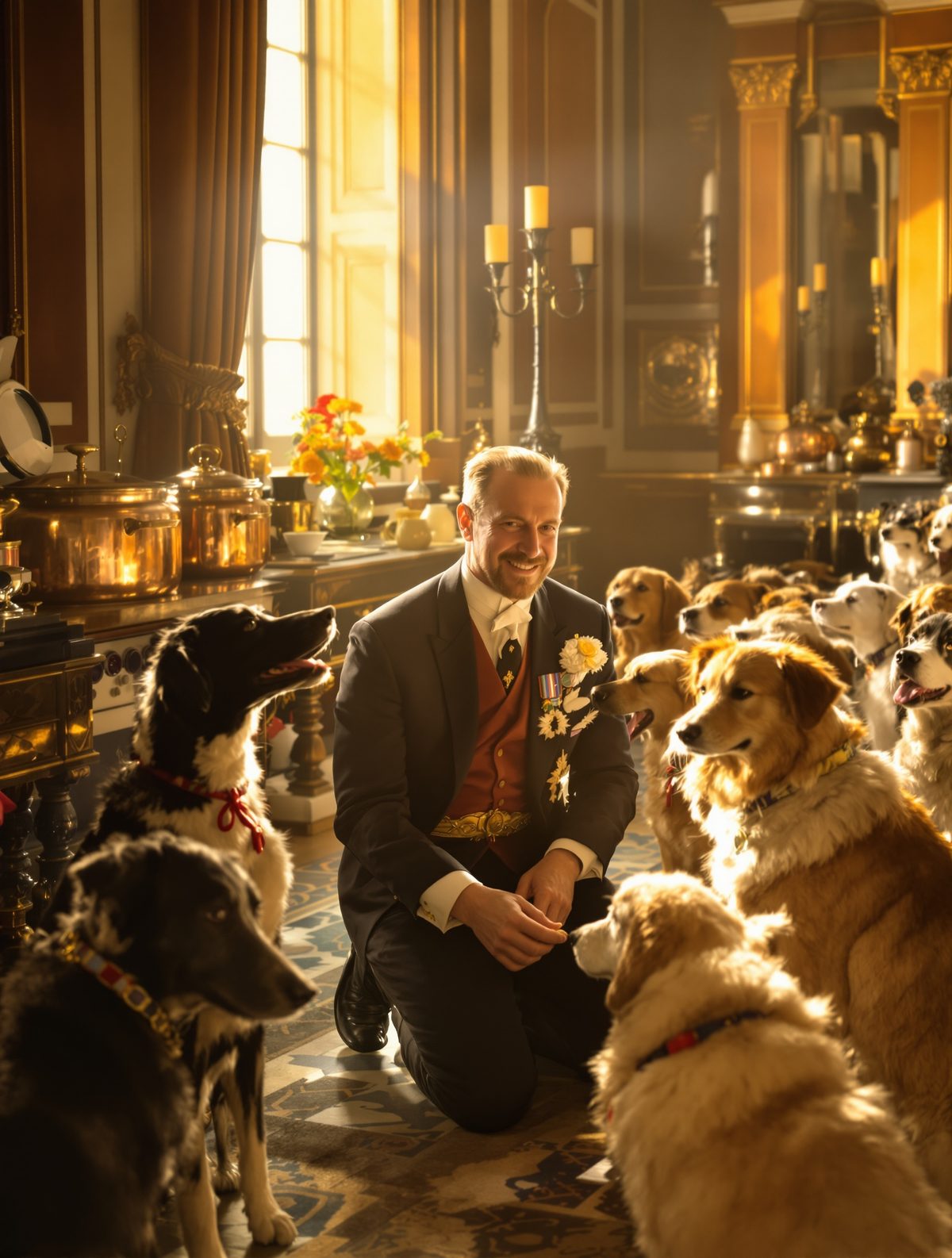
For twenty-five years, from his accession in 1910 until his death in 1936, King George V maintained what palace staff came to recognize as his most sacred daily ritual. While the Empire's business could wait, the royal dogs could not. Armed with bowls of carefully prepared meals, the King would spend the first hour of each day moving from kennel to kennel, personally ensuring that every single royal dog received their breakfast from his own hands.
This wasn't merely a cursory royal visit—it was a thorough, methodical routine that revealed the King's meticulous nature in an entirely unexpected context. Palace records suggest that at various times during his reign, George V cared for dozens of dogs, including his beloved wire fox terriers, faithful Labradors, and the occasional rescued stray that had somehow earned royal protection.
The sight of the King of England, still in his morning dress, crouched beside kennels and speaking softly to his four-legged subjects became a cherished spectacle for palace staff. "His Majesty knew every dog by name," one former palace worker later recalled, "and each one knew exactly when to expect him."
A Monarch's True Character Revealed
This daily devotion to his dogs revealed aspects of George V's character that rarely surfaced in official royal duties. The same man who could appear rigid and intimidating during state occasions displayed infinite patience as he coaxed nervous rescues to eat or celebrated enthusiastically when a particular favorite showed signs of improved health.
The King's love for animals wasn't merely sentimental—it was deeply practical and hands-on. He insisted on understanding each dog's dietary needs, health concerns, and individual temperament. When dogs fell ill, palace veterinarians reported directly to the King, who would often adjust his schedule to spend additional time with ailing animals.
This dedication extended beyond mere feeding. George V personally oversaw the dogs' exercise routines, often taking groups for walks around the palace grounds before his official day began. Staff members grew accustomed to seeing their sovereign striding across the lawn at dawn, surrounded by a joyful pack of royal dogs of various sizes and breeds, all competing for his attention.
The Palace Dogs Who Stole a King's Heart
Among George V's most cherished companions was Caesar, a wire fox terrier inherited from his father, King Edward VII. Caesar had famously walked behind Edward VII's coffin during the state funeral, and George V ensured the beloved dog lived out his remaining years in absolute luxury. The King's attachment to Caesar demonstrated his deep sense of continuity and family loyalty—qualities that would define his entire reign.
Charlotte, a yellow Labrador who arrived at the palace as an unwanted puppy, became another particular favorite. The King personally trained her and delighted in her intelligence and gentle nature. Palace staff often observed him having what appeared to be serious conversations with Charlotte, as if seeking her counsel on matters of state.
The royal kennels during George V's reign became legendary among dog enthusiasts throughout Britain. The King's commitment to proper care, nutrition, and training set new standards for animal welfare that influenced dog care practices far beyond palace walls. His insistence on spacious, clean accommodations and regular veterinary care demonstrated a progressive approach to animal welfare that was ahead of its time.
Staff Hearts Won by Royal Compassion
Perhaps most touching of all was how this daily ritual affected the palace staff. Servants who might have felt intimidated by their sovereign's official demeanor discovered a man of genuine warmth and compassion during these morning visits to the kennels. The King would chat easily with kennel staff, ask about their families, and express genuine gratitude for their care of his beloved animals.
Kitchen staff took pride in preparing the specialized meals for each dog according to the King's detailed instructions. Groundskeepers ensured the kennel areas were immaculately maintained, knowing their sovereign would inspect every detail during his daily visits. This shared care for the royal dogs created an atmosphere of collaborative devotion that strengthened bonds throughout the palace community.
The King's secretaries learned to schedule morning appointments only after nine o'clock, understanding that the first hour belonged entirely to the dogs. Foreign dignitaries and government ministers might wait, but the King's priorities were clear and unwavering.
A Legacy Written in Pawprints
When King George V died in January 1936, the royal dogs seemed to sense the loss immediately. Palace staff reported that the animals waited in their kennels at the usual eight o'clock hour for several days after the King's death, as if expecting his familiar footsteps and gentle voice. The sight moved hardened courtiers to tears and provided a poignant reminder of the genuine bonds the King had forged through his daily acts of care.
This tradition of royal devotion to dogs continued through subsequent generations, with each monarch bringing their own style to the relationship between crown and canine. Yet George V's methodical, personal approach to animal care established a template of royal responsibility that extended far beyond mere ownership to genuine stewardship and love.
In our modern world, where public figures' every move is scrutinized and their genuine character often questioned, King George V's secret morning ritual offers a refreshing glimpse into authentic royal character. His commitment to these daily acts of care, maintained faithfully for a quarter-century regardless of national crises or international obligations, speaks to a man who understood that true nobility lies not in grand gestures but in consistent, quiet devotion to those who depend on us most.