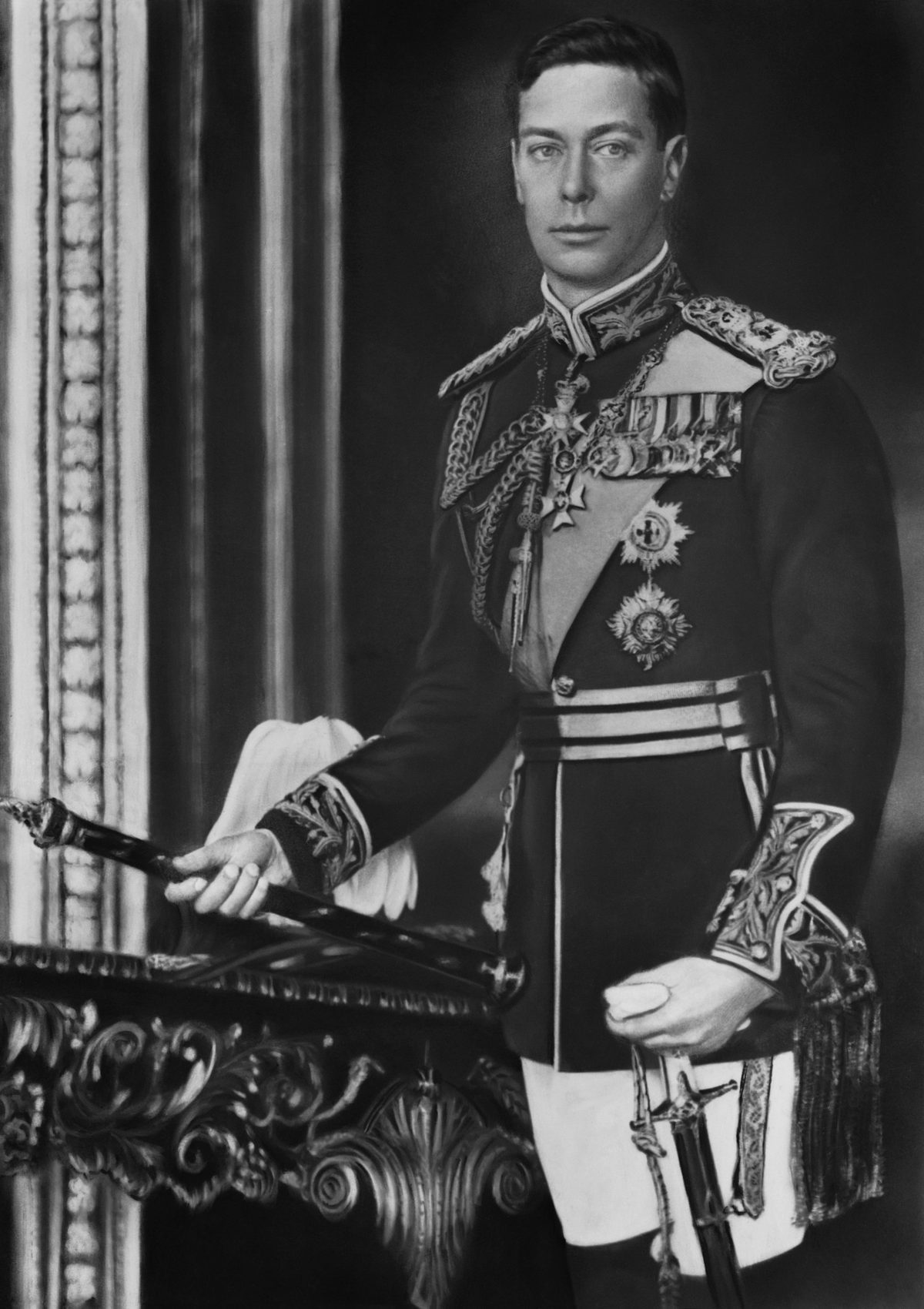
London was burning. The skies, once clear and stoic, echoed with the dreadful wail of air raid sirens. An entire nation clung desperately to hope amidst devastation. Yet, amidst the chaos of wartime Britain, a solemn figure occupied the throne—King George VI. He was a monarch not only beset by external forces that sought to overshadow his empire but also by an internal battle with the formidable challenge of speech. However, each night, whether from Windsor Castle or another temporary royal sanctuary, he set aside the weight of expectation and worry, choosing instead to share a simple, yet profoundly human, ritual with his eldest daughter, the young Princess Elizabeth. Together, they solved The Times crossword, an hour of peace during great turmoil.
A Ritual Amidst Ruins
The Blitz of 1940 was a harrowing chapter in Britain’s storied past. The night skies of London lit up not with stars, but with the surreal and punishing luminescence of warfare. Families huddled in shelters, stoically enduring the bombings that sought to crush their spirit. Amidst such chaos, few would expect tenderness and simplicity to thrive, especially within the walls of the royal residence. Yet every night, King George VI found solace not in the grandeur of crowns and scepters, but in solving crosswords with his daughter.
This nightly sojourn offered more than mere escapism. For George VI, known affectionately within the family as Bertie, it was a rare opportunity to bond with the young Elizabeth, who herself stood on the brink of historic responsibilities. Royal duties momentarily relinquished their grip, and in their place blossomed an exercise of wit and collaboration. Together, their thoughts wandered to quaint wordplay and puzzles that momentarily whisked them away from the daunting reality outside. The image of a father and daughter, side by side, signifies resilience, familial bond, and, above all, the unassailable warmth of shared moments.
A Sanctuary from Sovereign Responsibilities
If there existed an image of the indefatigable spirit of monarchy, George VI was its archetype. Ascending the throne unexpectedly, following his brother Edward VIII's abdication, he was thrust into a role amid personal struggles. The new king was often characterized by public reticence and a battle with a speech impediment famously chronicled in various narratives. Despite his challenges, George VI faced these trials with courage and dignity, embodying the steadfastness expected of royal leadership.
However, the midnight crosswords were not just a pastime; they were a balm—an intellectual refuge. To decipher the intricate puzzles within The Times was to draw some semblance of order in their fractured world. The royal family, notably private in their personal affairs, found something universally relatable in this nightly ritual. It offered a whisper to the public: Even amidst royalty's splendor, simple, honest connections are invaluable and harness uncanny strength in adverse times.
Windsor's Candles in the Dark
As bombs fell like comets on the cityscape of London, the Windsor Castle, unflappable as ever, stood as a beacon of continuity. Here, stewarded by a relentless monarch, young Princess Elizabeth first observed and participated in leadership's nuances, later to define her own storied reign. The shared crosswords with her father nurtured delight while subtly imparting lessons in strategy, patience, and clarity—all vital for future queenship.
Such an ordinary, quintessentially British exercise delivered profound solace. Windsor's temporary quietude, emphasized by the gentle choruses of leaded pencils scratching across The Times, signified reassurance in the continuity of tradition. Elizabeth, who would eventually become the longest-serving British monarch, embraced the values instilled during these tender hours. History often omits such domestic moments of humanity, but perhaps it is here where royals are most relatable—fabricating the bridge between tradition and everyday life.
Puzzle Pieces of Enduring Legacies
King George VI's life and legacy, laden with the burdens of reconstruction and kinship, would eventually lead to the cherished stability of the post-war era, a testament to his unwavering dedication. Meanwhile, young Elizabeth, molded by these intimate moments, would step confidently into her role as queen, armed with memories of midnight selections of enigmatic words and grids, a passage between generations.
Their shared crosswords were preambles to Elizabeth's reign characterized by a rhyme of duty and warmth, a duality that defined George VI. Carrying forth the poignant lessons of these nights, she emerged not just as a queen, but an emblem of resilience and an unwavering public servant, much like her father before her. The monarchy, through such personal interludes, carries the promise that even in isolated towers above, human stories echo richly when seen through the lens of shared, simple rituals.
Today, as society embraces change with the same vigor with which bombs once rained upon London, the heartwarming midnight crosswords between King George VI and Princess Elizabeth remind us of unwavering bonds that tie us in shared humanity. Their tale transcends the opulence so often associated with royalty, instead capturing the spirit of family and fellowship. Despite the grandeur swirling around, the monarchy remains timeless, imbued with narratives of warmth like this—a tender reminder that in the realm of both puzzles and life, clues are best deciphered in communion.
📷 Photo: Matson Photo Service. Public domain via Wikimedia Commons.