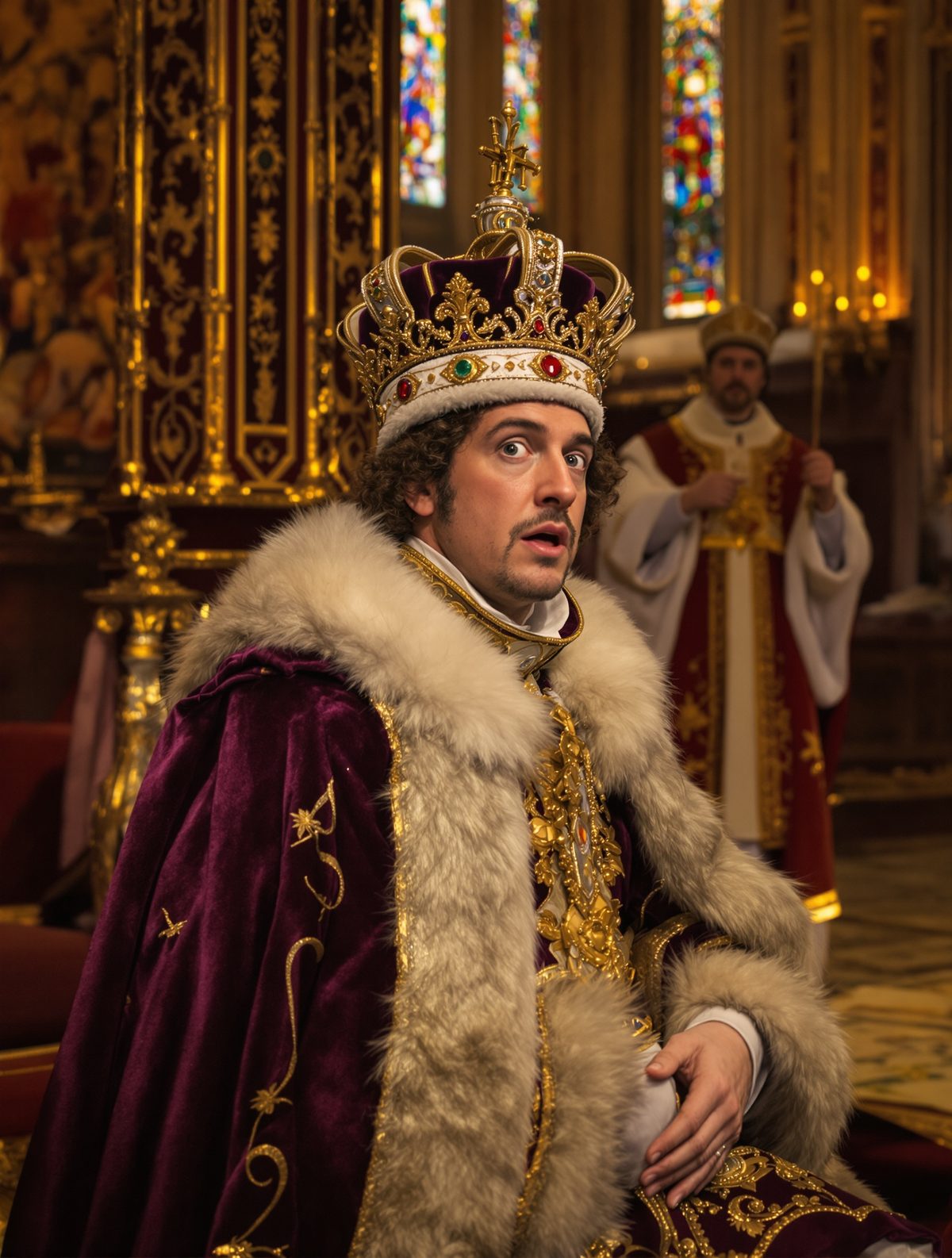
The ancient stones of Westminster Abbey had witnessed countless coronations, each one a moment of divine transformation where mortal flesh became sacred kingship. But on the crisp spring morning of April 23rd, 1685, those hallowed walls bore witness to something unprecedented. As Archbishop William Sancroft lifted the magnificent St. Edward's Crown—that most precious symbol of English sovereignty—and placed it upon the head of the kneeling James II, the unthinkable happened. The crown, worn by monarchs since the days of Edward the Confessor, slipped forward on the King's brow and tumbled to the abbey floor with a resounding clatter that seemed to echo through eternity.
A Crown Steeped in Sacred History
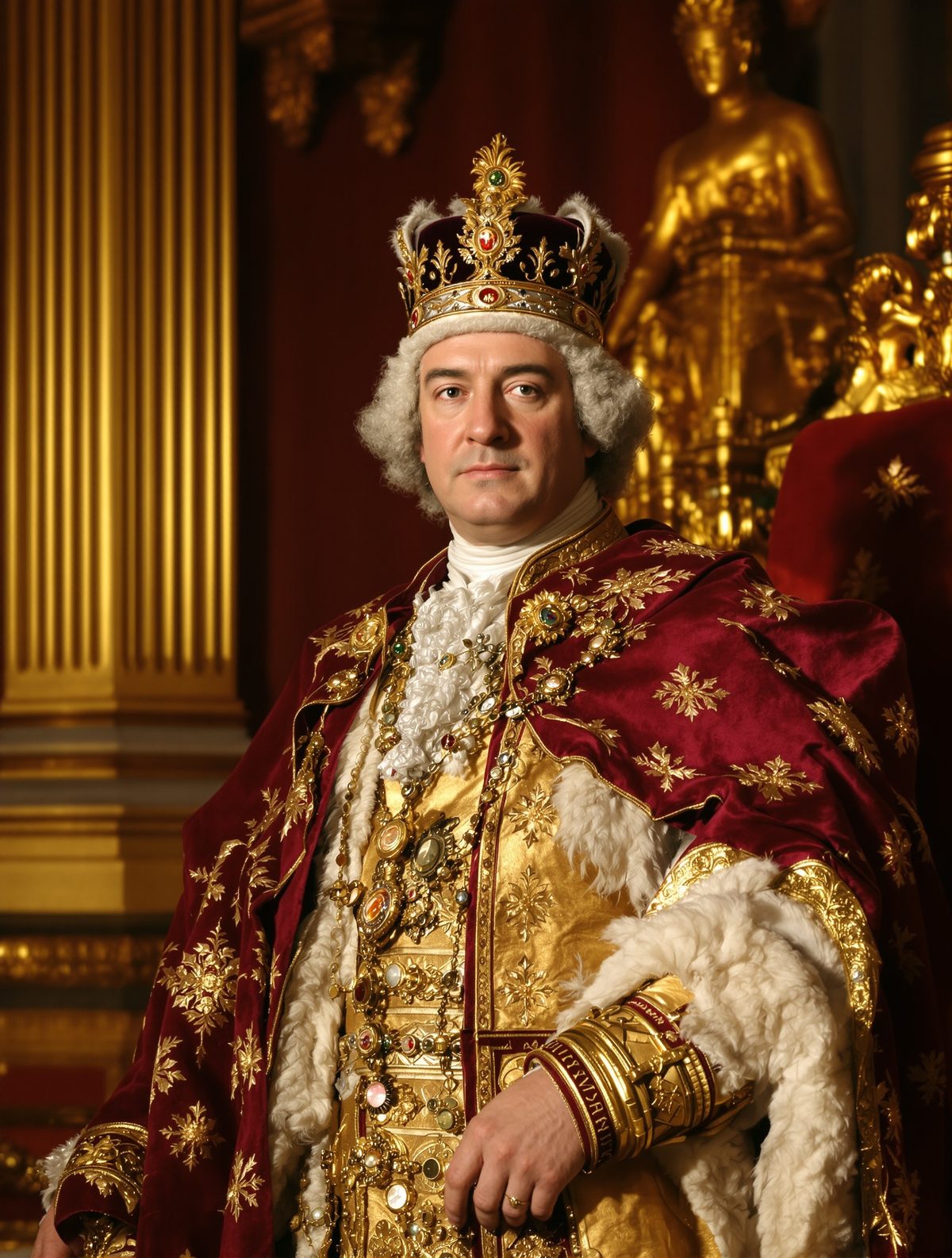
To understand the profound shock of this moment, one must appreciate the reverence surrounding St. Edward's Crown. Named after Edward the Confessor, the crown represented an unbroken chain of sovereignty stretching back through centuries of English history. Crafted from solid gold and adorned with semi-precious stones, it weighed nearly five pounds—a substantial burden that symbolized the weight of kingship itself.
The crown had graced the heads of James's predecessors without incident. His brother, Charles II, had worn it proudly during his restoration coronation in 1661, marking the triumphant return of the monarchy after the dark years of the Commonwealth. Before that, it had crowned medieval kings and queens who had shaped the very foundations of the realm. Its presence at a coronation was not merely ceremonial—it was the physical manifestation of divine right, the moment when God's grace descended upon the chosen monarch.
The coronation ceremony itself followed a script refined over centuries, each gesture and prayer imbued with deep spiritual significance. The congregation in Westminster Abbey that day included the finest of English nobility, foreign dignitaries, and church officials, all gathered to witness this most sacred of moments. The air was thick with incense and anticipation as the ancient ritual unfolded with its usual majesty—until that shocking instant when tradition literally fell apart.
The King and His Troubled Path to the Throne
James II's journey to Westminster Abbey had been anything but conventional. The second son of Charles I, James had spent his youth in exile during the Commonwealth period, experiencing firsthand the precarious nature of royal power. His return to England with the Restoration in 1660 had seemed to secure the Stuart dynasty's future, but his path was complicated by a decision that would define his entire reign: his conversion to Roman Catholicism.
In an England where anti-Catholic sentiment ran deep, James's faith made him a controversial figure long before he ascended the throne. As Duke of York, he had served his brother Charles II loyally, distinguishing himself in naval battles and proving his administrative capabilities. Yet whispers about his religious allegiance followed him through the corridors of Whitehall, creating an undercurrent of tension that would eventually contribute to his downfall.
When Charles II died in February 1685, James's accession to the throne was legally uncontested but politically fraught. Parliament had attempted to exclude him from the succession during the Exclusion Crisis of 1679-1681, and though Charles had successfully defended his brother's rights, the underlying religious tensions remained unresolved. James came to his coronation as a king whose legitimacy was legally sound but whose reign would prove to be built on increasingly shaky foundations.
An Ominous Moment in Sacred Space
The coronation ceremony proceeded with its traditional grandeur until that fateful moment when Archbishop Sancroft approached with St. Edward's Crown. Historical accounts suggest that the crown may have been ill-fitted to James's head, though whether this was due to the King's physical proportions or some oversight in preparation remains unclear. What is certain is that as the Archbishop completed the sacred words of investiture, the crown slipped inexorably forward.
The silence that followed must have been deafening. In an age when omens and portents were taken seriously, the sight of the crown of England lying on the abbey floor would have sent shock waves through the assembled nobility. Coronations were supposed to be flawless demonstrations of divine approval—this was something entirely outside the realm of acceptable possibility.
Contemporary accounts vary in their details, but most agree that the Archbishop quickly retrieved the crown and placed it more securely upon the King's head, allowing the ceremony to continue. Yet the damage to the mystique of the moment was irreparable. Those present would have struggled to forget what they had witnessed, and in the coffee houses and drawing rooms of London, the incident would inevitably be discussed in hushed, troubled tones.
The superstitious might have seen the fallen crown as a divine warning about James's fitness to rule, while the more politically minded would have recognized it as an unfortunate metaphor for the instability that seemed to follow the Stuart dynasty. Even those sympathetic to the King must have felt a chill of foreboding as they watched the symbol of English sovereignty being lifted from the cold stones of Westminster Abbey.
Prophecy Written in Gold and Gravity
History would prove the fallen crown to be remarkably prophetic. James II's reign lasted just three years and ten months, ending not in the glory of a successful monarch but in the ignominy of exile and the arrival of William of Orange. The Glorious Revolution of 1688 would see James flee to France, abandoning his throne rather than face the military forces arrayed against him.
The issues that made James's reign so turbulent—religious conflict, questions about the limits of royal power, and tensions between Crown and Parliament—were all present in embryonic form on that coronation day in 1685. His attempts to advance Catholic interests in a Protestant nation, his perceived absolutist tendencies, and his inability to read the political mood of his subjects would all contribute to his eventual downfall.
Perhaps most poignantly, James would never again wear St. Edward's Crown after his coronation day. The magnificent symbol that had slipped from his head in Westminster Abbey would pass to William III and Mary II, and later to Queen Anne, while James spent his remaining years as a pensioner of Louis XIV, dreaming of a restoration that would never come.
Echoes Across the Centuries
The story of James II's fallen crown resonates across the centuries as a reminder that monarchy, for all its pageantry and tradition, remains fundamentally human. Even the most sacred moments can go awry, and the grandest ceremonies cannot guarantee the success of those they celebrate. In our own era, when royal events are planned with military precision and broadcast to global audiences, it's worth remembering that our ancestors faced the same challenges of balancing dignity with the unpredictable realities of human experience.
Today's St. Edward's Crown—though incorporating elements of the original—was largely remade for Charles II's coronation and continues to play its sacred role in British coronations. When King Charles III was crowned in 2023, the same weighty symbol sat securely upon his head, connecting him to that unbroken chain of sovereignty that stretches back through the centuries, including that dramatic day in 1685 when divine right met the laws of physics in the most public way imaginable.
The fallen crown of James II serves as both a fascinating historical curiosity and a profound meditation on the nature of power itself—magnificent in concept, weighty in responsibility, and always subject to the fundamental uncertainties that make us human. In the end, perhaps that's what makes these royal stories so endlessly compelling: they remind us that beneath the crowns and ceremony, history is shaped by real people facing very real challenges, one momentous day at a time.