In the summer of 1969, as the politics of cultural identities stirred passions across the world, a young prince embraced an extraordinary challenge. Prince Charles, heir to the British throne, was sent to Aberystwyth to learn the Welsh language in just eight short weeks. This was no symbolic gesture. The aim was for no less than fluency sufficient to address a nation deeply rooted in its own linguistic and cultural heritage. What transpired was nothing short of remarkable: by the time of his investiture, Prince Charles was able to deliver an entire speech in Welsh, capturing the respect of many who never expected such a feat from the future king.
The Royal Journey to Aberystwyth
Prince Charles's investiture as the Prince of Wales was more than a ceremonial passage. It was a poignant acknowledgment of the uniqueness of Wales within the United Kingdom. However, the decision for Charles to learn Welsh was ambitious, to say the least. Enter Cefin Roberts, an esteemed scholar and an eccentric figure, whose task was to teach the prince a challenging language — replete with complex phonetics and rich history — as much for its cultural significance as its intrinsic link to Welsh nationalism.
In Aberystwyth, the prince settled into a life of academia far away from his more familiar regal surroundings. This picturesque town, nestled on the coast with its windswept beaches and verdant landscapes, became the backdrop for a royal experiment in cultural engagement. The young prince traded his royal garb for student attire, attending lectures and immersing himself in the vibrant life of a university town.
An Unlikely Student
For Prince Charles, a twenty-year-old with a penchant for history and the arts, the opportunity to delve into Welsh culture was a welcome one. Known for his thoughtful nature and keen intellect, Charles approached his studies with determination. Yet, learning Welsh was no mere academic exercise — it was a deeply personal journey.
The prince's tutor, William Edwin "Tedi" Millward, was not only an expert linguist but also a committed nationalist. Millward’s dedication to Welsh culture and language was the ideal inspiration for Charles. The tutor's unique amalgamation of enthusiasm and methodical teaching transformed what could have been a mere academic duty into a profound exercise of cultural empathy.
Under Millward's guidance, Prince Charles navigated the complexities of the Welsh language. The task required more than discipline; it demanded an emotional connection to engage a people proud of their distinct heritage. Through this process, Charles demonstrated a rare humility, stepping into a culture not to appropriate or overshadow, but to honour and respect.
The Investiture
The 1st of July, 1969, saw the grand spectacle of the investiture take place at Caernarfon Castle, an emblem of historical significance. Against this majestic backdrop, the world watched as Prince Charles took centre stage. Dressed in resplendent attire and carrying the weight of tradition on his shoulders, he addressed the gathered assembly.
When the young prince began speaking in Welsh, there was a collective gasp of surprise and delight. His speech, meticulously prepared and delivered, resonated deeply. Here was a testament to a genuine effort to bridge cultural divides — a royal attempt to understand and appreciate a nation whose history was interwoven with its distinct linguistic identity.
"I am deeply proud," he declared in Welsh, pausing to let the sincerity of his message sink into the hearts of those present as well as the thousands watching on television broadcasts around the world. It was a defining moment — in equal parts surprising and moving — marking a royal acknowledgment of something greater than formal duties.
A Lasting Legacy
The impact of Prince Charles's effort in learning Welsh went beyond the pomp of the investiture ceremony. It was a gesture that laid the foundations for a continuing relationship between the Prince of Wales and the Welsh people. The event opened doors for conversations that acknowledged regional heritage and values while strengthening the unique bond within the British Isles.
For Charles, the experience at Aberystwyth became more than part of his royal training. It was a connection that imbued him with a personal understanding of what it meant to be Prince of Wales. The endeavor inspired respect and goodwill, cementing his role as a unifying figure across diverse cultural landscapes. By learning Welsh, Charles not only honored a centuries-old tradition but also embraced the evolving narrative of unity within diversity.
Embracing and Celebrating Diversity Today
The story of Prince Charles's linguistic journey is as timely now as it was groundbreaking then. In a world often defined by its differences, the spirit of understanding and empathy that Prince Charles embodied fifty years ago remains a guiding light. His experience underscores the importance of cross-cultural respect and knowledge, enriching both the understanding of the monarchy and its enduring influence.
As the monarchy continues to evolve, its ability to adapt and connect across cultural lines remains crucial. Prince Charles's bold undertaking in 1969 echoes across time, reminding us that the strength of the British monarchy lies not just in its history and tradition, but also in its capacity to learn, grow, and reflect the world of today.
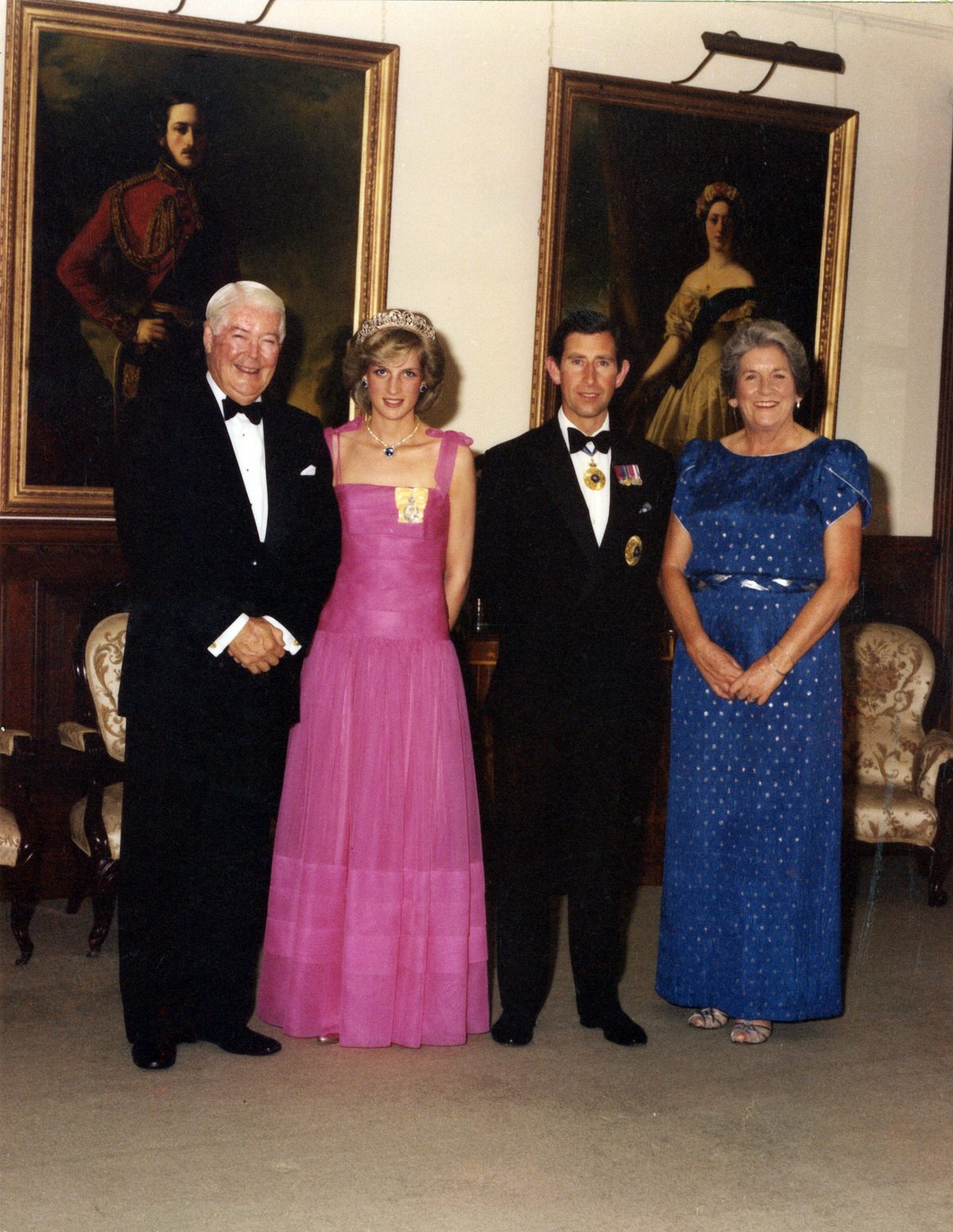
📷 Photo: Queensland State Archives. Public domain via Wikimedia Commons.