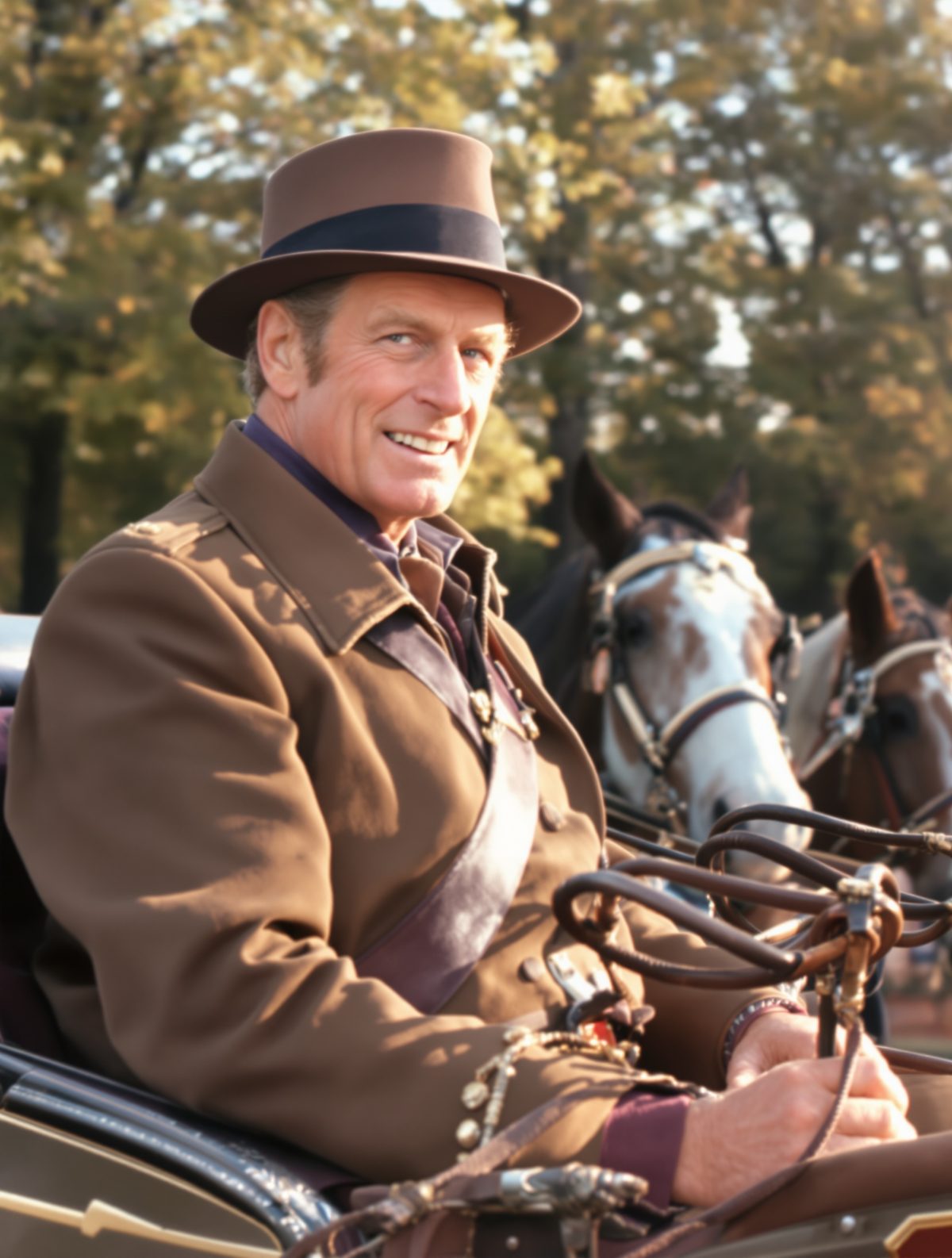
Picture this: a 50-year-old Duke of Edinburgh, tired of the genteel world of polo, suddenly announcing he's taking up competitive carriage driving. Not the leisurely trot around Hyde Park that one might expect of royal recreation, but thundering four-horse teams through the challenging terrain of Windsor Great Park at breakneck speed. Even by Prince Philip's standards of surprising career pivots, this one raised more than a few eyebrows at Buckingham Palace.
In 1971, the Duke made what many considered an eccentric decision that would become one of his greatest passions. Trading his polo mallet for leather reins, Prince Philip didn't just dabble in carriage driving—he threw himself into it with the same fierce determination that had defined his naval career and his approach to modernizing the monarchy.
From Polo Fields to Driving Trials
Prince Philip's journey into competitive carriage driving began with a familiar royal problem: boredom with traditional pastimes. After decades of polo, the Duke found himself seeking a new challenge that would satisfy his competitive spirit and love of precision. The timing was fortuitous—carriage driving was experiencing a renaissance in the 1970s, evolving from a practical mode of transport into a sophisticated equestrian sport.
The transition wasn't entirely surprising to those who knew the Duke well. Throughout his life, Prince Philip had shown a remarkable ability to master new skills, from flying helicopters to oil painting. His approach was methodical and intense—when the Duke decided to learn something, he didn't simply dabble. He studied, practiced, and pushed himself to excel with an almost military precision that reflected his naval training.
What made carriage driving particularly appealing was its combination of technical skill, physical courage, and strategic thinking. Unlike polo, which relied heavily on the partnership between horse and rider, competitive driving required the coordination of four horses working in harmony, guided by subtle shifts in the reins and the driver's voice. It was chess at full gallop, demanding split-second decisions while navigating complex obstacle courses at considerable speed.
The Queen's Initial Concerns
Her Majesty's reaction to her husband's new hobby was, by all accounts, one of bemused concern rather than outright opposition. The Queen, herself an accomplished horsewoman with an intimate understanding of equine unpredictability, could see the inherent risks in Philip's chosen pursuit. Watching her husband career around Windsor's grounds behind four powerful horses, often at speeds that made spectators hold their breath, must have tested even her legendary composure.
The royal household's response was similarly mixed. Courtiers who had grown accustomed to the Duke's various enthusiasms—from his passion for technology to his environmental advocacy—found themselves watching nervously from the sidelines as he practiced increasingly complex maneuvers. The sight of the Duke of Edinburgh taking corners at what seemed impossible angles, his carriage tilting dramatically as the horses thundered through their paces, became both a source of pride and anxiety for those charged with his welfare.
Yet there was something undeniably magnificent about Philip's commitment to his new sport. Palace staff reported seeing a renewed energy in the Duke, a sense of purpose and excitement that had been somewhat absent during his later polo years. The mathematical precision required for successful driving—calculating speeds, angles, and distances while managing four independent-minded horses—seemed to engage both his analytical mind and his need for physical challenge.
Mastering the Art of Four-in-Hand
Prince Philip's approach to learning carriage driving was characteristically thorough. He studied the sport's technical aspects with the same intensity he had once applied to naval navigation, understanding that success required far more than simply holding the reins. The Duke worked with expert trainers, spending hours perfecting his technique and developing the subtle communication skills necessary to control a four-horse team.
The learning curve was steep and occasionally dramatic. Early training sessions at Windsor Great Park sometimes resulted in what could charitably be described as "unplanned dismounts," though the Duke's naval training had prepared him well for unexpected situations. His persistence paid off remarkably quickly—within months of taking up the sport, Prince Philip was competing in national events and showing a natural aptitude that surprised even his instructors.
The physical demands of competitive carriage driving suited the Duke perfectly. At 50, he retained the fitness and quick reflexes of his naval years, along with the kind of fearless determination that had seen him through wartime service. The sport required not just courage but also strategic thinking—drivers needed to balance speed with accuracy, knowing when to push their teams and when to exercise restraint.
Windsor Great Park became the Duke's training ground, its varied terrain providing the perfect environment for developing his skills. The sight of Prince Philip practicing became a regular feature of life at the castle, with staff and family members often pausing to watch his progress. What had initially seemed like another of Philip's passing enthusiasms was clearly becoming something much more significant.
Competition and International Success
As Prince Philip's skills developed, so did his competitive ambitions. The Duke began entering national competitions, where his natural talent and rigorous preparation quickly earned respect from fellow competitors. The carriage driving community, initially perhaps somewhat awed by their royal participant, soon came to appreciate the Duke's genuine commitment to the sport and his willingness to compete on equal terms.
The international dimension of competitive carriage driving particularly appealed to Prince Philip. Here was a sport that allowed him to represent Britain while pursuing personal excellence—a combination that resonated deeply with his sense of duty and competitive spirit. His participation helped raise the profile of carriage driving both in Britain and internationally, bringing new attention and respectability to what had sometimes been viewed as an antiquated pursuit.
The Duke's success in competition was remarkable considering his relatively late start in the sport. His systematic approach to training, combined with his natural ability to remain calm under pressure, made him a formidable competitor. Fellow drivers reported that competing against the Duke required not just skill but also strong nerves—his reputation for tactical brilliance and unshakeable composure made him a challenging opponent on any course.
Perhaps most importantly, carriage driving gave Prince Philip a arena where he could excel entirely on his own merits. While his royal status inevitably attracted attention, success in competition depended solely on skill, judgment, and courage—qualities the Duke possessed in abundance. This aspect of the sport, where titles mattered less than talent, seemed to provide a particularly satisfying form of personal fulfillment.
A Lasting Legacy of Passion and Precision
Prince Philip's embrace of competitive carriage driving at age 50 reveals something profound about his character and approach to life. Rather than settling into the comfortable routines that might be expected of a middle-aged royal, the Duke chose challenge over comfort, adventure over predictability. His willingness to risk looking foolish while learning something entirely new demonstrated the kind of personal courage that extended far beyond physical bravery.
The sport became more than just a hobby—it evolved into a defining passion that would sustain the Duke for decades. His commitment to carriage driving reflected the same qualities that had made him an effective consort to the Queen: determination, precision, and an unwillingness to accept limitations. In many ways, watching Prince Philip master four-in-hand driving offered the public a glimpse into the qualities that had made him such a formidable figure behind the scenes of royal life.
Today, as we reflect on Prince Philip's remarkable life, his midlife discovery of carriage driving stands as a testament to the value of remaining open to new experiences regardless of age or circumstance. His example suggests that true vitality comes not from avoiding challenges but from embracing them, even when—or perhaps especially when—others might question our judgment. The Duke who shocked his family by taking up competitive driving at 50 reminds us that the most rewarding chapters of our lives might still be waiting to be written.