In the hushed corridors of Westminster Abbey three weeks before the most anticipated coronation of the 20th century, a young woman sat in tears beneath the crushing weight of history. Princess Elizabeth, just 27 years old, had donned the full regalia of British monarchy for the first time—and discovered that wearing the crown quite literally came with unbearable burdens. What transpired during this secret dress rehearsal would forever change how royal ceremonies were conducted, transforming a potential disaster into one of the most magnificent spectacles the world had ever witnessed.
The Weight of Ancient Tradition
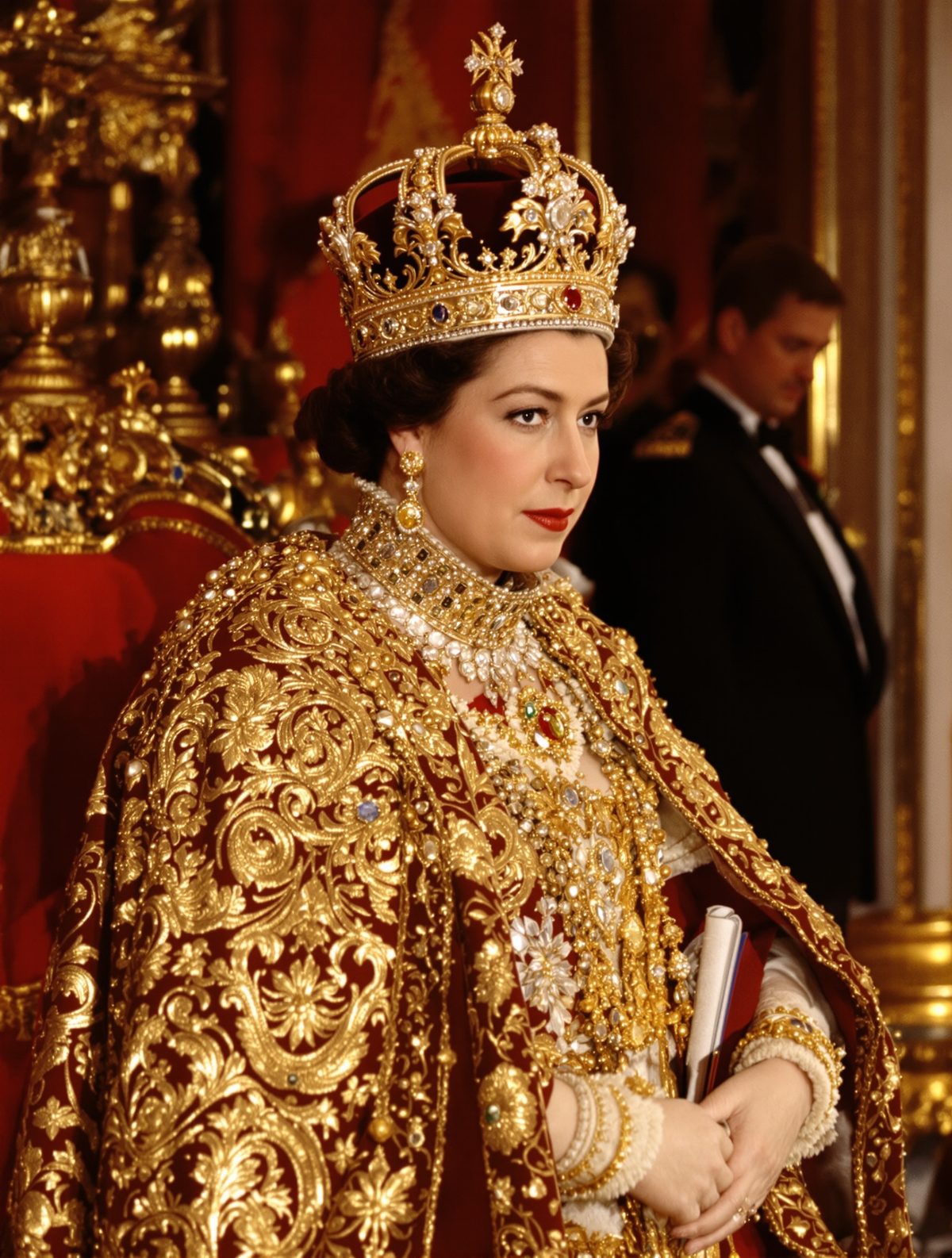
The St. Edward's Crown, crafted for the coronation of Charles II in 1661, had been the centrepiece of British coronations for nearly three centuries. Fashioned from solid gold and adorned with semi-precious stones, this magnificent symbol of sovereignty weighed an imposing five pounds—a detail that meant little on paper but proved overwhelming in reality.
During that fateful dress rehearsal in early May 1953, Princess Elizabeth experienced firsthand what no amount of preparation could have taught her. As the Archbishop of Canterbury carefully placed the crown upon her head, the young Princess felt the full force of its weight pressing down on her neck and shoulders. The elaborate purple velvet Robe of State, stretching six and a half yards behind her, seemed to anchor her to the spot like a magnificent but immobilising train.
Palace insiders later revealed that the Princess found herself unable to lift her head properly, the crown's weight making even the smallest movement a monumental effort. The realisation that she would need to wear this burden for hours during the actual ceremony, while walking, sitting, and performing countless ceremonial duties, reduced the future Queen to tears of frustration and genuine fear.
A Crisis of Confidence
The scene that greeted the Archbishop when he returned to check on the Princess was one that highlighted the profound humanity behind the crown. Here was a young woman who had already shouldered the unexpected burden of monarchy following her father's premature death, now faced with the physical reality of ancient traditions that seemed designed for a different era entirely.
The weight of the crown was compounded by the elaborate coronation robes, each steeped in centuries of tradition but presenting practical challenges that previous generations had simply endured. The Robe of State alone, embroidered with golden crowns, floral emblems, and wheat ears, was a masterpiece of craftsmanship—and an instrument of torture for anyone required to move gracefully while wearing it.
What made this moment particularly poignant was the Princess's keen awareness of the millions who would be watching her coronation. This would be the first coronation broadcast live on television, with an estimated 27 million viewers in Britain alone, not to mention the countless others around the Commonwealth and beyond. The pressure to appear regal, composed, and worthy of the crown was immense—yet here she sat, barely able to support its physical weight.
Innovation Born from Necessity
The crisis that unfolded during the dress rehearsal sparked immediate action from the royal household and ceremonial experts. Rather than simply expecting the Princess to endure what her predecessors had suffered, the Palace took the unprecedented step of modifying centuries-old traditions to ensure the ceremony's success.
The most significant change involved the timing of when the St. Edward's Crown would be worn. Instead of having Princess Elizabeth wear it throughout the lengthy ceremony, it was decided that the ancient crown would only be placed on her head for the actual moment of crowning. She would then switch to the lighter Imperial State Crown, which at just over two pounds was significantly more manageable for the remainder of the ceremony.
Additional modifications were made to the coronation robes and their fastenings, ensuring that the weight was distributed more evenly across the Princess's frame. The Palace also instituted additional rehearsals, but with carefully weighted replicas rather than the authentic regalia, allowing the future Queen to build up her strength and confidence gradually.
Perhaps most importantly, the entire approach to royal ceremonial was quietly revolutionised. The rigid expectation that royals must simply endure physical discomfort in service of tradition gave way to a more practical understanding that the ceremony's success depended on the monarch's ability to perform their role with dignity and grace.
The Triumph of Adaptation
The changes implemented following that tearful dress rehearsal transformed what could have been a disaster into one of the most successful royal ceremonies in British history. When Coronation Day arrived on June 2, 1953, Queen Elizabeth II moved through the elaborate ceremony with a grace and confidence that belied the struggles of three weeks earlier.
The sight of the young Queen processing through Westminster Abbey, her movements fluid and assured despite the weight of her regalia, created an indelible image of dignity and strength. The television cameras captured every moment of a ceremony that seemed effortlessly majestic, with no hint of the very real challenges that had been overcome behind the scenes.
The success of these adaptations extended far beyond that single day. The lessons learned from Queen Elizabeth II's coronation influenced how subsequent royal ceremonies would be planned and executed. The balance between honouring ancient traditions and ensuring practical success became a hallmark of the modern monarchy's approach to state occasions.
The innovations also reflected something deeper about Queen Elizabeth II's reign—a willingness to evolve and adapt while preserving the essential dignity and meaning of royal traditions. This pragmatic approach to ceremony would characterise her entire seven-decade reign, demonstrating that true respect for tradition sometimes requires the wisdom to modify it.
A Legacy of Grace Under Pressure
The story of that secret dress rehearsal reveals something profound about the nature of monarchy and the remarkable woman who would become Britain's longest-serving sovereign. In that moment of tears and apparent defeat, we see not weakness but the very human foundation upon which extraordinary achievement is built.
Queen Elizabeth II's willingness to acknowledge the challenges she faced, and the Palace's wisdom in addressing them practically rather than expecting her to simply suffer in silence, created a template for how the modern monarchy could honour its past while adapting to present realities. The young woman who once sat in tears beneath the weight of the St. Edward's Crown would go on to wear her metaphorical crown with unparalleled grace for more than seventy years.
Today, as we witness the continuation of royal traditions through new generations, we can trace a direct line back to that transformative moment in 1953 when necessity mothered innovation. The lesson endures: true strength lies not in the blind preservation of tradition, but in the wisdom to adapt it thoughtfully, ensuring that the magnificent spectacle of monarchy continues to inspire and unite rather than merely endure.