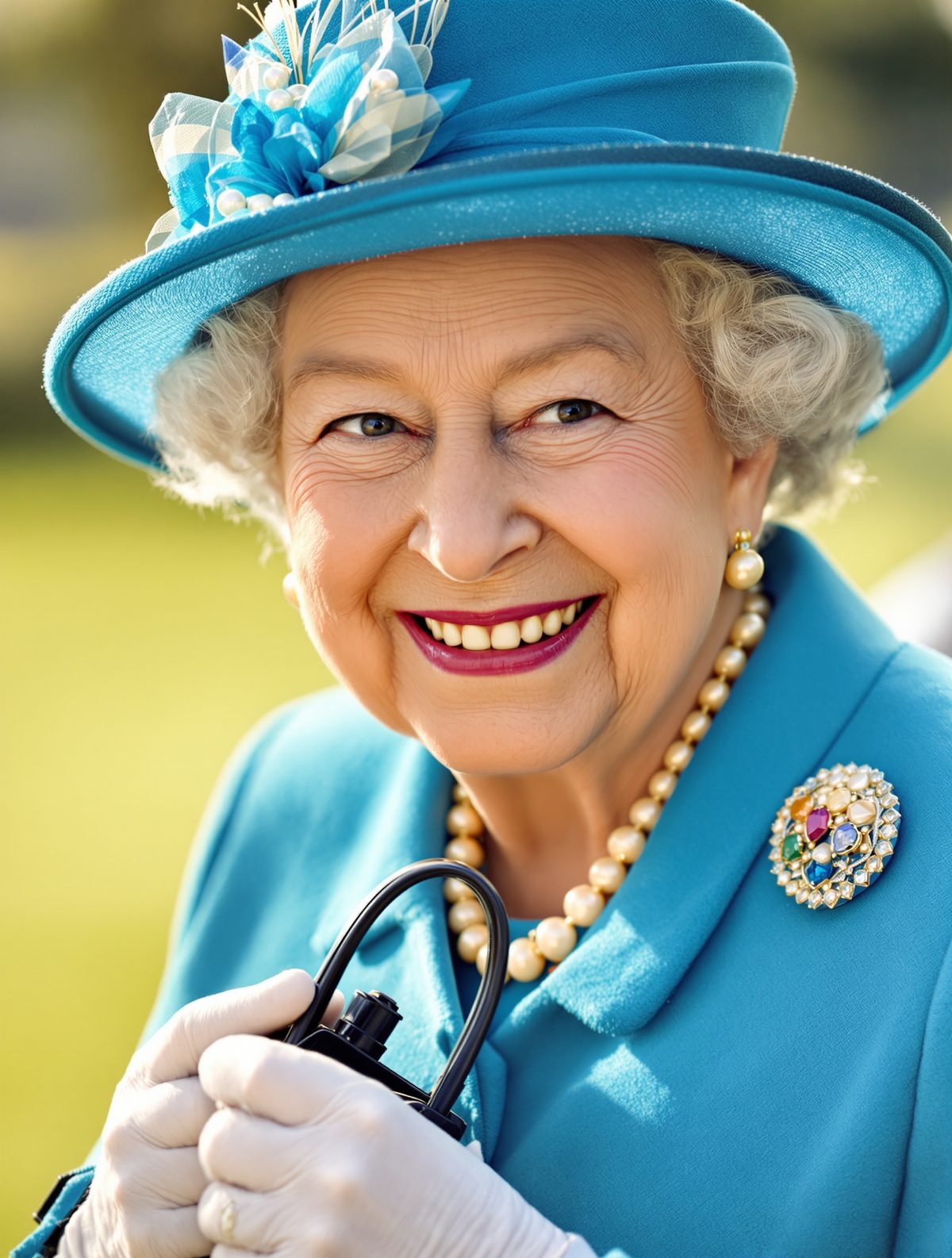
In the grand ballrooms of Buckingham Palace and the elegant drawing rooms of Windsor Castle, a silent conversation was taking place for over seventy years. While guests focused on the Queen's gracious smile and measured words, those in the know were watching something else entirely: her handbag. What appeared to be a simple black leather accessory was actually the centrepiece of an ingenious communication system that allowed Britain's longest-reigning monarch to navigate the complex choreography of royal life with remarkable precision.
The Birth of a Royal Code
Queen Elizabeth II's relationship with her handbag began long before she ascended the throne in 1952. Even as a young princess, she understood that royal life required a delicate balance between public duty and personal comfort. The handbag signals reportedly evolved organically during her early years as Queen, born from necessity rather than grand design.
Palace staff quickly learned that their young sovereign possessed a sharp mind for practical solutions. Unable to simply excuse herself from tedious conversations or rescue herself from awkward encounters as an ordinary person might, the Queen developed what would become one of the most sophisticated non-verbal communication systems in modern diplomatic history.
The signals centred around her beloved Launer handbags, crafted by the luxury British brand that would hold a Royal Warrant for decades. These weren't merely fashion statements – they were tools of statecraft, as essential to her role as the Crown Jewels themselves. The Queen's dresser, Angela Kelly, and her private secretaries became fluent in this silent language, creating an invisible support network that moved seamlessly around the monarch.
Decoding the Handbag Signals
The most famous and frequently used signal was elegantly simple: when the Queen placed her handbag on the table during a meal or meeting, it meant she wished the encounter to conclude within five minutes. This gave her staff enough time to politely orchestrate an exit without appearing rude to her guests. Palace insiders describe watching this signal with fascination, observing how smoothly the royal household would spring into action.
Even more urgent was the arm-switching manoeuvre. When the Queen moved her handbag from her right arm to her left, it was an immediate SOS – staff knew to intervene and rescue her from the current situation as quickly as possible. This signal proved particularly valuable during lengthy receiving lines or when conversations with dignitaries ran longer than protocol suggested.
The handbag's position when the Queen stood also conveyed meaning. Holding it in front of her body indicated she was open to conversation and engagement. However, when she clutched it behind her back, staff understood she wished to move on from her current interaction. Royal protection officers and ladies-in-waiting became expert at reading these subtle shifts, positioning themselves to facilitate smooth transitions.
The twirling motion was perhaps the most discreet signal of all. When the Queen gently rotated her handbag's handle, it indicated she was ready for her lady-in-waiting to approach and provide a reason to move to the next engagement. This particular signal required considerable skill to execute naturally, demonstrating the Queen's remarkable ability to maintain public composure while managing complex social situations.
A System in Action
State banquets and garden parties provided the perfect theatre for these silent communications. Former palace staff recall watching the Queen navigate rooms of hundreds of guests, her handbag serving as a conductor's baton orchestrating the evening's rhythm. The system proved particularly valuable during Commonwealth visits, where cultural differences might make verbal cues inappropriate or misunderstood.
Royal biographers note that the Queen's ladies-in-waiting were trained to position themselves strategically throughout any venue, always keeping one eye on Her Majesty's handbag. This created an almost telepathic level of coordination that foreign dignitaries often remarked upon, marvelling at the seamless efficiency of royal engagements.
The signals also proved invaluable during private audiences. When meeting with politicians, ambassadors, or other officials in her private study, the Queen could maintain perfect diplomatic courtesy while still controlling the pace and duration of meetings. A handbag placed deliberately on her desk spoke volumes to her private secretary, who might then appear with an urgent matter requiring the Queen's attention.
Perhaps most touchingly, the system allowed the Queen to maintain her famous warmth and accessibility with the public while still managing her energy and schedule. Rather than appearing aloof or hurried, she could engage genuinely with visitors knowing her staff would help facilitate natural transitions when needed.
The Human Touch Behind Royal Protocol
What made this communication system so remarkable wasn't its complexity, but its humanity. The Queen, despite her unique position and extraordinary life, faced the same social challenges as anyone else – how to politely end conversations, how to signal for help, how to manage time effectively. Her handbag signals represented a brilliant solution that preserved both dignity and efficiency.
Staff members who worked closely with the Queen describe the system with obvious affection, viewing it as evidence of her practical intelligence and consideration for others. Rather than creating awkward moments by verbal interruptions, the signals allowed for graceful transitions that left guests feeling valued rather than dismissed.
The Queen's loyalty to Launer handbags added another layer to the story. She reportedly owned more than 200 of their designs, each one serving not just as a fashion accessory but as a working tool. The brand's consistent style and quality meant the signals remained effective regardless of which particular bag the Queen carried on any given day.
Royal watchers began to notice these patterns over the decades, though the full extent of the system only became widely known through palace staff revelations and royal biographers' careful observations. The Queen herself never publicly acknowledged the signals, maintaining the discretion that made them so effective.
Legacy of Silent Communication
The handbag signal system offers a fascinating glimpse into the practical realities of royal life and the Queen's remarkable ability to adapt protocol to human needs. For seven decades, this silent language helped orchestrate thousands of public engagements, state occasions, and private audiences with precision and grace.
Modern royal watchers continue to study these subtle forms of communication, recognising them as masterclasses in diplomatic courtesy and crowd management. The system represented everything admirable about the Queen's approach to her role: thoughtful, efficient, considerate of others, and quietly brilliant.
Today, as the monarchy adapts to new generations and changing times, the story of the Queen's handbag signals serves as a reminder of the personal intelligence and practical wisdom that defined Elizabeth II's remarkable reign. In a world increasingly dominated by digital communication, there was something wonderfully human about a monarch who could say everything she needed to with nothing more than the gentle movement of her favourite handbag.