On the night of May 8, 1945, London erupted into a jubilant cacophony as the news of Germany's surrender spread like wildfire. Victory in Europe (VE) Day marked the end of nearly six years of war that had challenged the very fabric of the nation. Amidst the wild celebrations and joyous chaos, two young women slipped unnoticed into the throng of people packed around Buckingham Palace. Garbed in borrowed clothes and hidden by the veil of anonymity, these women joined the celebration, blending into the fervent crowds who were unaware they were in the presence of royalty. Princess Elizabeth, the future Queen Elizabeth II, and her sister, Princess Margaret, embarked on a memorable night of freedom away from the formality and duty of royal life.
The Crown in Wartime
During World War II, Britain’s royal family became a symbol of resilience. The royal family chose to stay in London during the Blitz, offering their presence as a source of comfort and solidarity to the British people. Then-Princess Elizabeth, just 13 years old when the war began, witnessed her parents' commitment and grew into her own role within the national morale-building efforts. While still heir to the throne, she became the first female member of the family to join the armed forces as an honorary Second Subaltern in the Auxiliary Territorial Service, volunteering to serve as a mechanic and truck driver. Her efforts were both symbolic and practical, illustrating the royal family's commitment to sharing in the hardships of the nation.
When the war in Europe finally reached its conclusion, it was not only a relief from the long-fought battles and rations but also a time for the people of Britain to reclaim moments of joy, celebration, and unity. For Princess Elizabeth, and indeed her sister, it was also an opportunity to briefly escape their own personal confinement imposed by their roles and responsibilities as part of the monarchy.
A Night of Anonymity
The idea for the royal escapade was said to have come from the young princesses themselves. Thoroughly intrigued and excited by the celebrations taking place just outside the walls of their confined world, they longed for the opportunity to join their fellow Britons in spontaneous celebration in the streets of London. Permission was sought from King George VI and Queen Elizabeth, who, after initial hesitations, allowed their daughters this rare adventure under the condition of secrecy and careful supervision.
Under the cloak of nightfall and with a handful of guards discreetly blending into the background, Princess Elizabeth and Princess Margaret exchanged their usual regal attire for simple, nondescript clothing. Dressed as ordinary citizens, even donning borrowed military caps for an extra layer of disguise, the princesses joined the throngs of people gathered around landmarks like Piccadilly Circus and Trafalgar Square. This was an evening when societal barriers dissolved, and everyone—from the joyful to the mildly inebriated—was simply reveling in Britain's victory and freedom.
An Unforgettable Experience
Princess Elizabeth later described the night as one of the most memorable of her life. The streets, alive with jubilant celebrations, provided a rare opportunity for the princesses to step away from the spotlight and into the simple joy of human connection. The heart of London pulsed with the sounds of cheering, singing, and dancing, a testament to the end of an era of sacrifice and the anticipation of peace.
Throughout the night, the two sisters mingled with unnoticed anonymity amidst the chaotic euphoria, joining the choruses of “For He’s a Jolly Good Fellow” and soaking up the electric atmosphere of unity and catharsis. They even approached the gates of Buckingham Palace themselves, joining thousands of others hoping for a glimpse of King George VI and Queen Elizabeth as they waved to the crowds.
The human stories that filled the air that night, from couples reunited to servicemen proudly returning home, provided a vibrant tapestry that the princesses, usually bound by protocol and expectations, could weave into their private memories of that remarkable day. For Princess Elizabeth, it was a taste of freedom largely unknown to royals, a chance to momentarily step outside her destined role and immerse in the very essence of the people she would one day serve.
Legacy and Reflection
Reflecting on Queen Elizabeth II’s remarkable journey from a princess stepping into the wartime streets of London to a sovereign who has weathered social, economic, and political changes over decades, her VE Day escapade holds a special place in her personal history. It encapsulates her connection to the very people who would later form the foundation of her reign—a reign marked by dedication, duty, and a profound understanding of service.
Today, this anecdote serves as a reminder of the bond between the monarchy and the public. Even amidst challenges and evolution, instances like the VE Day celebrations highlight the shared human experiences that bind sovereign and subject. It’s a legacy of relatability that resonates symphonically with today’s Royal Family members who continue to strive for a balance between tradition and modernity, duty, and relatability.
In moments both grand and intimate, the echo of that spontaneous night lingers as a testament to the enduring and evolving roles of royals, transforming tradition into tangible, personal interactions. As fans of the British monarchy today reflect on the past, they appreciate these encounters—visible or obscured—that illustrate the humanity behind the crown and serve to connect generations past with the eras yet to unfurl.
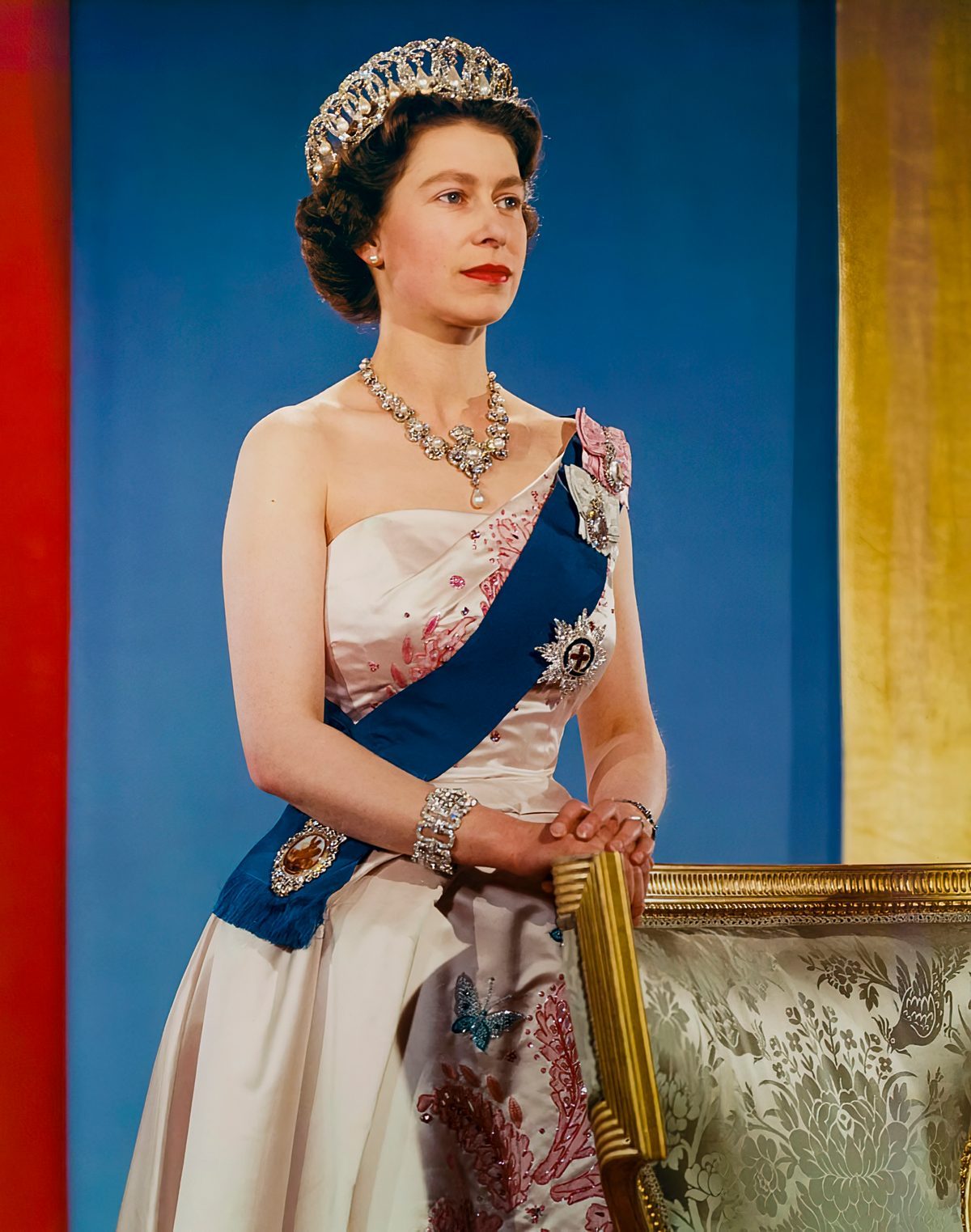
📷 Photo: Donald McKague. Public domain via Wikimedia Commons.