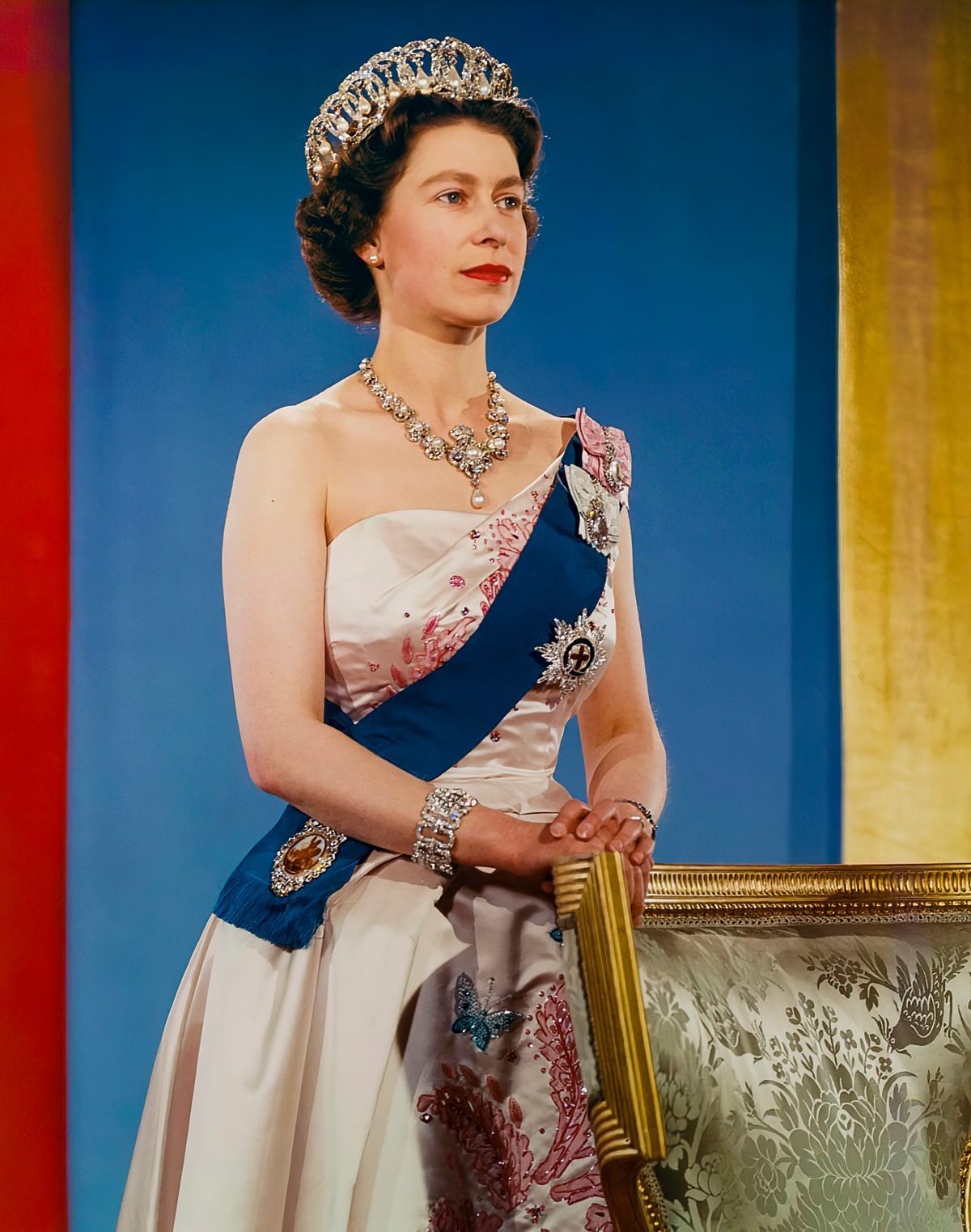
It was the summer of 1977, and Britain was a whirl of celebration and tradition. Across the country, bunting fluttered from every lamppost, and the air buzzed with the anticipation typical of a royal occasion. Queen Elizabeth II, sovereign for a quarter of a century, embarked on her Silver Jubilee tour—a grand affair filled with all the splendor and ceremony fit for such a milestone. Little did the public know that amid this regimen of regal engagements, the Queen would find herself in one of the most unexpected settings: a modest kitchen on a council estate in Glasgow, sharing a cup of tea with an astonished resident. This quiet act, free from the lavish pomp often associated with royal tours, offered a glimpse into the human spirit of a queen, painting a touching portrait of humility, warmth, and connection amidst grandeur.
The Jubilee Tour: A Nation in Celebration
The Silver Jubilee of 1977 marked 25 years since Queen Elizabeth II ascended the throne, and it was only fitting that the occasion be celebrated with a tour across the breadth and width of her United Kingdom. The journey was designed to reach as many people as possible, bringing the pomp and majesty of the monarchy to bustling cities and quaint villages alike. Accompanied by the Duke of Edinburgh, the Queen visited over 36 counties in England, Scotland, Wales, and Northern Ireland, delighting crowds with her presence and the pageantry that follows in her wake.
For a country navigating the challenging economic climate of the late 1970s, the Jubilee provided a momentary reprieve—a chance for communities to come together and revel in a shared heritage. The tour underscored the unifying power of the monarchy, with visits that spoke to the diverse tapestry of the Commonwealth's history and its contemporary challenges. Yet, amidst the spectacle of towering horse-drawn carriages and radiant military uniforms, the Queen's brief pause on a Glasgow estate became the unscripted highlight—an ordinary moment that shone above orchestrated ceremonial grandeur.
Arrival in Glasgow: A Royal Glimpse of Everyday Life
Glasgow is a city marked by its resilience, charm, and a culture rich in warmth and hospitality. When Her Majesty's visit was announced, excitement rippled through the city. Streets were lined with eager onlookers hoping for a fleeting glimpse of the Queen, an emblematic figure representing both continuity and change. The visit itself was carefully coordinated, as is typical of royal engagements, with detailed itineraries ensuring that every moment adhered to tradition and expectations.
However, fate had another agenda on this usual day of formalities. As the royal motorcade made its way through Glasgow, a detour brought the Queen to a council estate, where the everyday realities of life unfolded—a sharp contrast to the grandeur of palace halls. There, amidst rows of humble brick houses, an emblematic scene unfolded: the world's most recognizable monarch took a step outside the echo chamber of protocol and into the simplicity of a stranger's home.
An Unexpected Invitation: Tea with the Queen
The identity of the resident whose door the Queen happened to approach remains known only to some, a secret fondly respected by those who were present. What remains vivid, however, is the collective awe as the Queen stepped inside, setting aside the rigid expectations of regal engagements. Her Majesty was ushered into a modest, lived-in kitchen, the sort so many call home—walls adorned with cherished family photos, the air perfumed with the comforting aroma of tea.
For this Glasgow resident, entertaining royalty was a circumstance never anticipated in even the wildest dreams. Yet, as the Queen delicately lowered herself into a kitchen chair, the universe felt remarkably smaller, more intimate. There were no courtiers present to dictate protocol, no press corps clamoring at the door. In that moment, the Queen was simply Elizabeth—a woman at ease with the ordinary.
"The Queen's ability to connect with people in the most genuine way is what truly endeared her to millions. It was never about the obligation but the humanity she shared in these fleeting exchanges," recalled one royal observer years later.
Legacy of a Quiet Moment
This simple act of shared humanity echoed far beyond that kitchen and the estate that harbored it. For the Queen, who had been navigating the responsibilities of her role since her ascension at the tender age of 25, such moments were treasured opportunities to peer beyond the ceremonial façade into the lives of the people she served. They demonstrated her belief that a monarch’s duty encompassed both grandeur and grounded compassion—a delicate balance that endeared her to millions.
The tale of Queen Elizabeth II's impromptu tea in Glasgow slipped into the annals of royal stories cherished not for opulent displays of power, but for the poignant humanity they reveal. Stories like these resonate deeply, reminding us that at the heart of the monarchy lies a dedication to understanding and, wherever possible, uniting the diverse fabric of the society it represents.
Reflections on Royalty Today
The echoes of that day in 1977 continue to speak to today’s monarchy—a reminder of the interpersonal connections that form the truest foundations of leadership. In a world ever-headlined by technology and speed, slowing down to share a simple moment can be revolutionary. Queen Elizabeth II, with her enduring grace, illustrated that monarchy is not just the sum of its majestic artifacts and residences, but a living institution reflecting the soul of its people.
This legacy of openness and connection continues to define the essence of the British monarchy as it evolves. The Queen's gesture captured the hearts of a generation, proving that even amidst the trappings of royal life, humility and kindness transcend class, geography, and time. Her legacy endures, a remembrance of a unique blend of strength and modesty that still guides her successors in an ever-changing world.
📷 Photo: Donald McKague. Public domain via Wikimedia Commons.