In the swirling mist of post-war Britain, a young princess stepped into the public eye not with a tiara on her head, but with grease-stained overalls and a wrench in her hand. This was Princess Elizabeth, later Queen Elizabeth II, who, at the tender age of nineteen, made a choice that would set her apart: she joined the Auxiliary Territorial Service (ATS) during the final months of World War Two. Yet, it was what she did with her earnings that revealed so much about her character, setting early signs of the quiet, steadfast generosity that would come to define her reign.
A Princess Rolls Up Her Sleeves
By 1945, the toll of war had touched every corner of the British Isles. The royal family was no exception. In a powerful gesture against the gilded cage of privilege, Princess Elizabeth chose to serve her country not as a figurehead but as a participant. Despite being heir to the throne, she donned the khaki uniform of the ATS and took up roles traditionally occupied by men — as a driver and mechanic.
The decision was emblematic of the royal family's commitment to the war effort, having already engaged in various morale-boosting and charitable activities. Yet, for Elizabeth, it was personal. She knew firsthand the sacrifices millions of Britons were making and wanted to contribute in a way that reflected a shared experience, echoing the resolve and resilience of a nation under siege.
More Than a Symbol: The Service
The ATS offered training in driving and vehicle maintenance, but for Elizabeth, it meant immersing herself fully in the life of a servicewoman. She drove military trucks, learned how to change tyres, and mastered the intricacies of engine repair — tasks that required both physical strength and technical acumen. The young princess thrived in this environment, showcasing a tenacity and willingness to learn that impressed her instructors.
This commitment was recognized by her ATS comrades, who saw beyond her royal status to the determined spirit of a young woman eager to stand alongside them. Being on an equal footing with others was important to Elizabeth, who understood that true respect must be earned, even by a princess.
Every Penny a Deed: The Wartime Wages
Perhaps the most intriguing aspect of Elizabeth’s time in the ATS was her insistence on drawing a full wartime wage. This was not a mere token to satisfy public relations; Elizabeth believed in receiving equal pay for equal work, mirroring the zeitgeist of fairness and service that defined the era.
Remarkably, Elizabeth chose not to keep this pay, instead donating her entire salary to wartime charities, cementing her reputation as a young woman of substantial heart and integrity. Though such acts were quietly done — in keeping with the royal penchant for understated charity — they spoke volumes about her values and commitment to the common good.
"Through small acts of kindness, one can often reveal the truest traits of one's character."
A Family Reimagined
Elizabeth's service reflected a broader evolution within the royal family, steered by her parents, King George VI and Queen Elizabeth. They understood that the monarchy had to adapt to inspire and reflect the people it served. During the war, the family refused to leave London amidst the Blitz, standing as symbols of unity and resilience.
This adaptability and willingness to evolve became hallmarks of Queen Elizabeth II's later reign. Her wartime experiences informed her understanding of duty and shaped a lifelong dedication to service, fundamentally affecting her approach as a monarch in the post-war period and beyond.
Legacy of Service
Reflecting on these formative months in the ATS, one can see in Princess Elizabeth the inception of the future Queen whose understated acts of kindness and rigorous sense of duty became legendary. Her decision to silently donate her wages underscores a lifelong belief that being royal was as much a privilege as it was an opportunity to serve others.
Today, as we look back at the life and legacy of Queen Elizabeth II, her time with the ATS stands as a testament to her extraordinary character. It serves as a reminder that leadership is not defined by grand gestures alone but by the myriad small, resilient acts of humanity that forge a deeper connection with the world.
In an age where the British monarchy continues to evolve, reflecting the changing values of its people, Queen Elizabeth II's wartime service is a powerful emblem of continuity, duty, and an unwavering commitment to the values that fortify a nation. Her actions during those war-torn months continue to inspire and guide, underscoring a legacy that resonates well beyond Buckingham Palace's gates.
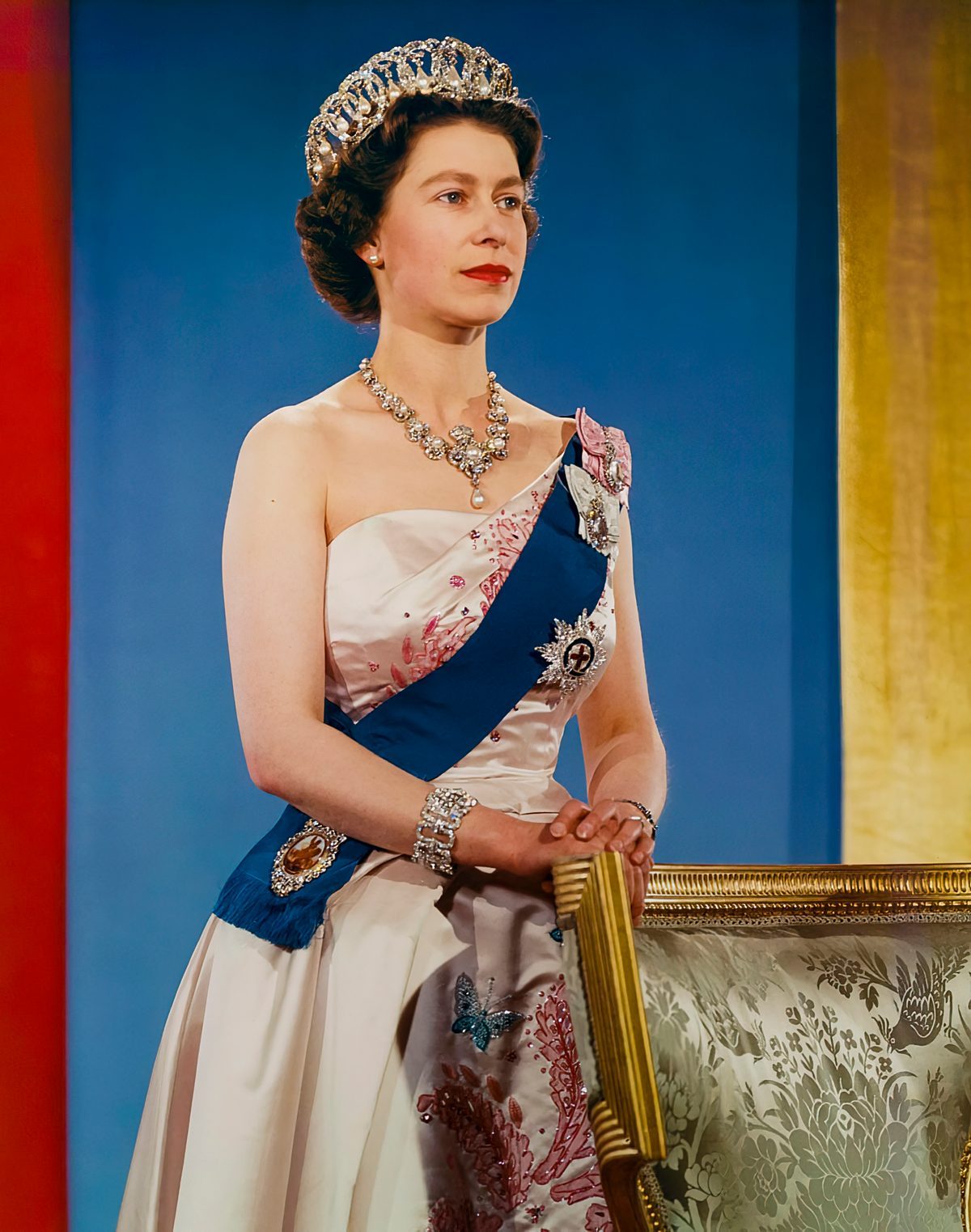
📷 Photo: Donald McKague. Public domain via Wikimedia Commons.