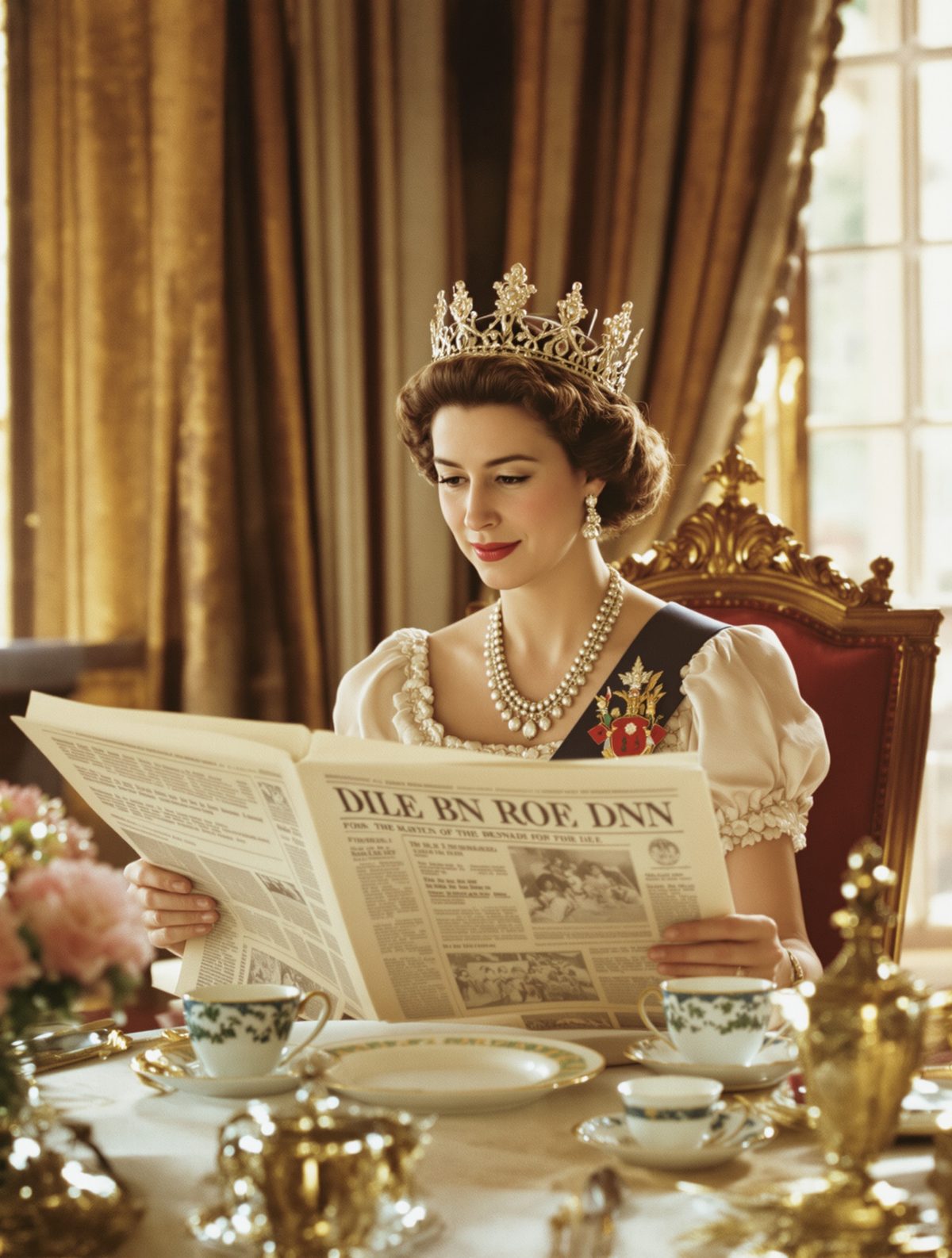
Picture this: It's a crisp morning in 1953 at Buckingham Palace, and the breakfast room falls into stunned silence as a young woman enters wearing one of the world's most magnificent crowns. She settles into her chair with practiced grace, unfolds The Times, and begins spreading marmalade on her toast as if wearing two pounds of diamonds, sapphires, and pearls is the most natural thing in the world. This wasn't a formal state occasion or a ceremonial portrait sitting—this was Queen Elizabeth II's ingenious solution to one of the most pressing challenges of her early reign.
The Weight of the Crown
The Imperial State Crown is a masterpiece of the Crown Jeweller's art, but it's also a formidable piece of headwear. Weighing in at just over two pounds and standing nearly five inches tall, the crown contains some of the most famous gems in royal history, including the Black Prince's Ruby and St. Edward's Sapphire. For a newly crowned monarch who stood just 5'4" tall, wearing this glittering burden for extended periods presented a genuine physical challenge.
Following her coronation on June 2, 1953, the 27-year-old Queen faced a packed calendar of state occasions, formal portraits, and ceremonial duties—all requiring her to wear the Imperial State Crown for hours at a time. Palace courtiers began to notice the Queen's discomfort during longer ceremonies, and it became clear that something needed to be done to help Her Majesty build up her neck strength and balance.
The solution, characteristically practical and wonderfully eccentric, came from the Queen herself. If she needed to become comfortable wearing the crown, she would simply wear it more often—much more often. And what better time to practice than during her morning routine, when she could focus on the familiar comfort of reading the daily newspapers?
A Royal Morning Routine Like No Other
For several weeks following the coronation, the Queen's morning ritual took on an almost surreal quality. Each day, she would request that the Imperial State Crown be brought to her private apartments, where she would carefully place it on her head before making her way to breakfast. Palace staff, initially startled by the sight, quickly learned to treat these extraordinary mornings as perfectly ordinary.
The breakfast room companions—typically including the Duke of Edinburgh and various members of the royal household—found themselves in the peculiar position of discussing the day's engagements and current affairs with a sovereign who happened to be wearing one of the world's most valuable pieces of jewelry while reaching for the jam pot. The Duke, with his characteristic dry wit, reportedly took the unusual sight in stride, though palace insiders noted his amused expressions during those memorable mornings.
The Queen's dedication to her crown-wearing practice extended beyond the breakfast table. She would often continue wearing the Imperial State Crown while attending to her morning correspondence, reviewing state papers, and even during informal meetings with her private secretaries. The sight of Her Majesty signing official documents while crowned with centuries of royal history became an endearingly familiar one within the palace walls.
The Art of Royal Balance
What made these practice sessions particularly remarkable was watching the young Queen develop the poise and grace that would become her signature. Wearing the Imperial State Crown requires more than simple endurance—it demands perfect posture, measured movements, and an almost balletic awareness of one's head position. Every gesture must be deliberate, every turn carefully calculated to maintain the crown's stability.
Palace staff observed with growing admiration as the Queen mastered these subtle skills. They watched her learn to read while keeping her head perfectly level, to reach for items without tilting forward, and to engage in conversation while maintaining the regal bearing that the crown demanded. These weren't merely physical adjustments; they represented the young monarch's transformation into a truly sovereign presence.
The breakfast practice sessions also served an unexpected purpose: they helped the Queen become completely comfortable with the crown's presence. By wearing it in the relaxed, familiar setting of her morning routine, she was able to separate the physical experience of the crown from the formal ceremonial contexts where she would eventually need to wear it. This meant that during state occasions, her attention could focus entirely on her duties rather than on managing the crown's weight and balance.
Beyond the Palace Walls
While the Queen's crown-wearing breakfasts remained private palace business, the benefits became publicly apparent almost immediately. Royal photographers and ceremonial observers noted the remarkable ease with which the young sovereign wore the Imperial State Crown during formal occasions. Where other monarchs throughout history had sometimes appeared stiff or uncomfortable beneath their crowns, Queen Elizabeth II displayed a natural grace that seemed effortless.
This dedication to perfecting her royal bearing reflected the Queen's deep understanding of her role's symbolic importance. She recognized that every public appearance was an opportunity to embody the dignity and continuity of the monarchy, and that her comfort with the crown's physical presence would translate into confidence in her ceremonial duties.
The morning practice sessions gradually became less frequent as the Queen developed the neck strength and muscle memory necessary for extended crown-wearing. However, the habit established a pattern that would serve her throughout her reign: the willingness to put in private effort to ensure public excellence, and the understanding that even the most glamorous aspects of monarchy required dedicated practice and preparation.
A Legacy of Grace
Those extraordinary mornings in 1953 reveal something profound about Queen Elizabeth II's character and her approach to monarchy. Rather than simply enduring the physical demands of her role, she found a characteristically practical and determined way to master them. The image of the young Queen calmly reading her newspapers while wearing the Imperial State Crown captures both her essential pragmatism and her complete commitment to royal duty.
The breakfast crown sessions became part of palace lore, remembered fondly by longtime staff members as emblematic of the Queen's unique blend of majesty and relatability. Here was a monarch who understood that true royal grace wasn't innate—it was earned through dedication, practice, and a willingness to do whatever was necessary to serve her role with distinction.
Looking back over the decades that followed, it's clear that those morning practice sessions were time well spent. Throughout her reign, Queen Elizabeth II wore the Imperial State Crown with unmatched elegance and apparent ease, whether during brief ceremonial moments or extended formal occasions. The poise she developed during those private morning hours became one of her most recognizable qualities, a physical manifestation of the steadiness and reliability that defined her entire approach to monarchy.