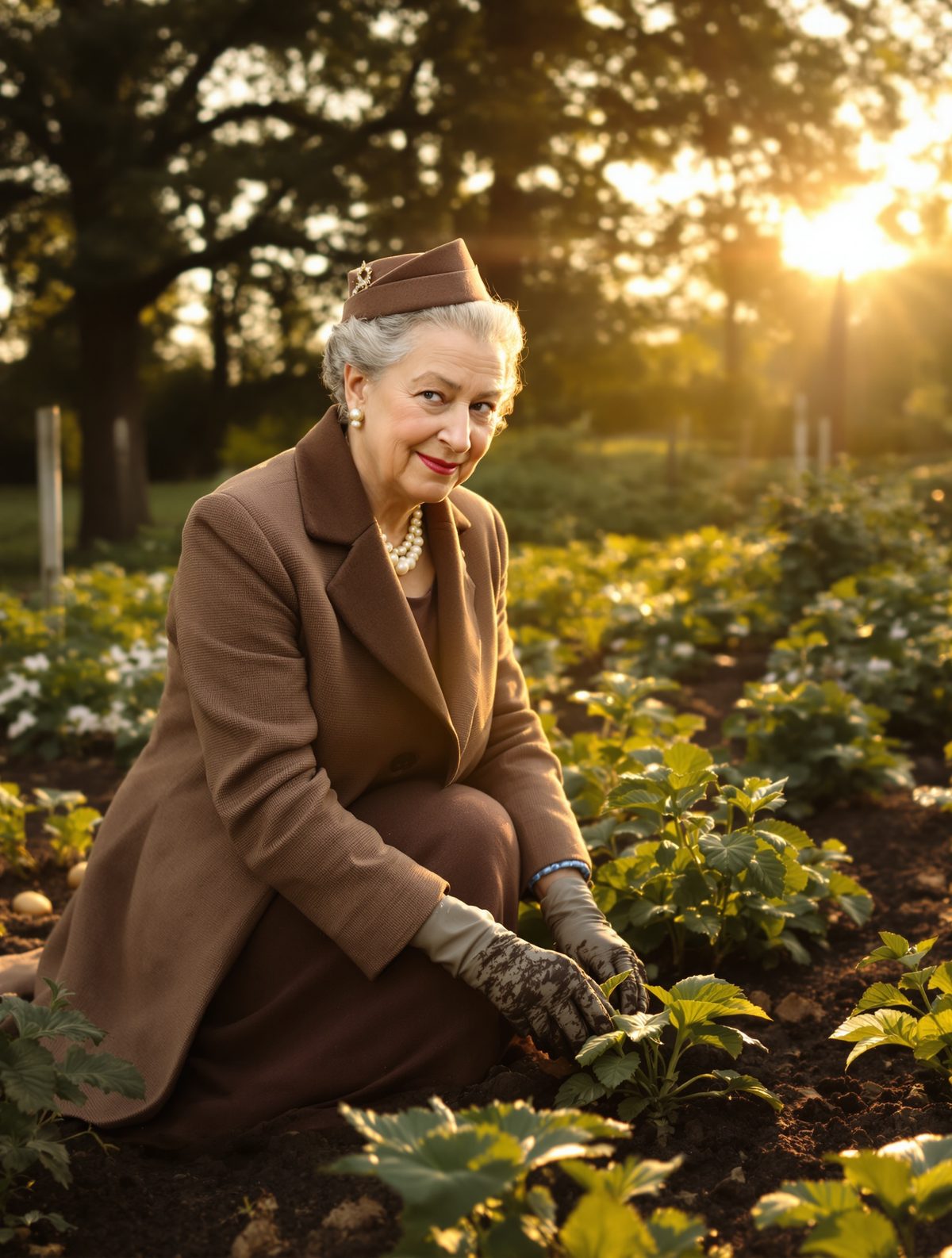
Picture this: the sun barely creeping over the Gloucestershire horizon, mist still clinging to the grounds of Badminton House, when a solitary figure emerges from the grand estate. But this isn't a gardener or groundskeeper making their early rounds. It's Queen Mary herself, dressed in practical clothes, making her way to a secret patch of earth where she's been nurturing something that would soon astonish her entire household. At 73, the formidable Queen Consort had taken Britain's wartime "Dig for Victory" campaign quite literally, creating her own clandestine vegetable garden that would become the stuff of palace legend.
A Royal Refuge in Wartime
When war clouds gathered over Britain in 1939, Queen Mary faced a dilemma that would have been unthinkable just years earlier. The woman who had presided over the height of British imperial grandeur suddenly found herself navigating rationing, blackouts, and the very real possibility of invasion. Her solution was as practical as it was surprising: she would evacuate from London to Badminton House, the Gloucestershire estate of her niece, the Duchess of Beaufort.
But Queen Mary wasn't content to simply wait out the war in comfortable exile. The Queen Consort who had weathered the abdication crisis and transformed the monarchy's public image had no intention of becoming a passive observer during Britain's darkest hour. Instead, she channeled her legendary determination into something completely unexpected: agriculture.
Staff at Badminton House initially had no idea what their distinguished guest was planning when she began making inquiries about unused sections of the estate grounds. Known for her precise daily routines and formal deportment, Queen Mary had never shown any particular interest in gardening beyond the ornamental. Yet something about the wartime atmosphere seemed to awaken a deeply practical streak that surprised everyone who knew her.
The Dawn Harvests
The first signs that something unusual was afoot came when household staff began noticing Queen Mary's early morning absences. The woman famous for her punctual breakfast routine was suddenly unavailable at dawn, her lady's maid reporting that Her Majesty had "stepped out for some air." It wasn't until a curious kitchen maid followed the mysterious early morning trail that the truth was discovered.
There, in a previously overlooked corner of the estate, was Queen Mary's secret project: neat rows of potato plants that she had been tending with the dedication of a professional farmer. But perhaps most shocking of all was the sight of the 73-year-old Queen Consort, sleeves rolled up, carefully harvesting her crop with her own hands as the morning dew still glistened on the leaves.
The discovery sent ripples of amazement through the household. This was, after all, the same woman who had maintained the most formal court protocols during her years as Queen. Palace etiquette had been her domain, and she had never been known to engage in any activity that might soil her gloves. Yet here she was, not only growing vegetables but clearly taking immense satisfaction in the work.
What made the scene even more remarkable was Queen Mary's obvious expertise. This wasn't a token royal gesture or a publicity stunt—she had genuinely mastered the art of potato cultivation. Her plants were healthy, her technique sound, and her harvest timing perfect. Somehow, the Queen Consort had become a skilled gardener without anyone noticing.
Feeding the Household
The true scope of Queen Mary's agricultural achievement became clear when she proudly presented her first major harvest to the astonished palace chefs. The quantity was extraordinary—enough potatoes to feed the entire household for several weeks. In an era when even royal kitchens were subject to strict rationing, this unexpected bounty was nothing short of miraculous.
But Queen Mary's contribution went beyond mere calories. Her vegetables were of exceptional quality, carefully selected varieties that would store well and provide maximum nutrition during the lean winter months ahead. She had clearly researched not just how to grow food, but how to grow the right food for wartime conditions.
The palace chefs, initially skeptical about incorporating "amateur" produce into their carefully planned menus, quickly became converts. Queen Mary's potatoes were not only plentiful but delicious, and they allowed the kitchen to stretch their official rations much further than would otherwise have been possible. Soon, the entire household was benefiting from what became known as "Her Majesty's Victory Garden."
Word of Queen Mary's agricultural prowess spread quietly through royal circles, earning her a new kind of respect from staff and family alike. Here was a woman in her seventies who had not only adapted to wartime privations but had actively fought back against them in the most hands-on way possible.
More Than Just Potatoes
Encouraged by her success with potatoes, Queen Mary expanded her secret garden to include other vegetables crucial to wartime nutrition. Carrots, turnips, and hardy greens soon joined her agricultural repertoire. Each crop was planned with the same meticulous attention to detail that she had once applied to state ceremonies and court presentations.
Her morning garden visits became a cherished ritual, providing not just fresh food for the household but a sense of purpose and accomplishment that seemed to energize the Queen Consort throughout the difficult war years. Staff reported that she appeared more animated and engaged than she had in years, finding genuine joy in this unexpected new role as provider and caretaker.
The symbolic power of Queen Mary's garden extended far beyond its practical benefits. At a time when Britain was asking every citizen to contribute to the war effort, here was a 73-year-old Queen Consort literally getting her hands dirty for the cause. Her example inspired others in the household to take up gardening, creating a network of small Victory Gardens throughout the estate.
Perhaps most remarkably, Queen Mary's wartime gardening revealed a side of her character that few had ever seen. The formal, sometimes intimidating royal persona gave way to someone who took genuine pleasure in nurturing life and providing sustenance. Her secret garden became a source of quiet pride and unexpected happiness during one of the most challenging periods in British history.
A Legacy of Resilience
Queen Mary's wartime vegetable garden represents something profound about the character of the British monarchy during its finest hour. Here was a woman who could have easily retreated into comfortable isolation, waited for others to solve the nation's problems, and maintained her distance from the harsh realities of rationing and shortage. Instead, she chose to roll up her sleeves—literally—and contribute in the most practical way imaginable.
The image of Queen Mary harvesting potatoes at dawn speaks to qualities that continue to define the royal family today: duty, adaptability, and a willingness to lead by example rather than mere words. Her secret garden was ultimately not so secret at all, but rather a quiet demonstration of values that would inspire generations of royals to come.
Today, when we see members of the royal family championing environmental causes, supporting local farmers, and promoting sustainable living, we can trace a direct line back to Queen Mary's muddy hands and dawn harvests. She showed that true nobility isn't about maintaining distance from life's necessities, but about embracing them with dignity, purpose, and surprising joy. In her own quiet way, Queen Mary's potato patch helped feed not just a household, but the enduring spirit of a monarchy that finds strength in service and grace in the most unexpected places.