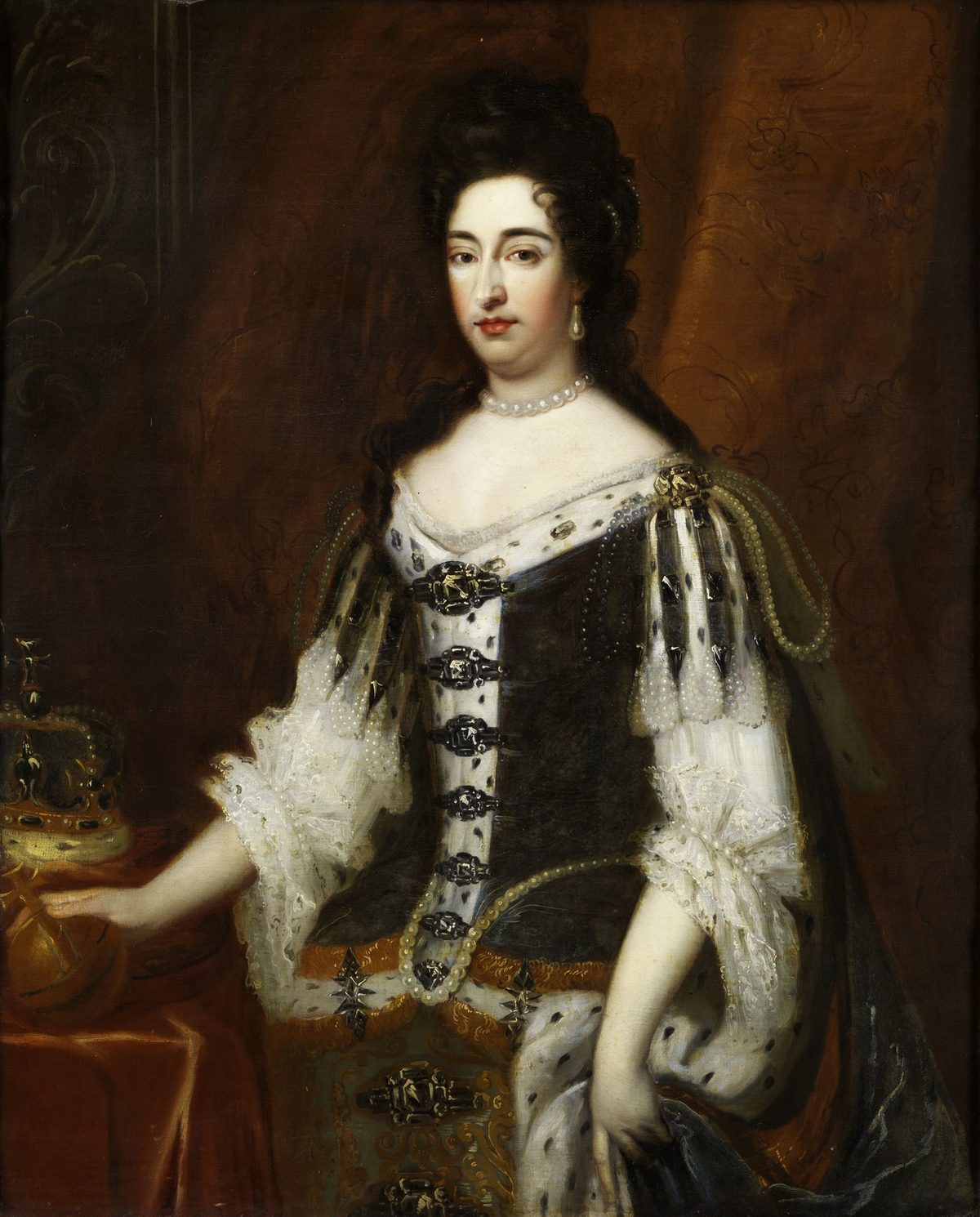
As the dawn light trickled across the rich tapestries of Whitehall Palace, a singular figure moved inside her private chambers. Unbeknownst to those outside her inner circle, Queen Mary II, who had emerged from the sedate environment of a Dutch court, was preparing for the greatest performance of her life — her coronation. In the splendid attire befitting a queen, she rehearsed an essential yet daunting ritual: her own coronation walk. With an air of determination mixed with a silent trepidation, Mary, unacquainted with the demands royalty imposed, paced her gilded room. Each step was a silent dialogue with destiny, a solitary ballet upon which the legacy of an era turned.
The Unwanted Throne
Born in 1662, Mary was the eldest daughter of the Duke of York, who became King James II of England. Her early life was one of privilege and promise at St. James's Palace. Yet, despite her royal birthright, Mary hadn't envisioned herself wearing the crown. Instead, she enjoyed a serene existence, more attuned to the channels of Dutch waterways than the turbulent waves of English politics. Her marriage to William of Orange in 1677 was a significant alliance, conceived more for political balancing than romantic aspirations.
However, the Glorious Revolution of 1688 changed everything. Discontent with James II's rule grew into a revolution, culminating in his deposition. England sought not just a change of monarchs but a new guardian of both Protestant faith and parliamentary power. The nation turned to Mary and William, her husband, to take the throne jointly. Thus, Mary embarked on a sovereignty she had never sought, becoming a vital pillar of a new constitutional monarchy.
Coronation Preparations Away from the Limelight
Despite her natural grace and lineage, Mary felt the weight of expectation. Before the eyes of a kingdom, she needed to walk with the authority befitting a queen. Her resolve led her to practice in solitude, a poignant image of her dedication to fulfilling this newfound role. In the carefully orchestrated rehearsals, she donned her full regalia — an opulent display of majesty that was both physically cumbersome and symbolically heavy.
Her ladies-in-waiting, traditionally quiet observers, stood watch as she rehearsed. They bore witness to the intimate juxtaposition of strength and vulnerability that marked Mary's preparation. Her emotions would spill over, tears marking the silent testament to her inner turmoil. Yet, this was not a defeat but rather a testament to her perseverance. She dried her eyes, resolved once more, and began the procession again.
The Coronation Walk: More than Ceremony
The coronation walk held more significance than its ceremonial pomp would suggest. For Mary, it was a baptism into her role as Queen Regent of an embattled isle. The presence of William beside her was both a comfort and a reminder of their shared burden. Each stride was imbued with political implications; the stability of England rested upon her ability to capture the hearts and faith of their subjects.
Her Majesty's presence had to convey strength, unity, and an unwavering resolve that could withstand the echoes of change sweeping through Europe.
The actual coronation day, April 11, 1689, was a magnificent affair. Westminster Abbey glowed with candle and sunlight, resplendent upon jewels and finery. When Mary emerged, joined by William, her stride was measured, each step echoing the rehearsals forged in solitude. The dawning of a new age was reflected in her every movement, imbued with the regal poise she had desperately practiced in secret.
The Human Element in Majestic Times
The story of Queen Mary II's careful preparation offers us more than just the annals of royal history. It invites a deeper understanding of the demands placed on those who inherit crowns, as well as the personal sacrifices that lie hidden beneath layers of ceremonial grandeur. Mary's tears, shed away from the public gaze, resonated more deeply than any outward portrayal of royalty might suggest.
She was not just a regent, but a woman navigating an inherited destiny, striving with every step to embody the essence of queenship. Her ascension and the sensitivity she brought to her role remain a poignant reminder of the humanity that often lies veiled within the annals of history's grand figures.
The Enduring Legacy of Queen Mary II
Mary's legacy stretches beyond her tenure on the throne. Her ability to unify England and support the Bill of Rights 1689 laid foundational stones on which modern British democracy stands. Through her reign, one senses the enduring strength of character that buoys a nation in transition, echoing through the ages to inform today's constitutional monarchy.
As we reflect on those days leading up to her coronation, we glimpse the timeless appeal of the monarchy: it is a blend of tradition and transformation, where individuals transcend personal narratives to serve a greater good. Queen Mary II's story is a testament to a perennial truth — beneath the ermine and sceptres, it is the human heart that often reveals true nobility.
📷 Photo: After Godfrey Kneller. Public domain via Wikimedia Commons.