In the hushed corridors of Windsor Castle, long after the last courtier had retired and the final candle had been extinguished in the servants' quarters, a solitary figure would emerge from the royal apartments. Dressed in her familiar black mourning attire, Queen Victoria would make her way through the darkened halls with the quiet determination of a woman on a sacred mission. Her destination was always the same: the Blue Room, where time had stopped on a cold December day in 1861.
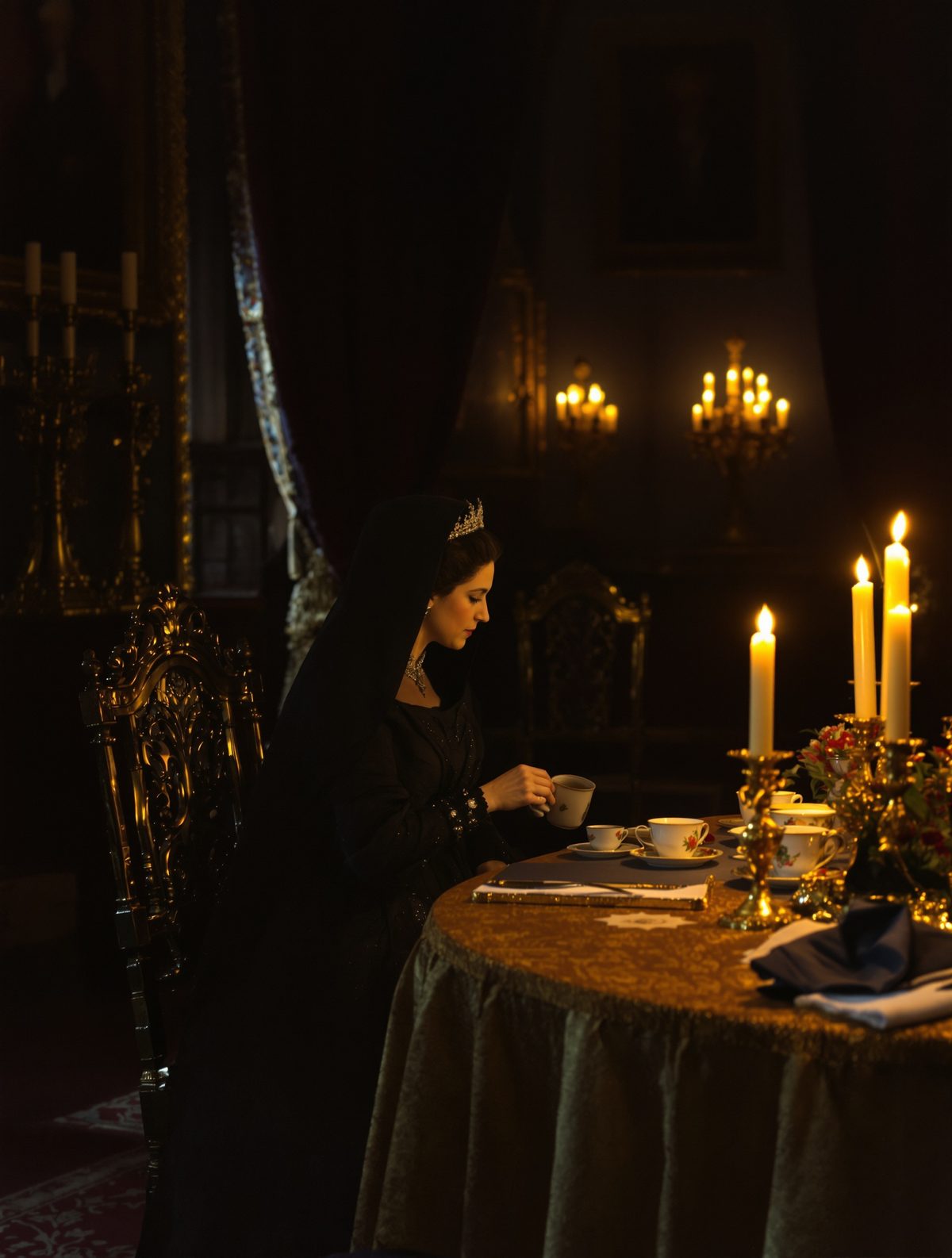
For over three decades following Prince Albert's death, Britain's longest-reigning monarch maintained a ritual so deeply personal that even her most trusted servants could only watch in respectful silence. Every night at the stroke of two, the Queen would set two place settings at a small table, pour steaming tea into delicate china cups, and begin what appeared to be an intimate conversation with an empty chair. This extraordinary nightly ceremony would become one of the most poignant examples of enduring love in royal history.
The Blue Room: A Shrine to Eternal Love
The Blue Room at Windsor Castle had been transformed into something approaching a shrine following Prince Albert's death from typhoid fever on 14 December 1861. Queen Victoria, devastated by the loss of her beloved husband and closest confidant, ordered that the room remain exactly as it had been during Albert's final moments. His personal effects remained undisturbed, his clothes were laid out daily by servants as if he might return at any moment, and fresh flowers were placed beside his photograph each morning.
It was in this sacred space that Victoria's midnight ritual unfolded night after night. According to accounts from palace staff who observed these sessions from a respectful distance, the Queen would arrive precisely at 2 AM, carrying a silver tea service that she insisted on preparing herself. The careful placement of two cups and saucers, the precise arrangement of biscuits and small cakes, and the gentle pouring of tea suggested a hostess expecting her most cherished guest.
Palace records indicate that Victoria would then settle into her chair and begin what appeared to be earnest conversations with Albert's empty seat. Though the exact nature of these discussions remains private, servants reported hearing the Queen's voice rise and fall in the familiar patterns of intimate conversation – sometimes animated, occasionally tearful, but always deeply engaged.
A Widow's Unwavering Devotion
Victoria's midnight tea ceremonies were just one aspect of her extraordinary mourning period, which lasted for the remainder of her life. The Queen, who had been utterly devoted to Albert during their twenty-one years of marriage, found herself unable to imagine a world without his guidance and companionship. Her daily routine became a careful balance between her royal duties and her need to maintain connection with her departed husband.
The servants at Windsor Castle, initially bewildered by their sovereign's nocturnal activities, gradually came to understand these sessions as expressions of the Queen's unshakeable belief in the continuation of love beyond death. Lady Augusta Stanley, one of Victoria's ladies-in-waiting, later wrote in her private correspondence about the "profound dignity" with which the Queen conducted these midnight meetings, describing them as moments of "sacred communion" rather than mere grief.
Staff members who witnessed these scenes reported that the Queen would often emerge from the Blue Room appearing somehow refreshed, as if the weight of her daily responsibilities had been temporarily lifted. Some palace historians suggest that these conversations served as Victoria's way of processing the complex decisions she faced as monarch, seeking Albert's counsel as she had done throughout their marriage.
The Palace's Best-Kept Secret
Remarkably, knowledge of Victoria's midnight rituals remained largely confined to the palace walls for decades. The Victorian era's strict protocols regarding royal privacy, combined with the genuine affection and respect that palace staff held for their grieving monarch, created an atmosphere of protective silence around these intimate moments.
Servants would coordinate their duties to ensure the Queen's path to the Blue Room remained unobstructed, and night watchmen learned to adjust their rounds to preserve the sanctity of her private time. The domestic staff took particular pride in maintaining the Blue Room to Victoria's exacting standards, understanding that their care for this space was, in many ways, an act of service to both the living Queen and the memory of Prince Albert.
Even visiting dignitaries and government ministers, who might stay overnight at Windsor Castle, remained unaware of the Queen's nightly pilgrimage. The palace's ability to maintain this level of discretion speaks to both the loyalty of Victoria's household and the deep respect they held for her personal grief.
When whispers of the midnight tea parties did occasionally surface in society circles, they were generally met with understanding rather than criticism. The Victorian public, who had witnessed the Queen's devastating grief in the immediate aftermath of Albert's death, seemed to intuitively grasp that these rituals represented not eccentric behavior, but rather the actions of a woman whose capacity for love extended beyond the boundaries of life and death.
A Legacy of Enduring Love
Victoria's midnight conversations with Albert continued well into the 1890s, only ceasing in the final years of her life when age and infirmity made the nightly journey too challenging. By then, the practice had become so embedded in the rhythm of palace life that its absence was noted with genuine sadness by long-serving staff members who had grown to see these sessions as tangible proof of love's permanence.
The Queen's unwavering devotion to Albert's memory extended far beyond these private moments. She consistently sought his approval for major decisions, frequently invoking his opinions in government meetings, and maintained detailed correspondence with his relatives in Germany throughout her widowhood. The midnight tea parties, however, remained her most personal connection to the man who had been her partner in both love and governance.
These intimate rituals also revealed a side of Queen Victoria that the public rarely glimpsed – not the stern "Widow of Windsor" or the formidable Empress of India, but simply a woman whose heart had been forever changed by profound love and irreplaceable loss. In an era when emotional expression was often constrained by social expectations, Victoria's midnight ceremonies represented a private space where royal protocol gave way to human need.
The story of Queen Victoria's secret midnight tea parties offers us a timeless reminder that love transcends even the most final of separations. In our modern age of constant communication and public scrutiny, there is something deeply moving about these quiet moments of communion between a widow and the memory of her beloved husband. Victoria's devotion challenges us to consider the depths of our own capacity for enduring love, and her midnight rituals stand as a testament to the belief that some bonds are simply too strong for death to sever. Perhaps most remarkably, they reveal that even queens – with all their power and privilege – experience loss in ways that connect them to the universal human experience of grief, love, and hope for reunion beyond this world.