In the hushed corridors of Windsor Castle, as midnight approached each evening, something extraordinary would unfold. While the rest of the royal household settled into slumber, Queen Victoria would perform a ritual so touching and deeply personal that it would continue unchanged for forty years. Long after her beloved Prince Albert had drawn his last breath in December 1861, the Queen maintained an intimate nightly ceremony that transformed grief into a sacred act of remembrance—one that would define her widowhood and astonish all who witnessed it.
A Love That Transcended Death
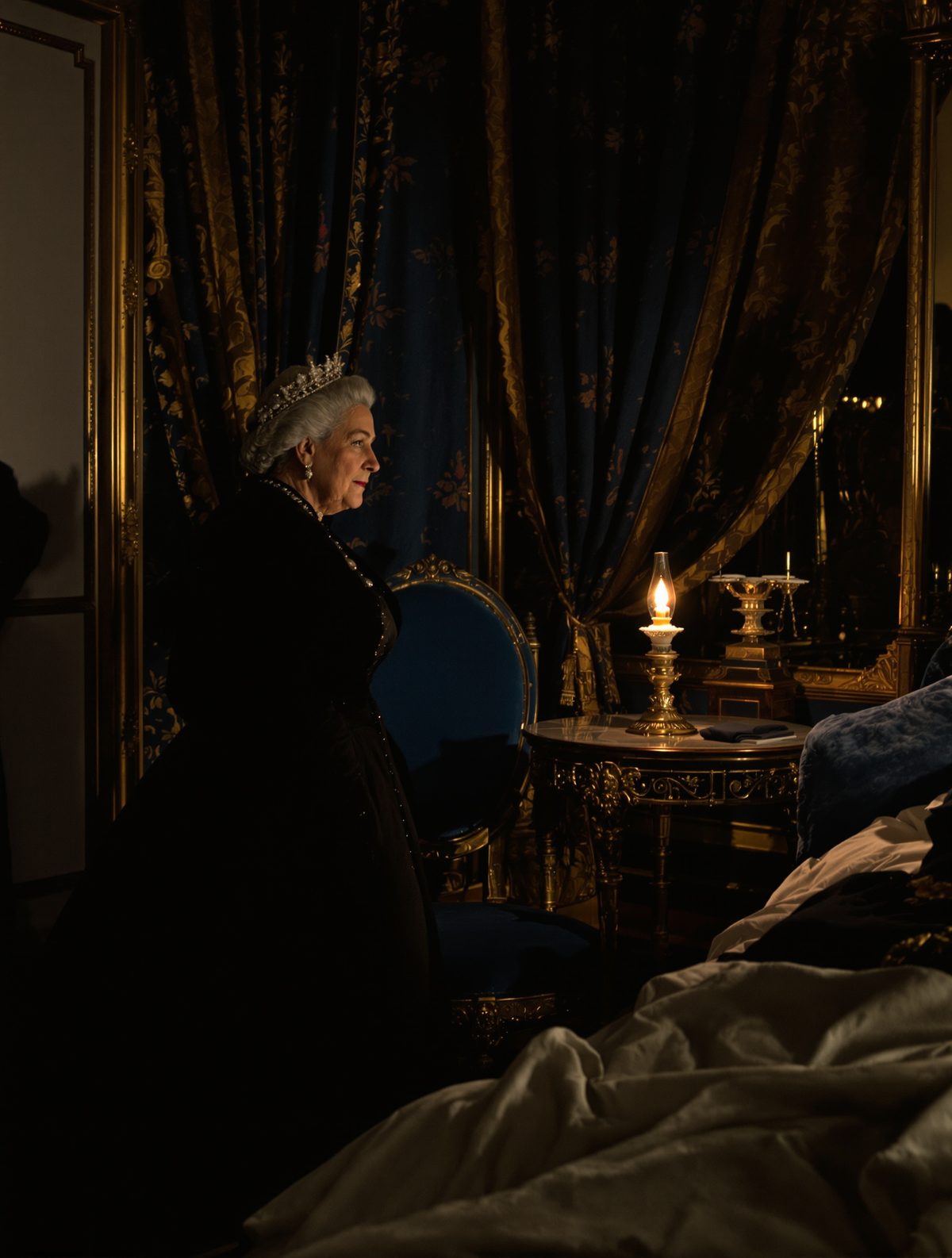
The Blue Room at Windsor Castle became a shrine unlike any other in royal history. Each evening, as darkness fell across the estate, Queen Victoria's devoted servants would prepare the chamber exactly as it had been on that fateful December night when Prince Albert succumbed to typhoid fever. Fresh linens were placed upon the bed, his nightclothes laid out with meticulous care, and a single lamp left burning through the night—as if the Prince Consort might return at any moment to retire for the evening.
This wasn't mere sentimentality; it was love in its purest, most enduring form. Victoria's devotion to Albert during their twenty-one years of marriage had been legendary throughout Europe, and his sudden death at just forty-two years old left her utterly bereft. "My life as a happy one is ended! The world is gone for me!" she wrote in her journal, words that would prove prophetic of the decades to follow.
The Queen's insistence on preserving Albert's presence extended far beyond the Blue Room. His study remained untouched, his personal effects arranged precisely as he had left them. Hot water was brought to his dressing room each morning, and his evening clothes continued to be laid out with the same attention to detail that had been maintained during his lifetime. For Victoria, Albert hadn't departed—he had simply stepped away temporarily.
The Palace of Perpetual Mourning
Windsor Castle transformed into something approaching a mausoleum during Victoria's long widowhood. The court, once vibrant with parties and celebrations during Albert's lifetime, became a place where black crepe hung permanently from the windows and servants moved with hushed reverence through dimly lit corridors. The Queen herself adopted mourning dress that she would never abandon, her widow's weeds becoming as much a part of her identity as her crown.
Palace staff, initially bewildered by these elaborate daily preparations for a deceased prince, gradually came to understand the profound comfort these rituals provided their sovereign. The Queen's dresser, personal maids, and Albert's former valet all participated in maintaining the illusion of his continued presence. They spoke of these duties with remarkable discretion and evident compassion for their grieving monarch.
The burning lamp in the Blue Room became particularly significant to household members, who would check each morning to ensure it had remained lit throughout the night. This simple beacon served as a metaphor for Victoria's own flame of devotion—steady, unwavering, and absolutely resolute. Visiting dignitaries and family members learned quickly never to comment upon these arrangements, understanding instinctively that they were witnessing something sacred.
A Widow's Devotion Shapes an Empire
Victoria's nocturnal ritual wasn't simply a private matter of grief—it fundamentally altered the nature of the British monarchy itself. Her prolonged mourning period, which effectively lasted until her death in 1901, meant that the crown operated differently than it ever had before. State occasions became rare, public appearances minimal, and the pageantry traditionally associated with royalty largely disappeared.
Yet paradoxically, this period of withdrawal may have strengthened the monarchy's connection to its subjects. Victoria's very human grief resonated with ordinary families who had experienced their own losses. Her refusal to "get over" Albert's death within a socially acceptable timeframe challenged Victorian conventions about mourning and demonstrated that even queens were subject to the same emotional devastations that touched every household.
The Queen conducted much of her later reign from Windsor Castle, often working late into the night on state papers in rooms adjacent to the preserved Blue Room. Courtiers reported that she seemed to draw strength from Albert's physical proximity, frequently consulting his portrait before making important decisions and speaking of him as though he remained her closest advisor. This wasn't denial—it was a conscious choice to maintain a connection that death couldn't sever.
The Final Flame
For four decades, through countless seasons and celebrations, political crises and family milestones, that lamp continued to burn each night in the Blue Room. Palace records suggest that the ritual never wavered, not through Victoria's Diamond Jubilee celebrations in 1897, not during the Boer War, not even during her final illness in January 1901. The Queen's commitment to her nightly homage remained absolute until her very last evening.
When Victoria died at Osborne House on January 22, 1901, she was finally reunited with her beloved Albert after nearly forty years of separation. Found among her personal effects were detailed instructions for her funeral arrangements, which included being buried beside Albert at Frogmore Mausoleum. Her wedding veil was placed over her face, and Albert's dressing gown was laid beside her in the coffin—even in death, she sought to maintain their intimate connection.
The Blue Room at Windsor Castle was finally allowed to rest after the Queen's death, the nightly preparations ceased, and the eternal flame extinguished. Yet the power of Victoria's devotion continued to resonate throughout the royal family and the wider public, establishing a template for royal mourning that emphasized the deeply human aspects of monarchy.
In our modern age, when public grief often feels performative and temporary, Queen Victoria's forty-year vigil reminds us that true love recognizes no boundaries—not even death itself. Her midnight ritual speaks to something timeless about human devotion, showing us that the greatest sovereigns are often those who love most deeply. In keeping Albert's memory alive through such intimate daily acts, Victoria didn't just mourn a husband; she celebrated a partnership that had shaped both their lives and an empire, proving that some bonds are indeed eternal.