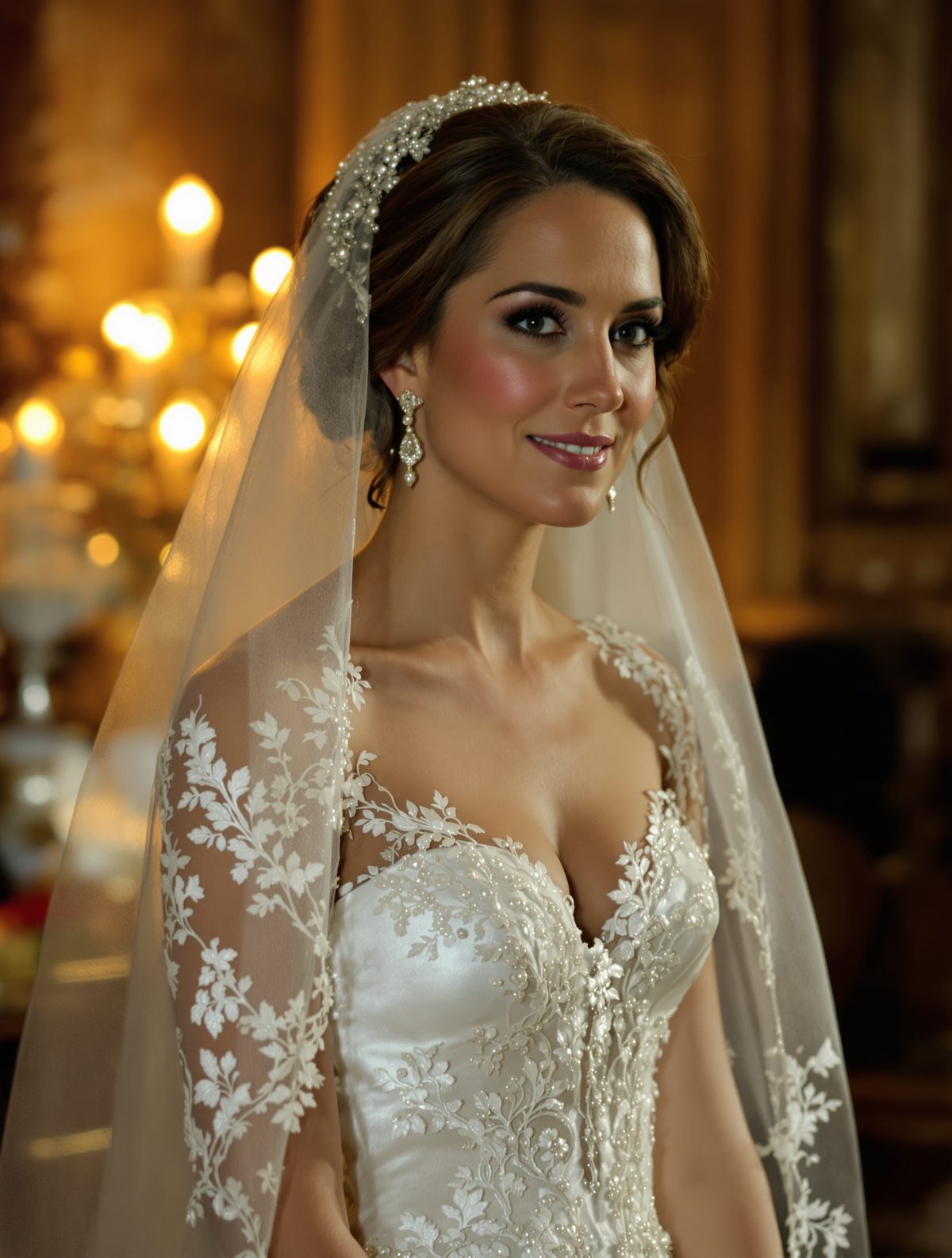
In the grand tapestry of royal weddings, few moments have captured the world's imagination quite like the instant Catherine Middleton stepped from her Rolls-Royce at Westminster Abbey on April 29th, 2011. But what the estimated two billion viewers witnessed that day—a breathtaking vision in ivory silk satin and French Chantilly lace—was the result of one of the most secretive fashion operations in modern history. The security surrounding Catherine's wedding dress was so extraordinary that it rivaled the protection of state secrets, with paper patterns locked away each night and seamstresses working in complete isolation from one another.
The Vault of Secrets
When Sarah Burton, creative director of Alexander McQueen, was chosen to design the future Duchess of Cambridge's wedding gown, she knew she was taking on more than just a commission—she was creating a piece of history. The weight of that responsibility led to security measures that would have impressed MI5. Each evening, Burton personally locked the precious paper patterns away in a secure vault, ensuring that not even a whisper of the design could escape into the public domain.
The paranoia wasn't unfounded. In an age of social media and instant global communication, keeping any royal secret had become increasingly challenging. The dress design represented months of careful planning, representing not just Catherine's personal style but also the image the monarchy wished to project to the world. A leaked sketch or photograph could have spoiled one of the most anticipated reveals in royal history.
Burton's meticulous approach to secrecy extended far beyond simple pattern storage. The Alexander McQueen atelier became something of a fortress, with access strictly limited and mobile phones banned from certain areas. Even the selection of fabrics and lace required careful coordination to ensure suppliers couldn't piece together the full picture of what was being created within those walls.
The Three Guardians
Perhaps the most remarkable aspect of the dress's creation was Burton's decision to entrust the complete design to just three seamstresses. In an industry where collaboration is typically essential, this represented an almost unprecedented level of compartmentalization. These three talented craftswomen became the guardians of royal fashion history, each sworn to absolute secrecy.
The seamstresses worked in separate rooms, a decision that must have felt both thrilling and isolating. Each woman was responsible for specific elements of the gown—perhaps one focusing on the intricate lacework, another on the silk satin bodice, and the third on the dramatic nine-foot train. This separation meant that none of them could fully appreciate the magnitude of their collective achievement until that final, magical fitting.
Working in isolation also meant that each seamstress had to trust implicitly in Burton's vision. They couldn't see how their particular section would complement the others, couldn't suggest adjustments based on the overall silhouette, and couldn't share the excitement of watching the dress come together with their colleagues. It speaks volumes about their professionalism and skill that the final result appeared so seamlessly unified.
Crafting Perfection in Secret
The technical challenges of creating such a significant gown under these conditions cannot be overstated. The dress featured intricate hand-cut French Chantilly lace and English Cluny lace throughout the bodice and skirt, applied using traditional Irish carrickmacross craftsmanship. Each piece had to be perfect, as there would be no opportunity for last-minute collaborative adjustments.
The choice of fabrics themselves told a story of British craftsmanship and heritage. Burton sourced ivory and white satin gazar from the British silk company Stephen Walters, which had been producing silk since 1720. The decision to use British suppliers wherever possible wasn't just patriotic—it was a statement about supporting traditional craftsmanship and maintaining the highest standards of quality.
The lace appliqué featured rose, thistle, daffodil and shamrock motifs, representing the four nations of the United Kingdom. Creating these delicate floral elements required countless hours of painstaking handwork, with each flower cut individually and applied with near-invisible stitching. The fact that this was accomplished with such limited oversight speaks to the extraordinary skill of Burton's team.
The Final Reveal
When the day of the final fitting arrived, it marked the first time the three seamstresses could see their collective masterpiece in its completed glory. One can only imagine the emotion in that room as Catherine tried on the finished gown, and the craftswomen finally witnessed how their individual contributions had combined to create something truly spectacular.
The secrecy had been maintained so successfully that even royal watchers and fashion experts were genuinely surprised by elements of the design. The Victorian-inspired silhouette, with its fitted bodice and full skirt, the subtle train that would photograph beautifully in Westminster Abbey's grand setting, and the perfect balance between tradition and contemporary elegance—all had remained hidden until that perfect April morning.
Burton herself later described the enormous pressure of those final weeks, knowing that the dress would be scrutinized by millions and become part of royal history. The security measures that had seemed so extreme suddenly felt entirely appropriate when faced with the magnitude of the moment.
A Legacy Sealed in Silk
The extraordinary security measures surrounding Catherine's wedding dress creation speak to something deeper than mere fashion secrecy. They reflect the modern monarchy's understanding of the power of image and the importance of controlling their narrative in an increasingly connected world. The dress wasn't just clothing—it was a symbol of British craftsmanship, royal tradition, and the future Queen's personal style.
More than a decade later, that ivory silk satin gown remains one of the most iconic wedding dresses in history, inspiring countless brides and cementing Sarah Burton's place in the pantheon of great royal designers. The three anonymous seamstresses who worked in isolation to create it demonstrated the kind of dedication and discretion that keeps the magic of monarchy alive in the modern world.
The vault may be empty now, and the patterns safely archived, but the legacy of that unprecedented collaboration continues to influence royal fashion today. In an age when secrets are increasingly rare, the story of Catherine's wedding dress reminds us that some mysteries are worth preserving—and that the most beautiful revelations are often worth waiting for.