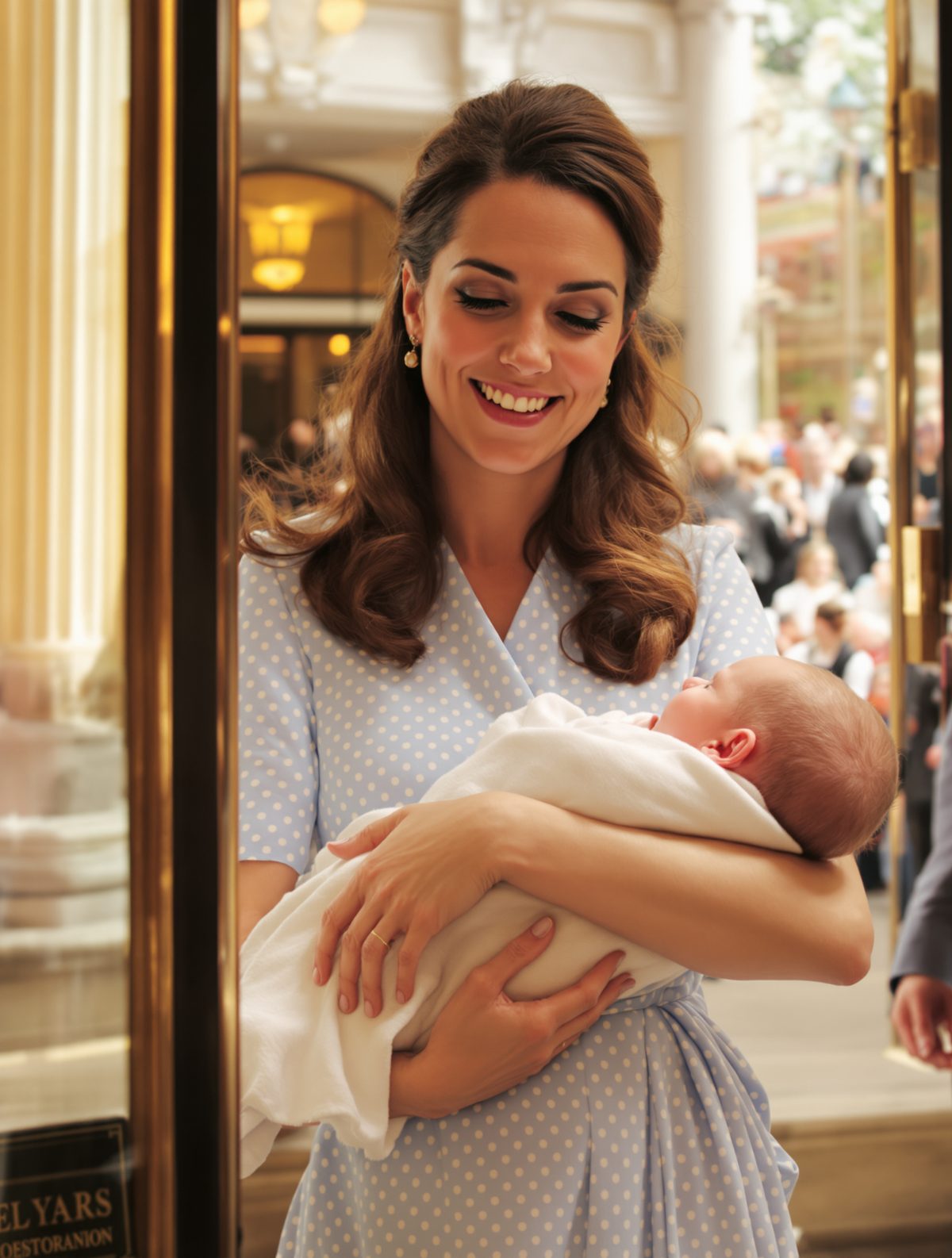
The world’s gaze was firmly fixed on the doors of the Lindo Wing of St. Mary’s Hospital on a warm July afternoon in 2013. Anxious anticipation crackled in the air as camera crews jostled for position, photographers poised to capture an indelible moment. It was the day Catherine, Duchess of Cambridge, would introduce her firstborn to the world. Yet, amidst the grandeur of royal tradition and historic gravitas, she stepped forward with refreshing simplicity, in a pale blue polka-dot dress that spoke volumes beyond its fabric.
An Entry to Motherhood Marked by Elegance and History
As the doors opened, Catherine emerged, cradling her newborn son, Prince George Alexander Louis, alongside her husband, William, Duke of Cambridge. The nation had waited with bated breath for the arrival of the future king, yet it was Catherine’s choice of attire that stirred a buzz of its own. She had chosen a Jenny Packham creation, a designer often favored by the Duchess. The dress was light, cheerful, and notably similar to the polka-dot gown worn by Princess Diana when she introduced Prince William to the world in 1982.
The sartorial choice was more than a nod to maternity style; it was a poignant homage to her late mother-in-law, a beloved figure whose warmth and compassion are fondly remembered. This gesture bridged three generations on the steps of the hospital and signaled a continuity of love and duty. It underscored how, in choosing the polka-dot pattern, Catherine had cleverly woven a tapestry of personal sentiment and public expectations.
The Context of the Royal Court: Behind the Cameras
For Catherine, a former commoner who had danced herself into the heart of British royalty, this was a moment of personal significance and public performance. It was as much about stepping into motherhood as it was about navigating the spotlight that accompanies every royal move. The wider royal household buzzed into action, ensuring the logistics of security, publicity, and protocol all flowed seamlessly, allowing this simple yet profound moment to unfold before the watching world.
Across the United Kingdom, and indeed around the globe, admiration poured in for the new mother. Catherine’s decision to wear an off-the-rack dress was a testament to her understanding of her role as a modern royal, accessible and relatable. It was a move that resonated with mothers everywhere, finding the balance of ordinary and extraordinary in those first few hours post-birth.
A Human Story in the Royal Narrative
The choice of the polka-dot dress was not just an echo of Diana’s fashion; it was a whisper of shared experiences between all mothers who step into the unknown terrain of parenthood. Catherine’s attire on that day seemed purposefully unburdened by grandiosity. It was a resonant reminder that even within the confines of royalty lies a relatable humanity, the tender bond between mother and child.
Beyond the sartorial and sentimental, the day was packed with the typical activities of jubilant celebration. Town criers, bells ringing, and public cheers certainly added to the jubilance of the occasion. Yet, transcending the spectacle was the quiet dignity in Catherine’s demeanor. The manner in which she carried herself encapsulated the grace she has consistently brought to her royal duties.
The Timeless Tradition of Royal Introductions
Royal introductions have long stood as poignant snapshots steeped in tradition. From balconies to hospital steps, these moments subtly reinforce the monarchy’s deep-seated history and continued evolution. Catherine’s choice not only nodded to Diana, but also contributed her own chapter to the royal family’s fashion archives. Just as each generation of royals presents its heirs to the public, they also recast roles with nuances that speak to their times. Her choice was a reminder that, while the Windsor dynasty thrives on tradition, it also breathes with change.
Interestingly, in the days following, the dress became an immediate sensation. Jenny Packham’s creation swiftly sold out, and its influence sparked a series of “George” and “Catherine” inspired sartorial selections in maternity and children’s fashion. It highlighted the immeasurable influence of the royals in the world of style.
Reflections from the Steps of History
As Catherine introduced Prince George to the world, she unwittingly crafted a tableau that fused royal history with contemporary elegance. Her polka-dot dress became a gentle metaphor for the enduring presence of the crown—one that fundamentally remains dedicated to service, yet intimately connected with the public it serves.
Decades prior, Princess Diana had stood in the same spot, experiencing similar joy and hope amidst life’s vulnerabilities. Whether it is a nod through fashion or a shared maternal gaze, these moments leave indelible imprints on the tapestry of royal history. Catherine’s decision was more than a matter of fashion; it was a shared embrace with the nation, unifying the throngs of onlookers with a touching symbol of both history and new beginnings.
Catherine’s heartfelt introduction of her son on that day not only redefined royal maternity style, but it invigorated the connection the British public feels with the monarchy. It reminded us all of the monarchy’s resilience and timeless appeal by turning a dressed-up moment into a cultural bridge that celebrated both heritage and hope.