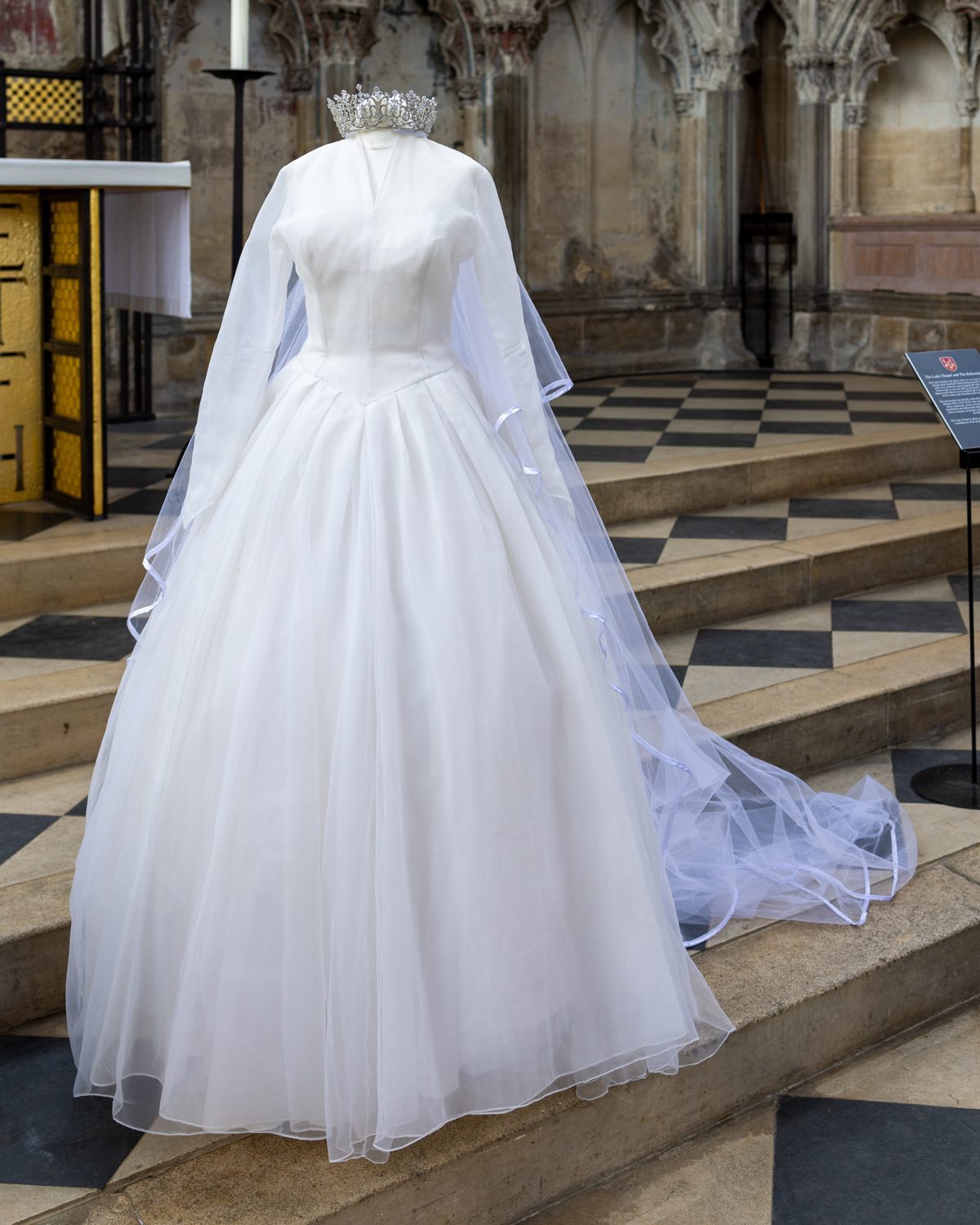
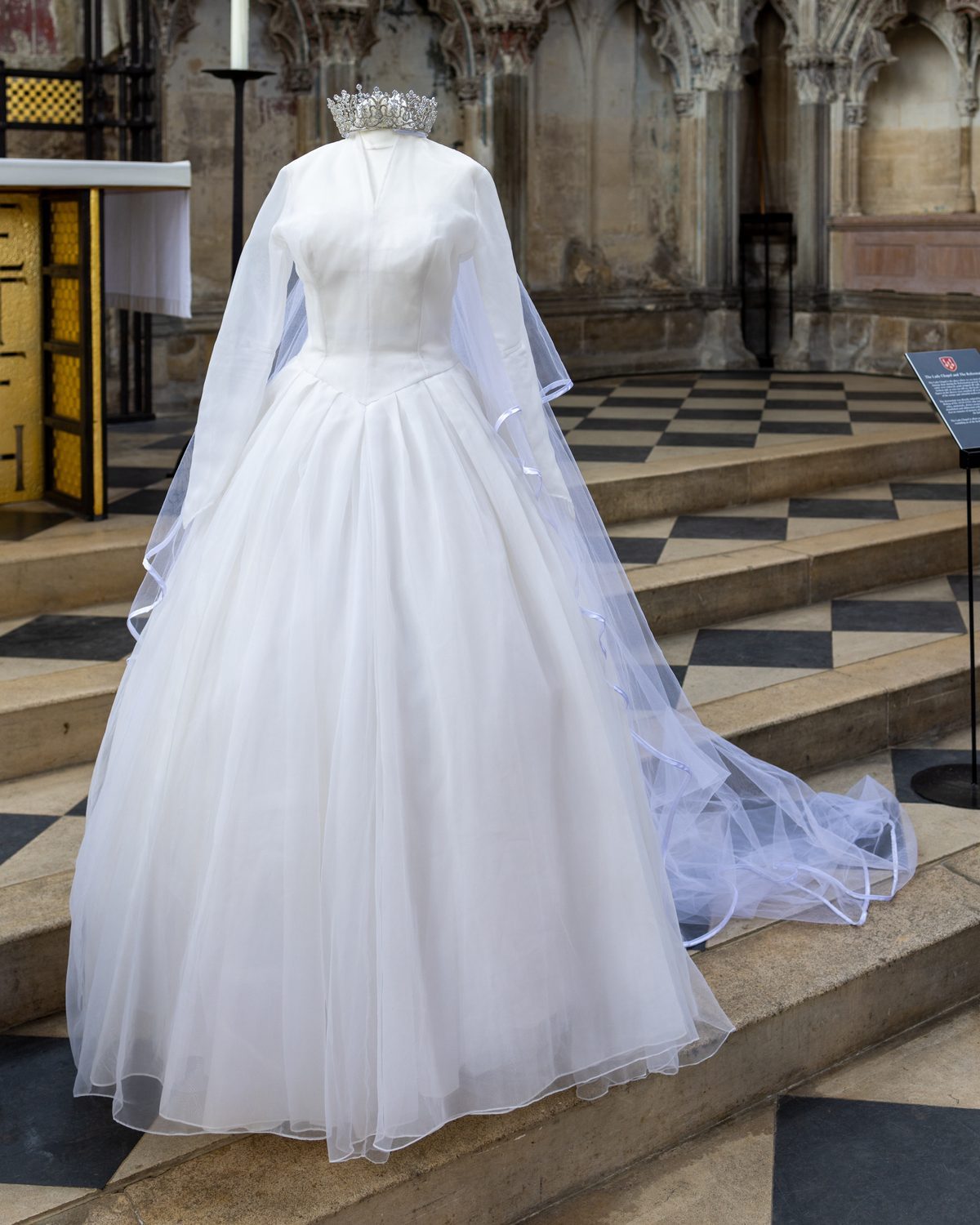

Attired in an outfit that seemed to defy not only fashion norms but time itself, Princess Margaret's New York debut in 1965 was anything but conventional. In a city known for its haste and high-stakes hustle, she stepped onto its streets — not as a mere representative of British royalty — but as a modern, almost otherworldly, goddess. Her appearance was a statement, not just a spectacle. There was no regal tiara perched upon her head that night, no opulent jewels to announce her status. Clad simply in a strapless column of white silk, Princess Margaret declared her sartorial independence. It was a choice both audacious and ingenious, one that was destined to echo through the annals of fashion history.
The Gown That Captured a City's Imagination
The year was 1965, and New York Fashion Week was a nascent blip on the global style radar. Yet, Princess Margaret's visit seemed to eclipse the city's own burgeoning fashion scene, capturing imaginations and headlines alike. Designed by Norman Hartnell, a couturier synonymous with British elegance and understated glamour, the gown itself was simplicity at its finest — devoid of any embellishment other than the luster of the silk that seemed to ripple with every step she took.
New York had seen glamour; it understood luxury. But Princess Margaret brought a distinctly British flavor to the style table. She wedged herself perfectly between the glitzy Broadway sparkle and the austere elegance of European tradition. The gown's streamlined silhouette and ethereal fabric worked in harmony to offset Margaret's own exuberant spirit, capturing a duality of restraint and flair that left Manhattan's fashion elite in awe.
The Context: Royalty Meets Cosmopolitan Chic
The acclaim that Margaret's ensemble received cannot be viewed without context. The mid-1960s was a transformative era, politically and culturally. The Beatles were at the forefront of a global music revolution, while London was experiencing its own 'Swinging' renaissance. In this climate of change, Margaret was a fitting figure for the age. Her visit to New York was a cultural bridging, a showcase of how tradition can evolve without losing its essence.
For Princess Margaret, the trip was more than diplomatic duty. It was an opportunity to cement her position as a modern royal, unshackled by stuffy conventions. While her older sister, Queen Elizabeth II, was revered for maintaining steely decorum befitting her role, Margaret was the uncontainable spirit — her personality marked by a visible flair and charisma. Yet, in the United States, she was not an errant royal but an enchanting figure dancing along the fine line between elegant restraint and unbridled innovation.
Breaking Traditions, Menacing Constructs
Perhaps the most remarkable aspect of the evening was what she chose not to wear. In a world that held fast to established norms, Margaret decided against a tiara, the time-honored symbol of royal stature. Such defiance might have induced a twinge of apprehension within more conservative royal circles but went triumphant among the fashion literati.
"Sometimes the crown must be left behind," an observer mentioned. Princess Margaret understood her fashion choices as extensions of personal expression rather than mere symbols of rank or privilege.
So what does it mean when a princess steps onto Fifth Avenue without this gleaming diadem? It meant that she was fully aware of the power dynamics that were shifting underneath the society's feet. Her absence of ostentatious jewels was itself a powerful accessory, proposing an inclusivity that invited admiration rather than demanded it.
An Icon's Lasting Imprint
The influence of Princess Margaret's New York attire extends far beyond the night in question. Her daring fashion choice has rippled endlessly through time, inspiring designers and fashionistas to embrace the blend of simplicity and elegance. By showing that a single, impeccably crafted garment could speak volumes, she set a new standard for high-level fashion that prioritized individual style over traditional paraphernalia.
Moreover, her boldness in breaking away from tradition also facilitated a deeper understanding of what it means to be modern royalty: that independence and individualism can exist even in environments where protocol often rules supreme. Her iconic gown taught generations that elegance does not have to be synonymous with rigidity, and that sometimes the most profound statements are made in sartorial whispers.
A Timeless Elegance in Today's Fashion
While the past often offers lessons nestled among challenges, it is crucial to pluck the stories that seed inspiration. Princess Margaret's visit to New York is more than a relic of history — it's a study in how grace and daring can defy expectations and create an indelible impact. Imagine the confidence it took to step before a world expecting diamonds and deliver silk instead, to offer one's authentic self sans the veil of tradition. This is the essence of Margaret’s enduring allure, reaching through the decades to speak to today's generation as clearly as it did then.
As society continues to evolve, so does the role of monarchy. It must engage with modern ideals while respecting timeless heritage. Princess Margaret’s night on Fifth Avenue is a splendid reminder that the brilliance of the British monarchy lies not just in its tradition but also in its occasional rebellions.
In every elegant line of Margaret's silk gown, we're gently urged to understand that power doesn't always wear a crown; sometimes, it graces a strapless silhouette.
📷 Photo: The wub. CC BY-SA 4.0 via Wikimedia Commons.