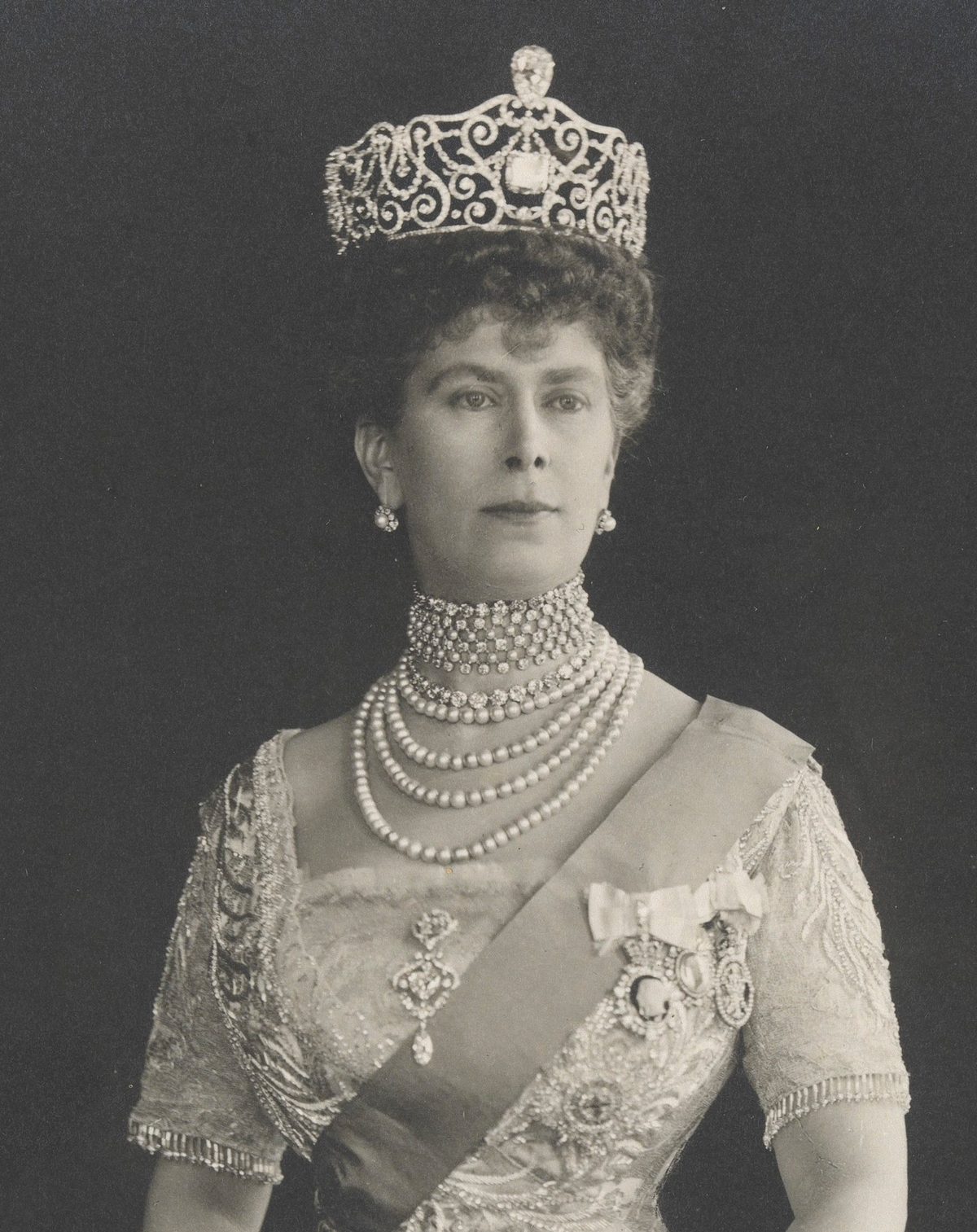
On a solemn day in May 1910, the bustling streets of London hushed to a respectful silence. Throughout the city, black-draped facades echoed the somber mood of a mourning nation. King Edward VII, revered and larger-than-life, had died. As the funeral cortege made its way through grieving crowds, nine sovereign monarchs gathered in profound tribute, each resplendent in ceremonial attire. Yet it was Queen Mary, the new queen consort, who truly captured the heart and gaze of all who were there. Clad not in the traditional black of mourning, but in a striking gown of deep violet silk, Queen Mary redefined the visual language of sorrow—a blend of grief wrapped in the indomitable majesty of the monarchy.
The Queen's Choice: A Palette of Power
Queen Mary's decision to forgo black, the universal hue of mourning, was both deliberate and symbolic. As she stood before a mourning empire, her choice of deep violet carried a message that transcended the ordinary. Violet was a color of ancient royalty, often associated with power and spirituality. For Mary, it was a gesture of continuity and strength amidst a sea of sorrow. Her ensemble, woven from the richest silk, was a masterclass in the subtle art of royal fashion, where every stitch seemed to whisper of resilience.
This sartorial decision was executed with precision, seen in the choice of exquisite amethyst brooches and a mourning tiara made of sparkling silver. Such accessories were not mere adornments. They were a reminder of authority and eternity, reflecting a regal grace that declared, even in sadness, the monarchy's enduring relevance and steadfastness. Queen Mary understood that in a time of transition, her attire could say what words could not: that while mourning was a rite of passage, the weight of the crown she wore was eternal.
A Nation In Mourning
In the wake of King Edward VII's passing, Britain confronted not just the loss of a beloved sovereign, but the end of an era. Edward had been a kind of bridge between the Victorian stability of his mother, Queen Victoria, and the undeniable storms of modernity. The shift from the Edwardian age to the nascent Windsor reign under King George V marked a new beginning, fraught with both potential and uncertainty.
Geopolitically, this transition was reflected in the assembly of global royalty and dignitaries at Edward's funeral. The House of Windsor faced a delicate diplomatic dance, where royals from across Europe, many of whom were closely related, shared personal grief with silent hints of political undertones. Queen Mary's choice of attire contributed to shaping the narrative of the monarchy's continuity and its influence on the global stage.
The House of Windsor's Unseen Strengths
Queen Mary's style of mourning, however, was not just about aesthetics. It was deeply rooted in the personal attributes that defined her reign. Known for her meticulous attention to court protocol and her devotion to the roles and responsibilities of royalty, Queen Mary exemplified the monarchy's public and private duties. Her ability to meld personal sentiments with the demands of her office was perhaps most strikingly visualized in her fashion choices during periods of public mourning.
Further, Queen Mary's decisions came at a time when women’s roles within the monarchy were evolving. Her public duties demonstrated a delicate balance of composure and empathy. In wearing violet and amethyst brooches, she projected this balance, ensuring that the realm's grief was wrapped in dignity and purpose. Her formidable stature as a matriarch and icon helped lay groundwork for future generations of royal women, who would similarly wield their influence through subtle yet powerful gestures.
Mourning and the Modern Monarchy
Queen Mary's striking appearance at King Edward VII’s funeral subtly sowed the seeds for an evolving public image of the British monarchy—one that spoke to the heart of tradition while embracing change. For observant members of the public, her choices during that iconic period represented a monarchy that would endure through personal touches as much as grand traditions. The way she connected the past with the present through her attire became a reflection of how the monarchy would continue to bridge history with modern times.
This legacy persists in how current members of the royal family address and attire themselves during times of national sorrow. The thoughtful consideration that goes into every appearance helps craft and sustain the royal family's unwavering connection with the people they serve. Queen Mary’s embodiment of strength in mourning, communicated through her violet gown, continues to inspire a monarchy as vibrant as it is venerable.
Today, as we look back on that moment, it remains a story not just about sartorial genius but about the human spirit that endures as a defining trait of the British monarchy. Queen Mary’s violet gown was more than a garment—it was a narrative of resilience, a promise that the monarchy would thrive through the ages, resilient and reassuring in its permanence. Such threads link history with the present, reminding us that amidst the many changes, the crown’s story, much like Queen Mary's gown, is ever unfolding, ever enduring.
📷 Photo: John Thomson. CC BY 4.0 via Wikimedia Commons.