She had given up a king, a country, and any hope of a royal title. But in Paris in 1937, Wallis Simpson walked into her wedding in a gown so precise, so quietly powerful, that it stopped the fashion world cold. The colour was so singular that Mainbocher named it after her alone. Some losses, it turns out, are worn beautifully.
The Colour of Reinvention
Paris, the city of enlightenment and style, buzzed with anticipation on June 3rd, 1937. Against the backdrop of societal norms and royal obligations, it was here that Wallis Simpson sought to reinvent her narrative. Having swapped the pomp and regal allure of the British throne for a life with the man she loved, Wallis needed something monumental to mark this audacious new chapter. Her weapon of choice? Fashion.
The eyes of the world were on Wallis, or at least on the azure Mainbocher gown that she wore, so perfectly tailored that it seemed to be woven from elements of her soul. The shade was one she chose deliberately, a muted blue-grey that mirrored her own eyes. In a moment of bold creativity, Wallis dubbed the colour ‘Wallis blue.’ It was the sartorial embodiment of her complex identity — elegant, understated, yet defiantly personal. Mainbocher, the French-American couturier, recognized the significance and duly christened the shade in her honour, ensuring its immortality in fashion lexicons.
A Gown that Whispered, Rather Than Shouted
This gown was an anti-coronation robe of sorts. Unlike the grandiosity associated with royal attire, Mainbocher’s creation exuded a subtlety that aligned with Wallis' quiet strength. The gown followed the natural form of her body, crafted with precision, every seam and fold a testament to a meticulous vision realized. It whispered of grace, resolve, and an undeniable allure.
The gown was crafted from silk crepe, a material choice that spoke of restraint and sophistication, each drape a silent declaration of Wallis' newfound independence. A high neckline with buttons running down the bodice suggested formality, while the cinched waist offered femininity — a dichotomy that mirrored Wallis' own life, caught between the worlds of commoners and kings.
More Than a Spectacle — A Statement
While fashion critics would later applaud the gown as an aesthetic masterpiece, its true power lay in the statement it made about Wallis herself. By choosing a gown that was unapologetically her own, Wallis rejected the conventionality that had loomed over her life with Edward. She opted for authenticity over conformity, a choice that resonated far beyond the couture ateliers of Paris.
In essence, she was redefining what it meant to hold power. No longer shackled by the expectations of monarchy, Wallis was crafting her own royal identity. In redefining the ‘uniform’ of a bride, she exhibited the kind of quiet courage that would mark her as an icon of the era. Unconsciously, she was inspiring a generation of women to embrace their individuality, asserting that true elegance comes from self-awareness rather than tradition-bound opulence.
Eternal Influence
The impact of Wallis's gown transcended fashion; it became a fabric narrative about embracing change and inventiveness. Wallis blue became emblematic of a shift in societal norms, where the intricacies of personal expression began to intertwine with public persona. As the Duchess of Windsor stood beside the man who had renounced a crown for her, she embodied a new form of royalty—one molded by authentic desire rather than inherited duty.
Yet, even beyond fashion, this moment marked Wallis as an immutable part of royal history. Though absent from Britain's registry of titled nobility, she had secured her place in its legacy not through formal recognition but through indelible personal expression. She may not have worn a coronation crown, but in her singular gown, Wallis proved that some crowns are invisible, worn not on heads but in hearts.
Legacy of the Unconventional Queen
Today, as we reflect on the past with modern eyes, the story of Wallis Simpson offers a timeless narrative about love, sacrifice, and the quiet power of self-definition. Her decision to step away from conventional royalty invites us to ponder what it means to hold one’s own in a world often dictated by the expectations of others. Within the folds of her Mainbocher gown, Wallis found—and shared—her truth.
In a world still entranced by royal glamour, Wallis reminds us of the strength that resides in authenticity. Names and titles bestowed by birthright may be revered, but it is often those who write their own stories who capture our imagination. Whether striding through the gilded halls of Buckhurst Hill or the bustling streets of post-war Paris, the essence of what it means to belong to royalty lies not just in pageantry, but in dignity, grace, and above all, the courage to be authentic to oneself.
As we admire royal fashion today, where modern duchesses and princesses also craft narratives through style, Wallis's legacy persists. Her gown continues to serve as a symbolic bridge between past and present, encouraging us all to consider how personal revolutions can alter history, one quiet stitch at a time.
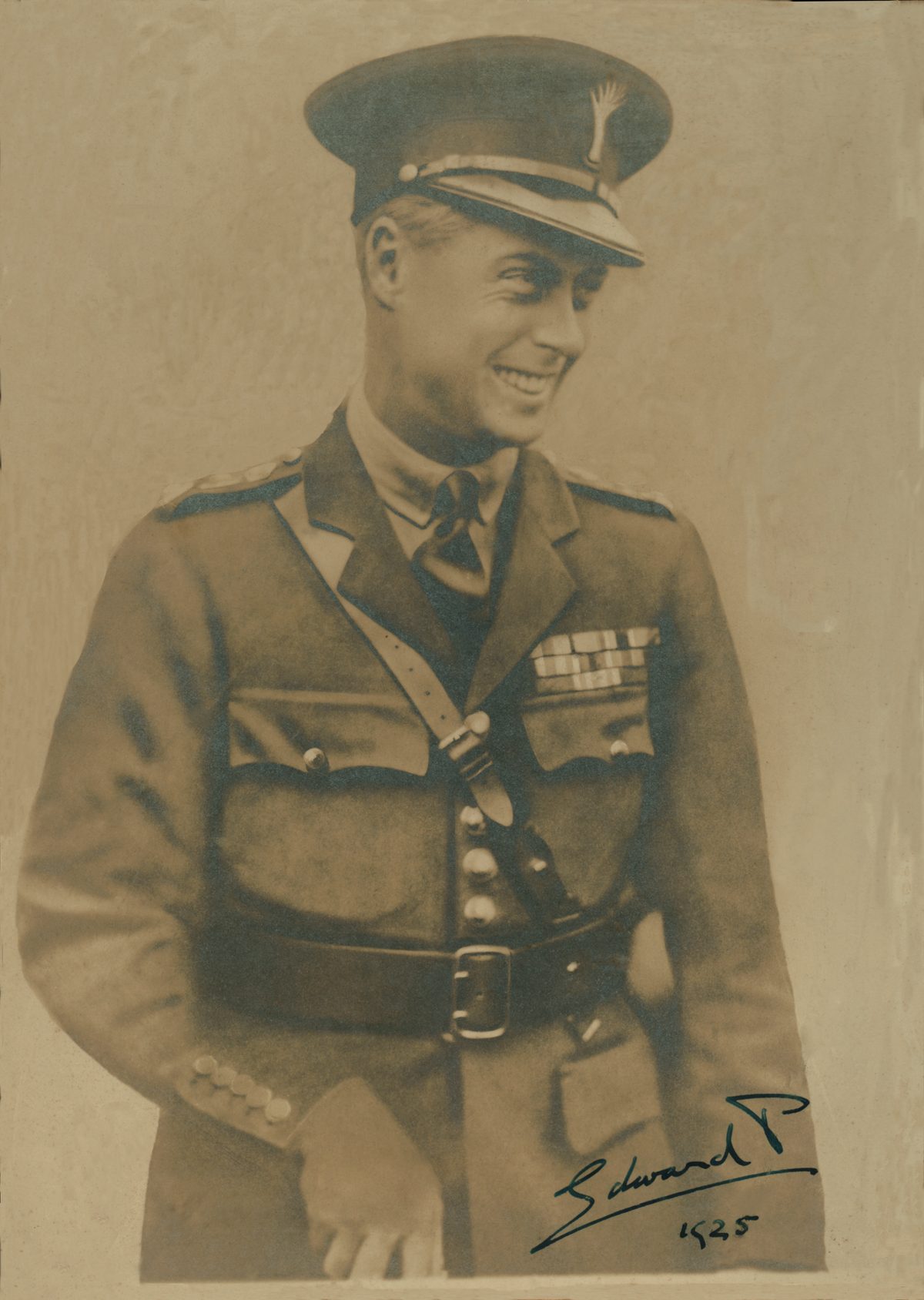
📷 Photo: Edward VIII. Public domain via Wikimedia Commons.