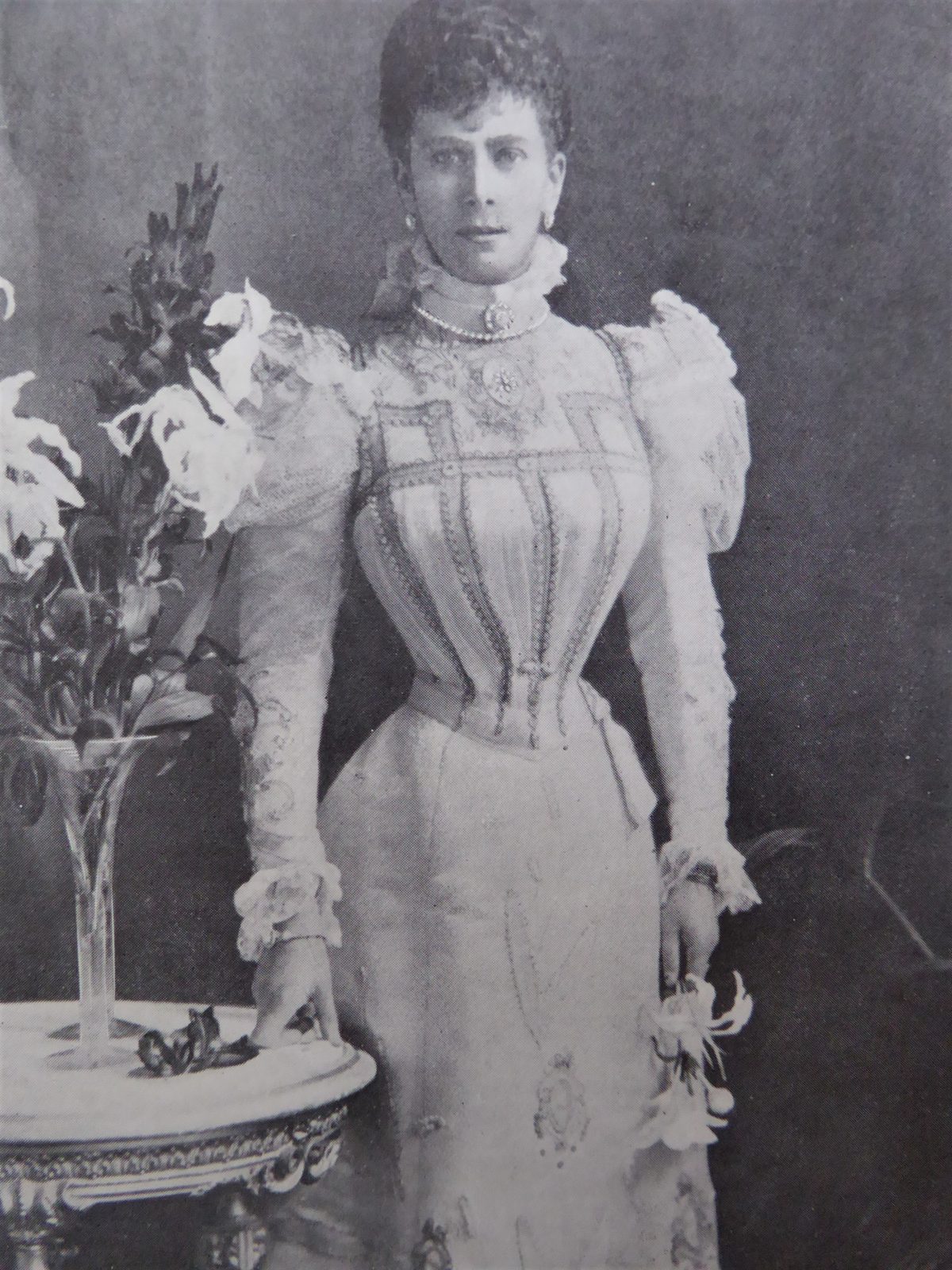
An immense parade of history, power, and fashion assembled under the sun-drenched skies of India’s capital, Delhi, in the winter of 1911. The opulent spectacle of the Delhi Durbar was organized to celebrate the coronation of King George V and Queen Mary as Emperor and Empress of India. Among the plethora of extraordinary ensembles, dazzling jewels, and ceremonial regalia on display, Queen Mary managed to capture the spotlight uniquely. Her ivory silk gown, laden with diamonds and adorned with intricate Indian-inspired motifs, not only outshone its contemporaries but also anchored itself firmly in the annals of fashion history.
A Dress Fit for Empire
To understand the magnificent emergence of Queen Mary in her ivory silk gown, we must first appreciate the grandeur of the Delhi Durbar itself. Conceived as a demonstration of British imperial power, the Durbar was a carefully orchestrated event designed to radiate luxury and command respect. Aware of the cultural and political weight such an event held, Queen Mary’s choice of attire was no accident. Her gown was to function as an emblem of grace and sovereign authority.
Designed by the eminent British fashion house of the time, Reville and Rossiter, the dress materialized the Edwardian era’s evolving aesthetics. The era celebrated opulence, and this gown captured just that — yet with profound subtlety. It was constructed from sumptuous ivory silk, a nod to regal tradition, while the intricate embroidery with gold threads paid homage to India’s rich cultural heritage. The floral designs bore a striking resemblance to Mughal motifs, elegantly showcasing a respectful nod to the land she was now symbolically ruling over.
Diamonds, Embroidery, and the Sunlit Stage
The gown was no mere article of clothing — it was a masterpiece. Diamonds were delicately sewn into the fabric, emerging in a subtle but breathtaking sparkle. As Queen Mary ascended to her carriage, the sunlight caught the gems, creating a shimmering halo of refracted light, much like a dream woven into reality. Seen equidistantly from all corners of the grand amphitheater of the Durbar, her gown appeared lit from within, capturing a tableau vivant of both solemnity and majesty.
Queen Mary's tiara added to her radiance — it was the Cambridge Lover's Knot Tiara, known for its elegant rhythm of scrolling orbs, diamonds, and pearls. The choice of such a piece echoed both traditional English sophistication and the exotic allure of Indian jewelry design, bridging two distinct cultures through aesthetic excellence.
The Creation and the Cost
While the gown’s final appearance was effortlessly majestic, its creation was a feat in design and craftsmanship. The artisans at Reville and Rossiter worked meticulously to incorporate delicate details that would speak both to the refined tastes of the English court and the intricate artisanal traditions of India. It was a labor-intensive process that employed numerous skilled craftspersons, each bringing their mastery of embroidery and ornamentation into focus.
The gown reportedly cost a fortune, an investment befitting its purpose and significance. Queen Mary, known for her keen interest in fashion and jewelry, was deeply involved in the details of her attire. She understood that her presence at the Durbar would be immortalized not just in photographs but also in the memories of those who witnessed it — clothing history in itself, worn to withstand both time and storm.
A Symbol of Unity Amidst Splendor
Beneath the glittering surface of diamonds and gold, Queen Mary’s gown did more than celebrate aristocratic opulence; it represented a bridge between two great nations. This sartorial decision was a carefully constructed gesture of goodwill, acknowledging the splendor and artistry of Indian heritage while solidifying British presence. In a world on the cusp of transformation, thanks to complex political climates and shifting monarchial power dynamics, Queen Mary’s attire spoke volumes about the diplomacy of fashion.
The atmosphere at the Durbar was electrifying; the crowd of thousands fell silent as the queen made her entrance. Their eyes etched onto her slender, regal silhouette, only to erupt into awe-struck applause as she took her place beside King George V. It was not merely about fashion then; it was about the embrace of mutual respect, the synthesis of two cultures under an imperial sun.
The Gown’s Legacy: From Then to Now
Even today, over a century later, Queen Mary’s ivory silk gown continues to inspire designers and royal fashion watchers alike. Like the rich tapestry of history itself, the dress became an instance of art understanding life — a swirling mingling of tradition, culture, and rhetoric through fabric and form. Modern designers have often looked back at this iconic ensemble, identifying elements of Queen Mary’s cross-cultural style in new fashion interpretations.
The gown serves as a tangible reminder of the enduring legacy of the British monarchy and the finely woven connections that style can create between diverse cultures. It speaks of an era where elegance was the conduit of diplomacy and royal ceremonies were more than mere pageantry — they were vital expressions of unity and admiration.
While the world has transformed since then, the meditative power of such royal events and their resplendent couture endures, very much alive in royal fashion circles today. For enthusiasts of royal fashion, Queen Mary’s 1911 Delhi Durbar gown remains one of the greatest exemplars of early 20th-century style — a classical anthem of grandeur echoing through time, drawing its lines in the sand between elegance and empire.
📷 Photo: Lafayette. Public domain via Wikimedia Commons.