The eve of October 24th, 1415, held a wildly different atmosphere at the English camp near Agincourt. The Spartans of old had their Thermopylae; Henry V had his Agincourt. As the fitful, moaning wind swept through the canvas tents, King Henry V of England – unexpectedly, in disguise – moved amongst his troops, blending invisibly into the human tapestry of fear, loyalty, and steadfast resolve. This was not merely a king rehearsing strategies or securing commands. This was a sovereign devoting time to commune, in the shadows, with those entrusted the task of changing history. Those precious stolen hours invigorated him for what lay ahead. And in that stillness, with a heavy cloak draping his shoulders and under the canopy of stars, King Henry V gathered the strength only solitude and introspection could instill.
The King's Gambit: Walking Unknown Amongst His Men
It was an age defined by royalty and the divine right to rule, where the monarch was often seen as distant and exalted. Yet, Henry V shunned such traditional perceptions for a night, choosing instead to cloak himself in the guise of an ordinary foot soldier. This moment was both revolutionary and deeply human – engaging with his subjects on their level, absorbing truths that were raw and unfiltered. What inspired this remarkable decision remains partly shrouded in mystery. Scholars speculate that he wished to gauge the morale of his army or perhaps, to understand their concerns firsthand.
The English army was notably outnumbered by the French forces. Spirits were dim, shaken by inevitable worry, the weight of striking odds, and haunted by the specter of defeat. As tidings of anxiety settled heavily around the camp, Henry's choice demonstrated remarkable leadership, both humbling and inspiring. He listened to the honest fears and hopes of his soldiers, granting them anonymity to speak freely. Here stood a king who understood his troops were fellow human beings, each running the same risk of death the next morning bore.
“Uneasy lies the head that wears a crown,” Shakespeare would write of him. Yet, that evening, as king and common man merged, Henry V transformed that unease into compassion.
A Leader's Silent Vigil: The Prayer Before Dawn
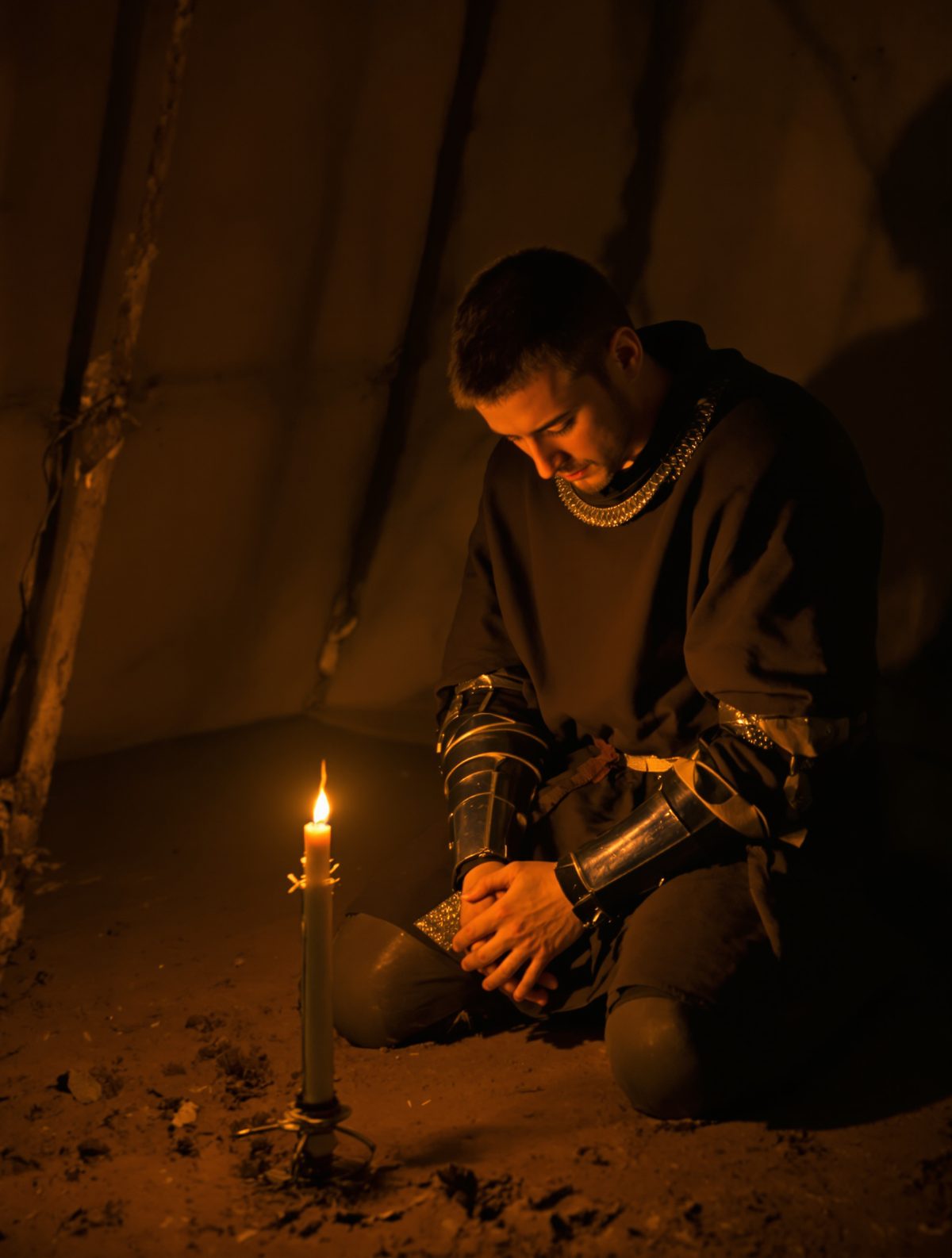
After hours spent in anonymous solidarity, listening and learning, Henry V returned to his solitary quarters. It was there in the stillness of his tent he knelt to pray. Alone in the dark, his personal communion with God was an act framed within the intimate folds of hope and introspection. He sought divine guidance for the battle ahead. Codified by some historical records and by Shakespeare’s poetic depiction, this poignant scene adds a deeply human dimension to his martial spirit. In the hours before dawn, the tent became a sacred space where vulnerability met with strength.
In contemplation, Henry sought not for glory but for deliverance, not merely for himself but for each of the men risking life and limb by his side. A personal intersection of faith and fate unfolded. This act signified the monumental weight of responsibility his crown bore, drawing strength from a foundation steeped in spiritual solace rather than gilded symbolisms of power alone.
Legacy and The Agincourt Sunrise
With the first breath of light on October 25th, St. Crispin’s Day, the dawn unearthed an army renewed by the night’s hidden resolve. Henry’s prayer, and his actions, reverberated beneath the rising sun. The Battle of Agincourt is celebrated for its unlikely victory. English forces employed what appeared to be humble technology – the longbow – against heavily armored French nobility, illustrating not only a tactical genius but also a testament to the adaptability and innovation that often characterize Henry's reign.
By choosing to walk unrecognized amidst his men and by the solemnity of his actions in prayer, Henry V became more than just a storied figure on a throne; he was the quintessential warrior-king. The victory at Agincourt wasn’t merely a triumph of arms, but a manifestation of a collective resilience fueled by the unyielding spirit of a united kingdom. Later romanticized in literature and drama, the events of that night and the subsequent battle serve as a reminder of the profound intersection between personal ambition and collective destiny.
A Legacy Continuing to Inspire
Even today, this tale resonates in the halls of history. While generations have passed since Henry V's era of medieval chivalry and valor, his narrative continues to inspire those facing seemingly insurmountable challenges. His journey from tent to battlefield offers a timeless message, underscoring the power of humility, empathy, and faith in leadership. In a world that often seems divided, Henry’s actions remind us of the power and grace that stems from communal unity and a shared purpose.
Beyond the historical significance, the night Henry V knelt alone at Agincourt echoes a fundamental truth transcending eras—the understanding that acknowledging the human spirit’s potential allows social and personal transformation to unfold. Agincourt remains etched in the tapestry of British heritage, a shining beacon demonstrating how sometimes, the most profound acts in royal history happen away from the throne—guided not by privilege, but by the common touch of purpose and the whisper of peaceful nights.
Henry V's pre-dawn encounter, evolving from royal intrigue into a cherished story of valor, reminds us that reverence in leadership and genuine connection hold boundless power and enduring influence. In honoring him through this lens, we also honor the timeless ideals his life depicted—courage, compassion, and faith. Stuart obelisks crumble; sovereignty reshapes; dynasties rise and fall—yet the heart encapsulated by Henry’s longing prayer on St. Crispin’s dawn remains steadfast in the annals of royal nobility.