As the echoes of war reverberated through the bombed-out streets of London during the turbulent months of the Blitz, a poignant moment of humanity unfolded that touched the hearts of many. Unbeknownst to him, a young boy with nothing left but a few crayons and an ember of hope sent a drawing to a king he never once met. Addressed simply to "The Palace, London," his creation found its way to the desk of King George VI. What transpired next would leave an indelible mark not just on the King himself, but on the very heart of a nation.
The King and His People
By 1940, the British Monarchy was still navigating the nascent years of King George VI’s reign. Ascending to the throne through unexpected circumstances following his brother Edward VIII’s abdication, George VI faced the immense challenge of leading his country through the throes of World War II. A man of humble heart and steadfast resolve, he endeared himself to his subjects not through grand displays, but through his unwavering dedication and ever-present humanity.
During the Blitz, as bombs rained down on London, the King and Queen refused to leave the city. Their presence among the people, touring bomb sites, visiting shelters, and comforting victims, brought solace to a war-weary nation. It was in this spirit of solidarity and empathy that King George VI received a simple envelope from a child who had been caught in the crossfire of war.
A Moving Message
The drawing, rendered in bright crayon hues, spoke more loudly of the child’s resilience and hope than words ever could. The King, known for his reserved nature, was visibly moved upon seeing it. It depicted a devastated street — a stark reminder of the harsh realities faced by many Londoners — yet it also held a tiny beacon of optimism: a British flag waving proudly amidst the rubble, a symbol of hope and undying spirit.
Accompanying the drawing was a note scrawled in a child’s unsteady hand, recounting tales of courage and longing for peace. For a King so acutely aware of his people's suffering, it was a moment that brought the war’s devastation to a poignant, personal focus. His Majesty, deeply touched, was moved to tears.
A Royal Reply
That same afternoon, King George VI sought out a quiet moment amidst his numerous responsibilities and penned a reply in his own hand. It was not uncommon for him to reach out personally to those who touched him deeply, reflecting his personal commitment to the people he served. His message, wrought with empathy and warmth, thanked the young boy for his bravery and resilience. He promised that all efforts were being made to win the war, restoring peace and normalcy to their beloved motherland.
“Your drawing,” he wrote, “stands brightly against the dark shadow of war, just as your spirit does in our hearts.”
His letter, though addressed to a sole recipient, resonated with millions. It became emblematic of the deep connection between the King and his subjects, portraying the very human heart beneath the regal crown during times of great turmoil.
The Heart of the Royal Court
King George VI’s response showcases the undercurrents of compassion that flowed through the royal court. His advisers, faced daily with matters of state and the logistics of maneuvering through a world at war, encouraged and supported these moments of connection that transcended the usual formality seen in monarchy. It was a reflection of a court that understood the power of heartfelt gestures to inspire and uphold a nation.
This profound commitment by the King was part of a broader strategy, one of unity and strength, presenting a resistant front amidst adversity. Both King George VI and Queen Elizabeth became beacons of hope for their country, their resolute presence affirming that they shared in every trial felt by their people, no matter how grave.
The Legacy Lives On
The poignant exchange between a king and a boy during World War II serves as a timeless reminder of the quiet power of empathy, compassion, and human connection. Today, the British monarchy continues to value and demonstrate personal touch and involvement, following in the footsteps of King George VI. His legacy, imbued with strength through adversity and an unyielding heart for his people, set a precedent that resonates through the generations.
As we look back on these moments, it remains clear why King George VI was cherished so deeply by his people. Through small acts of kindness and sincerity, he embodied the core essence of what it means to be a monarch. Beyond the grandeur and majesty of the crown, it was his humanity — his genuine care for a young boy lost in the chaos — that bound him to his people, thus enriching the tapestry of the royal narrative.
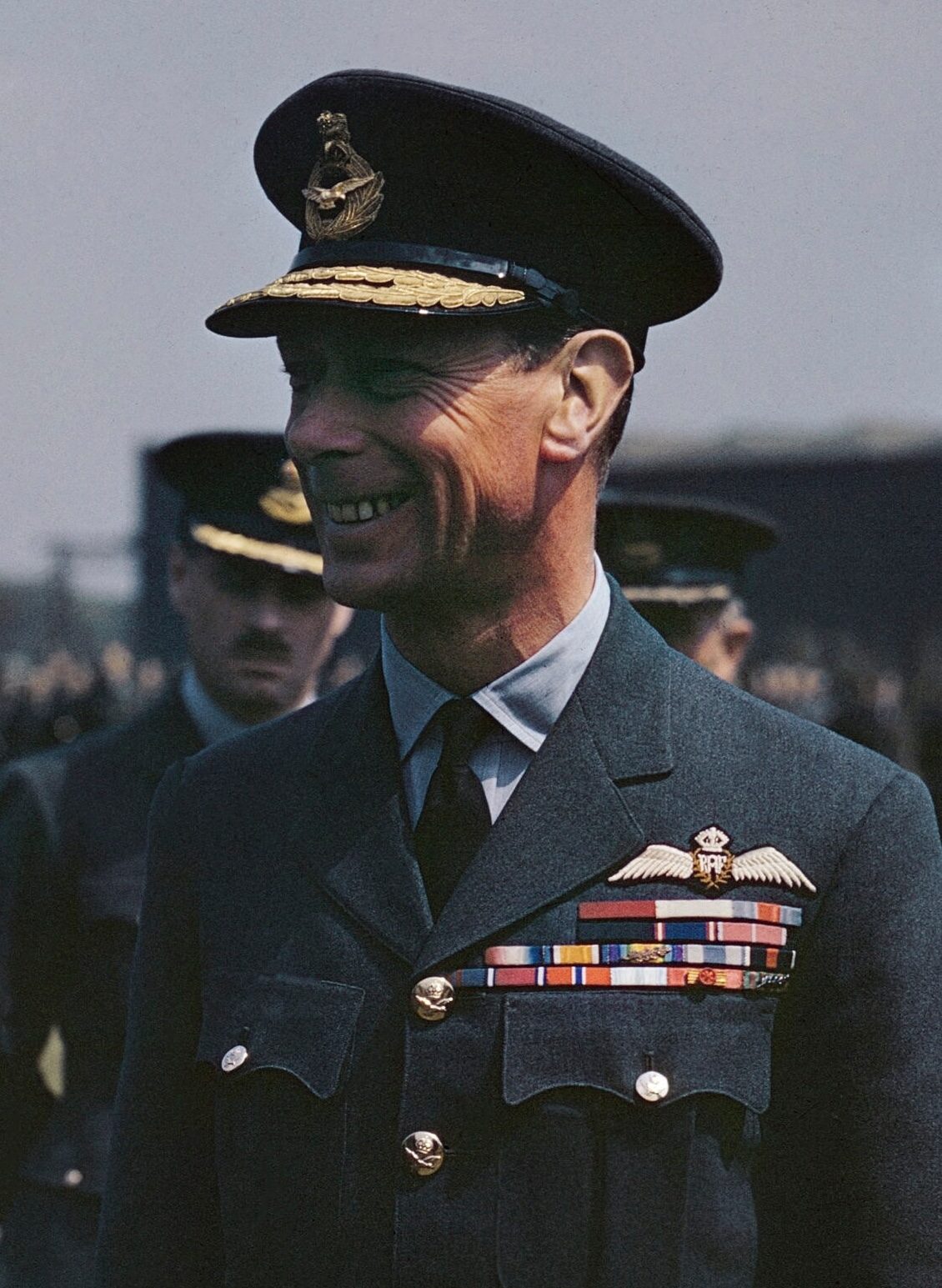
📷 Photo: Royal Air Force official photographer. Public domain via Wikimedia Commons.