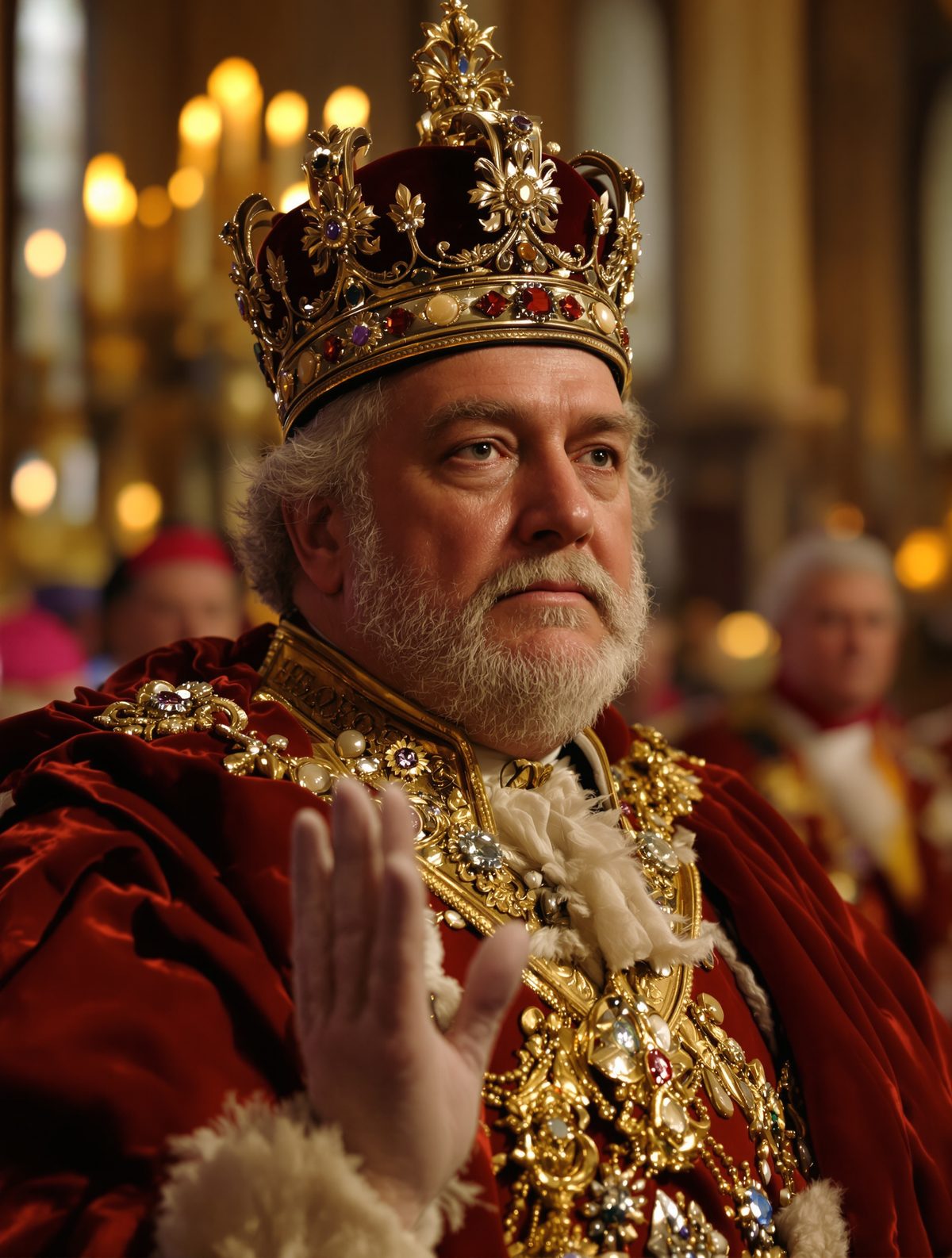
The grand halls of Westminster Abbey resounded with the solemn notes of the choir and the excited murmurs of the assembled nobility on the morning of 8 September 1831. It was a day destined for the annals of history, yet there, amid the pageantry, stood a man consumed by a deep and palpable dread. He was King William IV, the unwitting recipient of a crown from which he had once attempted to escape. As the gloved hands of the Archbishop of Canterbury lowered the regal crown onto King William's head, tears welled up and trickled down the face of the ‘Sailor King’. Little did the ceremonially attired congregation know, these were not tears of joy or pride. These were tears bred from the overwhelming enormity of a destiny he neither sought nor desired.
A Reluctant Monarch
For a life that was primarily steeped in the swirling, salty spray of the sea, the notion of ruling a kingdom seemed worlds apart. King William IV, known affectionately and famously as the ‘Sailor King’, had spent the majority of his life in the naval service. His passions lay with ships and the boundless horizons they traversed, not within the confines and protocols of regal courts.
Born in 1765 as the third son of King George III, William lived largely in the shadow of his more favoured elder brothers, George IV—who preceded him on the throne—and Frederick, Duke of York. So certain were his royal relations that the crown would rest on other brows, William himself was never groomed for kingship. Instead, he found an unrestrained joy in naval life, donning his officer's livery and carving a niche for himself away from the intrigue of courtly life.
Yet history had different designs. Upon George IV's death in 1830 without a legitimate heir, the crown found its way to William with surprising urgency. This sudden pivot from naval officer to the sovereign was not a prospect he relished. Faced with the weighty expectations of a nation, William reportedly called the crown a "curse", acutely aware of the onerous responsibilities pressing upon him.
The Coronation That Wasn't Meant to Be
Naturally, coronation preparations began forthwith, but William's wishes were crystal clear—he desired simplicity, yearning for a ceremony stripped of unnecessary extravagance. This was a desire that starkly contrasted with the expectations of the British Court and its unyielding reverence for tradition.
King William's preferences were not entirely ignored; the day saw a somewhat abridged ceremony. However, even this ‘scaled-back’ festivity was rife with pomp and circumstance that likely exceeded his comfort, a symphony of ceremonial splendor that included magnificent carriages and regal attire.
The coronation proceeded as any other had for centuries, with all the cavalcades of noblemen, clergymen, and dignitaries fulfilling their roles to perfection. What none could perceive, however, was the internal turmoil swirling in the heart of the newly crowned king, an emotional tempest rivaling any naval storm he had ever faced.
A Moment of Transformation
The defining moment arrived when the Archbishop of Canterbury poised the crown above William's brow, a pièce de résistance for both court and country. For countless monarchs before him, this pivotal point was a culmination of aspiration and approval. But for William, the profound ritual indicated the full brunt of regal responsibilities and expectations.
As the sacred relic descended, tears betrayed his royal composure. The weight of leadership didn't merely sit on William's head but penetrated his very soul. It was in that instance that the true gravity of his new role bore down on him, fusing equal parts duty and dread.
Observers in the abbey might have interpreted this reaction as mere sentimentality, but behind the veneer of regal decorum, a man recalibrating his entire existence stood humbled by his fate.
Embracing Leadership and Legacy
Though burdened with doubts, King William IV would go on to provide a steady hand to the kingdom in crucial years. His reign, albeit short, was marked by reform and change, setting a course for a rapidly modernizing Great Britain. He took steps to perfect parliamentary democracy, passing the landmark Reform Act of 1832, which diluted the aristocratic grip on political power and extended suffrage.
In personal realms, William was approachable and often disarmed the public with his affable albeit terse demeanor—a departure from the aloofness traditionally associated with royalty. Behind palace walls, he endeavored to modernize court life and policies, driven by the values gleaned from his nautical years.
The Legacy of the Unwanted Crown
King William IV’s reluctant accession is a poignant reminder of the sheer unpredictability of destiny, a narrative thread woven throughout royal history. His tears on coronation day underscore the humanity veiled beneath the regalia, speaking to a timeless truth: even those in exalted positions confront vulnerabilities and unforeseen challenges.
Today, the British monarchy continues to hold both reverence and relevance through the adaptability modeled by sovereigns such as William. They remind us that leadership is as much about resilience amid reluctance as it is about embracing grandeur. The chronicles of regal history often inspire current and future generations, showcasing that even the weightiest circumstances can be borne with dignity and determination.
As the pages of history continue to turn, the story of King William IV’s coronation reassures us that within the walls of palaces, the nuances of the human experience—dreams, struggles, and triumphs—eternally endure.