She was twenty years old, heir to the greatest empire on earth, and she had just been handed a set of military vehicle keys. Princess Elizabeth had demanded to serve. She had trained as a mechanic and driver. And on one spring morning in 1945, she drove a real officer through real wartime Britain — in uniform, without ceremony.
The Princess Who Chose Duty
April 1945 was a month fraught with anticipation and unease. The Second World War was dragging to a close, yet its last throes were bitter and hard-fought. Amidst this backdrop, a young Princess Elizabeth stepped forward into a role as improbable as it was inspiring. As Junior Commander Elizabeth Windsor of the Auxiliary Territorial Service (ATS), the heir to the British throne was determined to serve her country, not in the gilded rooms of her palatial homes, but in grease-streaked coveralls among her fellow citizens.
Much has been written about the steadfastness of Queen Elizabeth II during her six-decade reign, yet few moments highlight her innate sense of duty as vivid as her wartime service. In her early twenties, when most young women are exploring freedoms and opportunities, Elizabeth Windsor set her sights on a path of discipline—training as a military driver and mechanic. Her decision to join the ATS was not just a gesture of solidarity, but a proclamation that, had circumstances been different, she could walk the same path as those whom she would one day rule.
A Morning Like No Other
It was a crisp spring morning in April 1945 when Princess Elizabeth, clad in her ATS uniform, took the wheel of a military vehicle. Her mission was straightforward yet momentous: transport a senior military officer through the undulating roads of wartime Britain. There were no ceremonial trumpets, no onlookers to cheer her military stint, just the gentle hum of the engine and the solemnity of duty well understood.
The image of Elizabeth Windsor gripping the wheel, eyes fixed on the road, encapsulates more than just a royal milestone. It’s a snapshot of the wartime spirit, a reminder of a nation being propped up by men and women who, regardless of their rank or title, were united in purpose. To the outside world, she was the future queen, but to those she served alongside, she was merely Officer No. 230873—a colleague, a compatriot.
The Role of the Royal Household
The wartime participation of Princess Elizabeth marked a pivotal moment not just for her but also for the royal family. Traditionally perceived as divinely ordained, the British monarchy was quietly transforming. Supported by the steadying influence of her parents, King George VI and Queen Elizabeth, the future queen's decision demonstrated the Windsors' willingness to adapt and empathize with the populace during a time of struggle.
The palace thrummed with activity as war efforts required every hand on the ploughshare. Rumors of the princess's endeavors echoed through court gatherings, whispered with admiration by courtiers who understood that they were witnessing the sterling valor of a young woman unlike any other princess who had come before.
Mastering Mechanics: The Unlikely Career of a Heir
While many think of traditional queenly decorum—grace, poise, and sophisticated gowns—it’s easy to overlook that Elizabeth Windsor, for a brief, shining moment, was just as adept with a wrench as with a tiara. Her time at the ATS involved undergoing the same rigorous training as other recruits, an endeavor that culminated in her mastery of the intricacies of vehicle mechanics and maintenance.
Wartime Britain was a place fraught with immense challenges, where supplies were rationed, and espionage was a constant threat. It required more than just symbolic gestures to reassure a nation worn thin by years of conflict. It required action, sacrifice, and the willingness to dirty one's hands. Elizabeth’s service provided exactly that—an heir willing to stand in solidarity with her people, reflecting a commitment that would characterize her reign.
The Human Story
The personal experiences of service deeply shaped Elizabeth Windsor, offering her rare and invaluable insights into the lives of her subjects. Her time as a mechanic and driver brought her face-to-face with a Britain very different from palace life—a nation united in struggle, resilience, and hope for a brighter future. It’s a chapter in her life that she rarely discussed publicly, leaving historians to piece together its significance through glimpses and anecdotes.
A story goes that during her training, she adeptly handled the internal combustion engine’s intricacies and emerged with a mechanic's hands-on comprehension of machinery. Known for her quick wit and 'can-do' spirit, Elizabeth's commitment to her service role did not go unnoticed by her contemporaries, leaving an indelible mark on those who served alongside her.
Legacy Beyond the Crown
Throughout her life, Queen Elizabeth II was a fixture of opulence and duty, yet the memory of her wartime service stands as a poignant reminder of her humanity. Her wartime experiences, while a small fraction of her storied life, epitomized her lifelong character—portraying a young woman’s courage and humility.
As the world transitions to a new era where royal duties continue to evolve, the legacy of QEII's war years provides a beacon, highlighting the indomitable strength and adaptability that not only defined her reign but also set the precedent for future royal family members. Future generations have much to learn from her steadfast example—of a monarch who, when faced with adversity, chose to meet it on the open roads, her hands firm on the wheel, her spirit unyielding.
This tale of the morning when the future Queen took to the wheel reinforces her legendary ethos: In times of tumult, leadership means not just guiding one's people, but standing among them, shoulder to shoulder, looking toward a shared horizon.
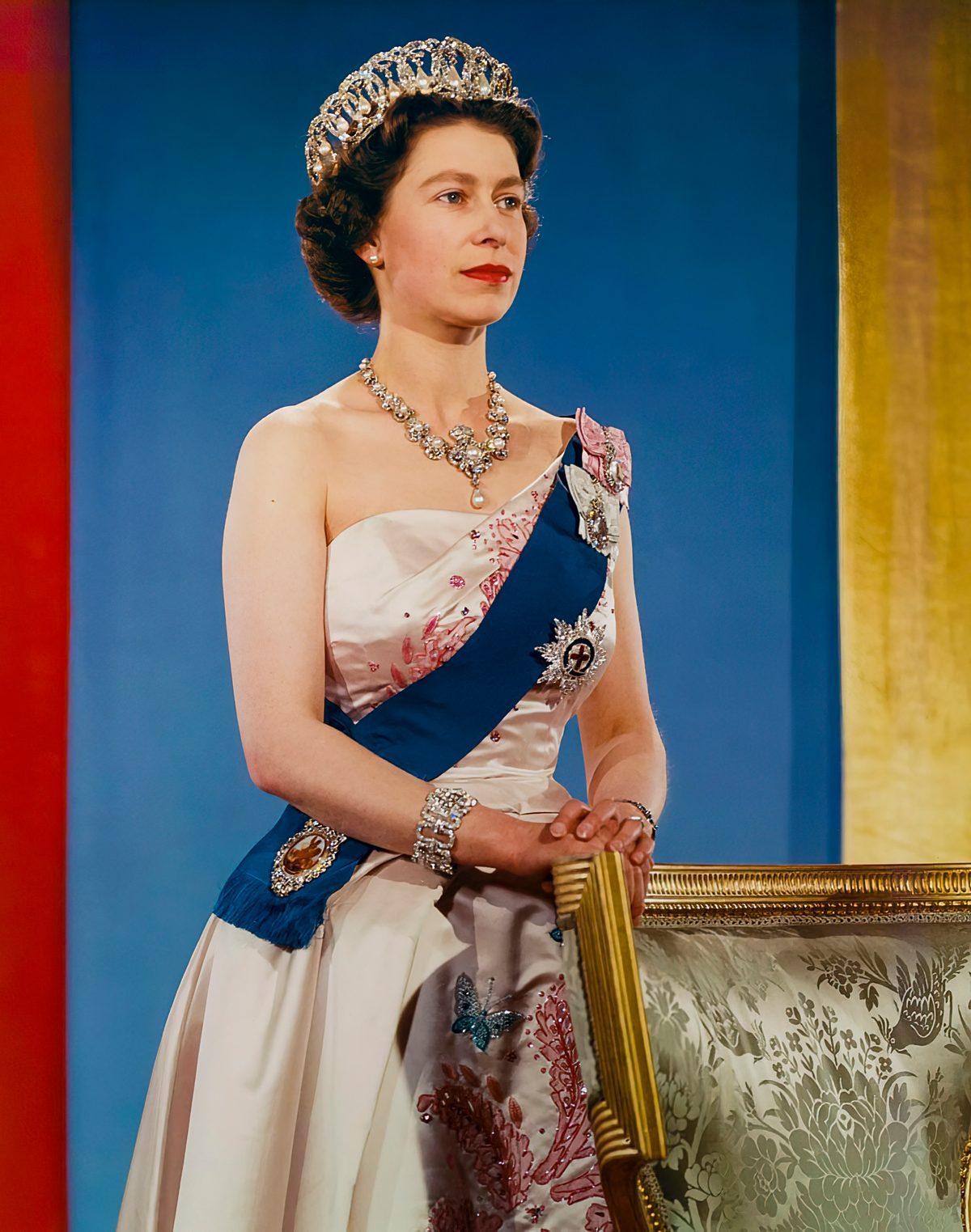
📷 Photo: Donald McKague. Public domain via Wikimedia Commons.