As the long night drew to a close on January 22, 1901, a profound silence settled over Osborne House on the Isle of Wight. Here, in her beloved residence, Queen Victoria’s era peacefully slipped into history. With her passing, sixty-three years of steadfast reign ended, but even in death, her connection to her cherished Prince Albert remained unbroken. The Queen had left meticulous instructions for her burial, ensuring that a token of her eternal bond with Albert would accompany her into eternity — her pristine white wedding veil.
A Veil of Love and Legacy
In February 1840, as a radiant young bride, Queen Victoria wore her wedding veil as she married Prince Albert of Saxe-Coburg and Gotha. The choice of white in her bridal attire set a trend that persists to this day, but for Victoria, the significance of the veil went far beyond mere fashion. It symbolized the pure, devoted love she had for Albert, a love which would become foundational for the monarchy she led.
The veil witnessed the happiest day of Victoria's life, a sentiment she echoed in her journals. Clad in satin and lace, she expressed being enraptured with every detail of the momentous day, from the chiming bells to Albert's loving gaze. In wearing the veil, she embraced not only a new life as a wife and queen but also a new era of partnership — a shared vision for a stable and modern kingdom.
"The Widow of Windsor"
Albert’s untimely death in 1861 plunged Victoria into a deep, unrelenting grief. She became known as the "Widow of Windsor," retreating from public life and dressing in black for the remainder of her days. Despite her mourning, the wedding veil remained a cherished artifact, symbolizing the bliss they once shared — a keepsake she requested to have draped over her face at the moment she joined Albert in the hereafter.
Within the confines of Victoria's regal life, the veil’s presence served as a potent reminder of her undying devotion. It was more than just a piece of fabric; it was a connective thread to the joys of her past with Albert. Her servants and closest enablers would often see her silently contemplating the veil, perhaps revisiting those cherished moments lost to time.
The Sanctuary of Osborne House
Osborne House, where Victoria spent her final days, was conceived as a retreat for familial privacy and comfort, a conceptual and architectural reflection of her and Albert's happiest years. Here, their collective legacy took tangible form, with interiors designed to celebrate Albert's taste and Victoria’s love for her husband’s memory. The estate's heart held the echoes of laughter and love, channeled through their shared vision of domestic bliss.
In this serene setting, Victoria often found solace, with the veil close, acting as a touchstone to those treasured days. Her room, carefully preserved as it was left, with simple, intimate decorations and personal effects, was a testament to a life richly lived yet steeped in nostalgia.
Final Wishes and Farewell
Victoria’s instructions for her burial were thoroughly detailed, emphasizing her desire to be remembered as the woman behind her titles: a wife and mother. Placing the veil over her face was a definitive acknowledgment of the happiness Albert brought into her world. Alongside the veil, a plaster cast of Albert's hand was kept in her own, a poignant ensemble reconnecting the queen with her beloved consort in death.
Her funeral was a convergence of public reverence and personal mourning. The majesty of the occasion did not overshadow the sentimental gesture of her veil. Enveloped in its fabric, she remained Albert’s bride, a role she cherished above all others.
Legacy and Remembrance
Queen Victoria's life was a tapestry of public duty entwined with private love, and her wedding veil was a thread woven throughout. It stood as a testament to the power of her bonds — personal ties that endured beyond the grave to inspire generations. Her legacy is one of enduring devotion, her love story emblematic of the heart's capacity to transcend time and circumstance.
Today, the romance and ritual of her life continue to captivate and inspire. Modern-day royals echo the bows and rings of their forebears, drawing inspiration from the deep-seated traditions Victoria and Albert enshrined. The white bridal veil remains a symbol of both royal splendor and enduring love, a legacy rooted in a queen’s tender memories.
As we look back at Queen Victoria's life and the love she carried to her final rest, we find that the ties of love and duty are timeless, resonating even today in the hearts of monarchs and citizens alike. Her story reminds us that behind the grandeur of royalty lies a very real human heart, capable of remarkable love that bridges the expanse between the past and present.
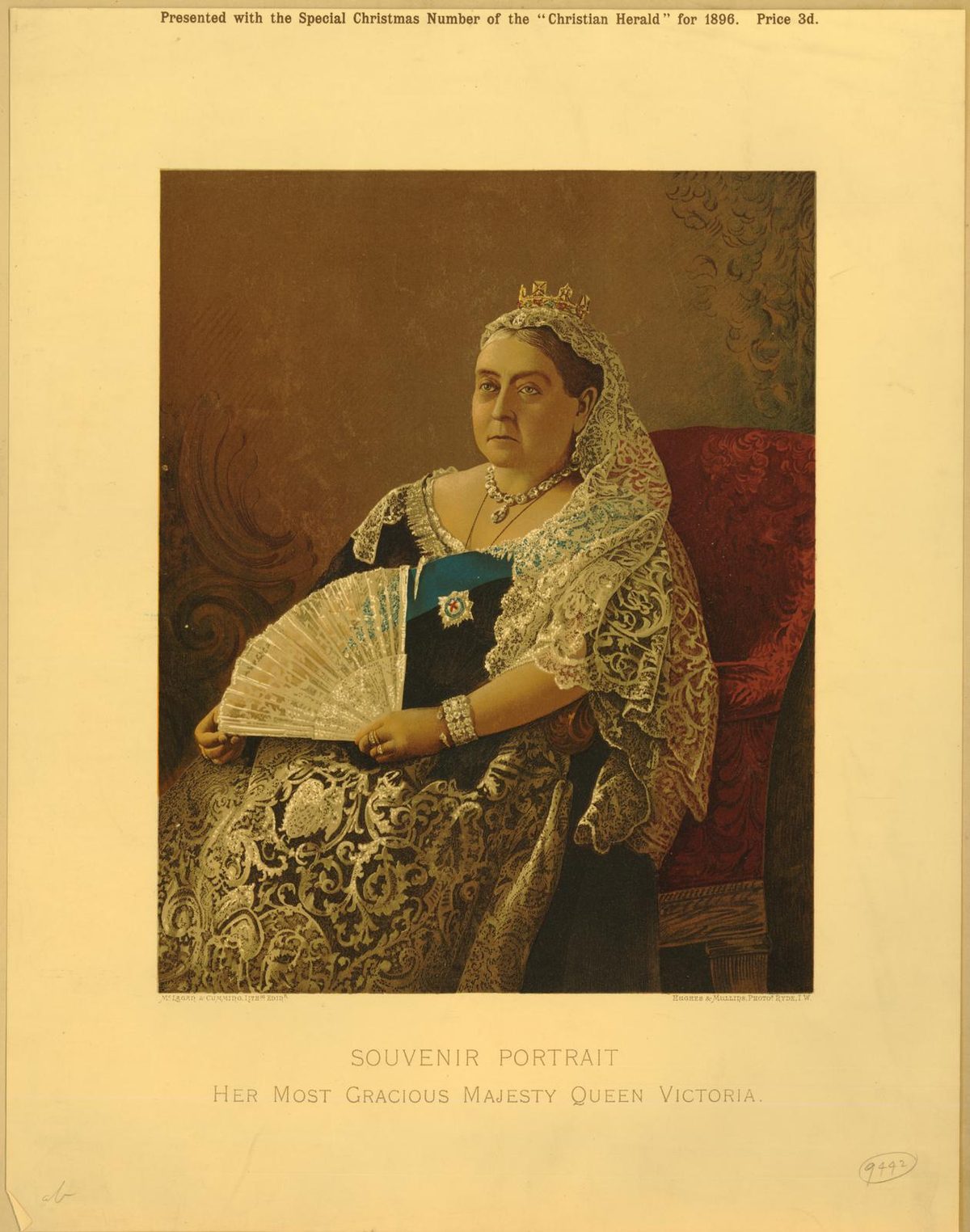
📷 Photo: Print made by: McLagan and Cumming After: Hughes & Mullins. Public domain via Wikimedia Commons.