In the chill of an October night in 1940, as the Blitz raged over London, the regal shadows of Buckingham Palace loomed large over a city under siege. In these dark days, Britain’s resolve was sorely tested. Even the very heart of the monarchy wasn't spared the wailing of air raid sirens and the ominous drone of approaching bombers. Yet, amidst the chaos, a quiet act of solidarity left an indelible mark on royal history. On one such night, King George VI descended the stairs into a makeshift shelter, a place where the grandeur of a palace met the vulnerable reality of war—bringing with him only a book and an unyielding desire to comfort his staff.
A Shared Night of Comfort in the Palace Shadows
The London Blitz, as history remembers it, was an unrelenting campaign of aerial bombardment that stretched from September 1940 to May 1941. On an October evening, as the clouds of war loomed broodingly over the night city, Buckingham Palace was not immune to the terror rain from above. Though its walls were built to last centuries, inside its shelter, flesh and blood quivered just like any other. King George VI, knowing full well that rank held no purchase when it came to fear, sought to provide comfort where none could be taken for granted.
With each blast echoing above, the basement of Buckingham Palace was filled with a kind of solitude punctuated by silent prayers and soft murmurs of reassurance. On this night, King George VI did something completely unexpected. Abandoning royal protocol, he joined his staff, seated on makeshift benches in the cramped, dimly lit space. The significance of a monarch descending into such a setting wasn’t lost on those present.
No grand speeches, scripted and punctuated with oratory finesse, were prepared. Instead, surrounded by his frightened staff, the King opened a book—its pages lit by the flickering lanterns of a palace turned fortress—and began to read aloud. His voice, usually a symbol of solemn authority, became a soothing balm for troubled souls that night.
The Human Monarch Behind the Crown
King George VI, born Albert Frederick Arthur George, was never supposed to be king. Thrown into the limelight by his brother Edward VIII’s abdication, George VI was a reluctant monarch. Often captured by history as a man fraught with duty and determination, he wasn’t initially prepared for the crown. Yet, in those tense years of war, he become a symbol of resilience.
He led not just with decisions but with personal gestures that humanized the monarchy in the eyes of his people. This night in October was emblematic of that leadership. The staff knew him as “Bertie,” a nickname from his younger years, and this familiarity breaching the distance between sovereign and subject unfolded uniquely in the depths of the shelter.
Such simple acts as reading to his staff demonstrated his commitment to bridging the divide inherent in titles and bloodlines. As his words cut through the gloom, he showed a monarch's capacity to connect deeply with individuals, fostering a sense of kinship. Hence, the memory of King George VI as “The People's King” was etched into history with each quietly spoken word in that shelter.
Nocturnal Vigil: The Unseen Side of Royal Life
The narratives often spun about the royal family deal in pomp, circumstance, and the trappings of grandeur, yet beneath those layers of tradition are stories of personal sacrifice and empathy. King George VI’s decision to read to his staff that night speaks volumes of a nuanced approach to leadership.
As those huddled under the palace grounds listened, they were reminded that they were seen not just by their king, but by a man who understood their fear. The chosen book, its title long lost to the annals of history, was incidental compared to the act itself. King George VI's presence was a beacon of hope, a reminder of the continuity during a time when the future was obscured by the fog of war.
This was a war not of battles fought with guns and planes alone, but with the resilience of spirits. By morning, when the all-clear signal was finally heard, those present in the bowels of Buckingham Palace had witnessed an unadvertised, unscripted connection formed in adversity.
The Monarchy’s Enduring Legacy of Empathy
The tale of King George VI gently holding court in a bomb shelter is more than just a story of wartime Britain. It’s a reflection of the monarchy's evolving role from isolated regality to empathetic stewardship. While the "stiff upper lip" is often cited as a quintessential British trait, there’s a counter-narrative—one of compassion and human connection—that the royal family has, from time to time, exemplified in the most unexpected moments.
The memory of this king who mobilized his presence to shift morale speaks to the quieter forms of leadership that discard grandiosity for sincerity’s touch. This legacy continues to resonate, grounding the monarchy’s aura with tales of humanity like threads sewn into an intricate tapestry.
Today, while the world may have changed with technology and geopolitics reshaping how we view leadership and symbols of power, this story from 1940 remains significant. It highlights that in times of immense challenge, whether faced by a nation or an individual, a guiding voice can anchor hearts and unite those adrift in uncertainty.
In the comforting darkness of a Buckingham Palace air raid shelter, King George VI invoked the enduring power of the human spirit. Just as he descended into the shelter to read, so too does his legacy lift from history’s pages—a reminder that often, small acts of kindness enrich the crown far more than any jewel ever could.
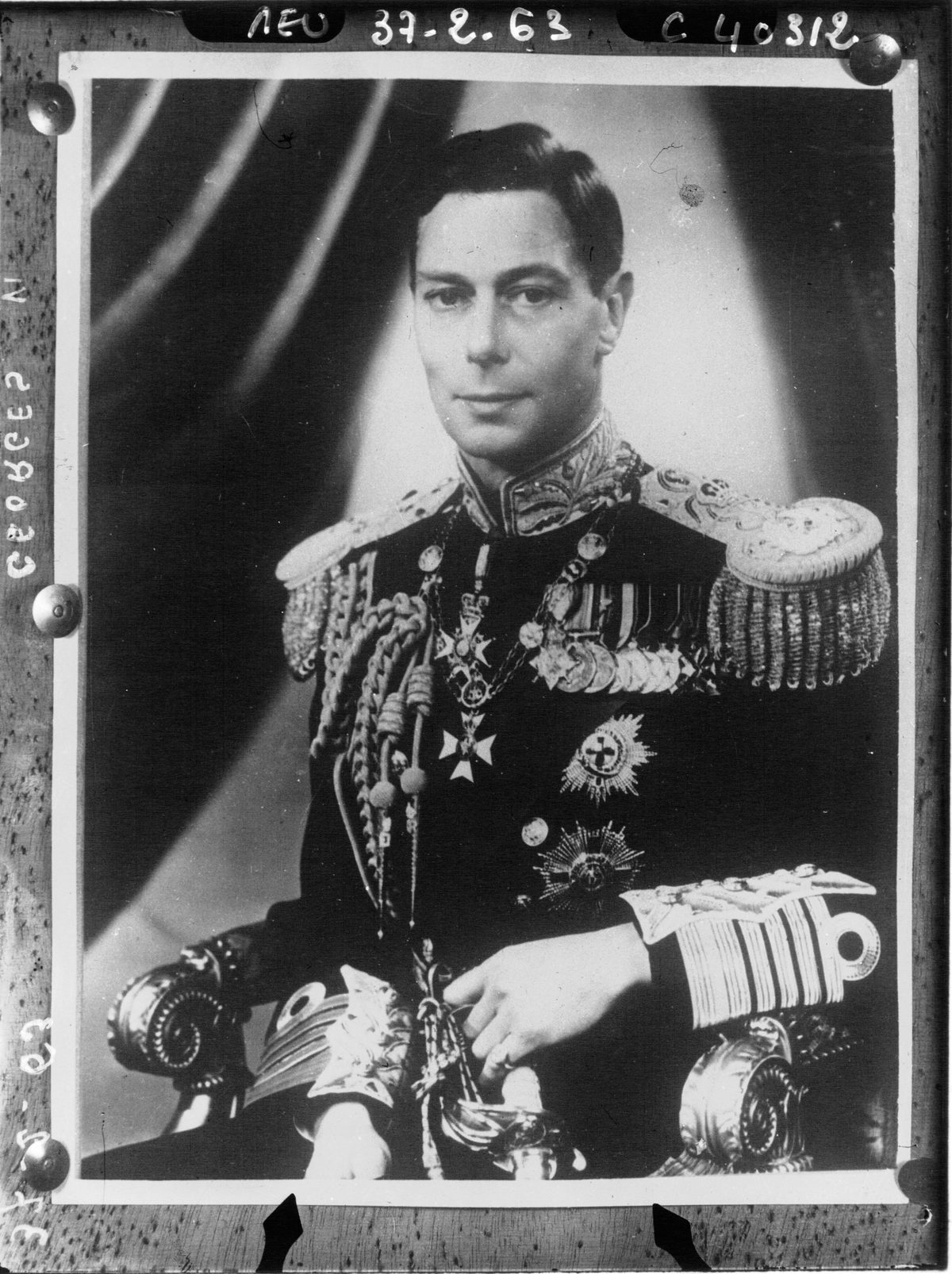
📷 Photo: Agence de presse Meurisse. Agence photographique (commanditaire). Public domain via Wikimedia Commons.